
Mon - Sat : 9am to 7pm Sunday is CLOSED


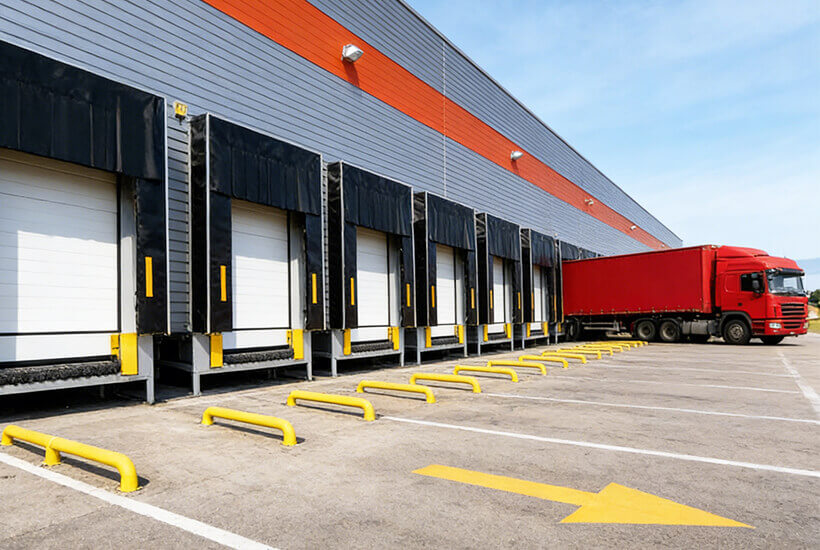
As the global logistics crossroads connecting the Atlantic and Pacific Oceans, Panama not only boasts a container hub, but also faces high-frequency local distribution demands. Against this unique logistics backdrop, warehouse and terminal managers in Panama face a dilemma: how can a single set of segmented lip telescopic dock leveler handle both standard container trucks and local small delivery trucks?
The truck dock leveler is a crucial component of modern loading and unloading systems. However, not all dock levelers are created equal. Selecting the right solution is essential, especially when it comes to handling both standard containers and local trucks simultaneously. This article will guide you on how to choose an intelligent adjustable width telescopic dock leveler that not only boosts efficiency, but also enhances safety and operational flexibility.
Contents
- 1 Analyzing the Limitations of Traditional Fixed-Lip Dock Levelers
- 2 Segmented Lip Telescopic Dock Leveler: An Intelligent Solution Specifically for Both Containers and Local Trucks
- 3 Why is This Hydraulic Dock Leveler the Ideal Solution for Panama’s Logistics Market?
- 4 Key Points for Selecting a Professional Dock Leveler Supplier for Panama Projects
- 5 Real Case Study: How Segmented Dock Levelers Solved a Warehouse Center’s Dilemma
- 6 FAQs
Analyzing the Limitations of Traditional Fixed-Lip Dock Levelers
When faced with Panama’s mixed traffic scenarios, the inherent design limitations of fixed hydraulic dock levelers—many warehouses’ initial choice of standard loading pit dock leveler begin to surface.
Only Suitable for Single Vehicle Type
For standard maritime containers or long-haul heavy-duty trucks, fixed-width lips (typically 2 meters) provide a stable load-bearing surface, ensuring safe forklift passage. However, problems arise when dealing with Panama’s local small trucks: the rear compartment width of these vehicles usually ranges from 1.5 meters to 1.6 meters. A 2-meter-wide fixed lip simply cannot fully extend into the narrower compartment. This unsafe “suspended” docking method greatly increases the risk of damage during loading dock. It not only endangers the integrity of the goods, but also the safety of the operators.
Risks of Forced Modification
Once some logistics managers see the issue, they may try to take some custom alterations to current platforms, like trying to mechanically separate the lip and giving them independent hydraulic drives. However, such crosswise customized will bring some risks:
- Synchronization Risk: It is difficult for two independent hydraulic cylinders to achieve complete synchronization when lifting the split lip. This causes uneven stress on both sides, generating torsional stress at the lip joint—inevitably accelerating structural damage with long-term use.
- Stability Risk: Complex hydraulic flow dividers and control valve groups increase potential system failure points. If one circuit malfunctions, it will directly cause uncontrolled dropping of one side of the lip, leading to serious accidents.
- Maintenance Complexity Risk: Spare parts for non-standard systems have poor universality, and matching repair components may be hard to source locally in Panama. This translates to longer downtime and high maintenance costs.
Segmented Lip Telescopic Dock Leveler: An Intelligent Solution Specifically for Both Containers and Local Trucks
Faced with the limitations of traditional fixed dock leveler, the hydraulic dock leveler with segmented telescopic lip offers a solution for handling both containers and local trucks in Panama’s logistics sector.
What is the Segmented Telescopic Lip Design?
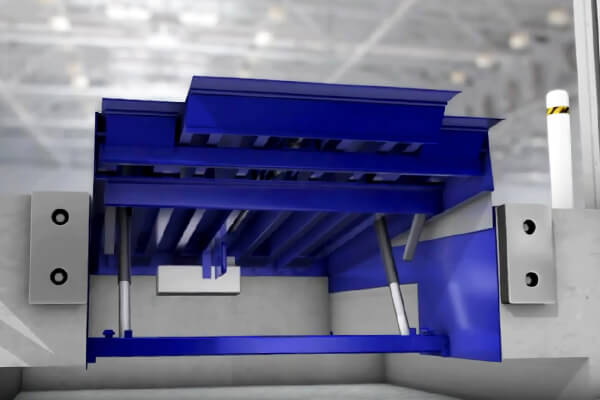
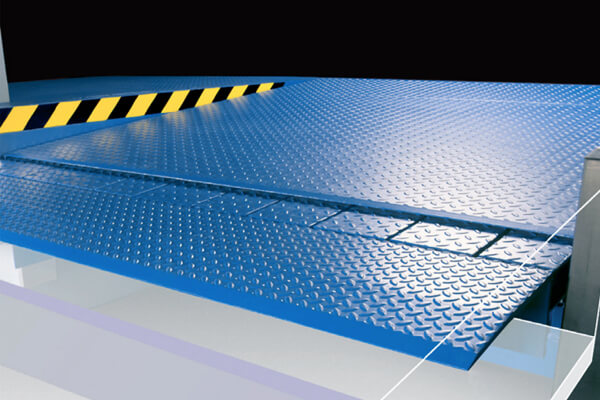
Its core innovation lies in the mechanical telescopic structure: the platform’s front lip is not a single unit, but consists of two parts—the main lip and the telescopic lip.
- Main Lip (2m wide): As the main extended part of the telescopic dock leveler, it is rigidly connected to the main board, providing primary load-bearing and lapping functions.
- Telescopic Lip (1.5m wide): Ingeniously concealed in a dedicated slide rail beneath the main lip, it can be smoothly extended with ease.
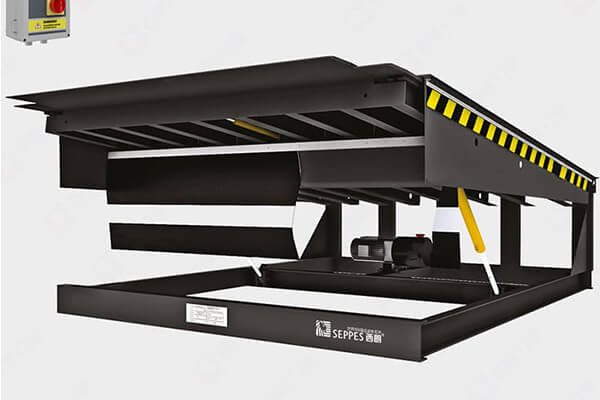
The telescopic movement is powered by a low-power electric system, which is completely independent of the main hydraulic system responsible for lifting the warehouse dock leveler. When the telescopic lip reaches the preset position, the built-in spring-loaded locking pin automatically engages, ensuring absolute stability and safety during operation. This design eliminates complex hydraulic synchronization issues, significantly enhancing reliability and ease of maintenance.
Swing Lip Dock Leveler VS Telescopic Lip Dock Leveler
| Requirement | Limitations of Traditional Hydraulic Dock Levelers | Recommended Solution: Segmented Telescopic Dock Levelers |
| Front lip needs to adapt to different vehicles (1.5m for small trucks, 2m for containers) | Single-piece front lip with fixed width, no adjustability. | Front lip divided into two sections (main section + telescopic section). Achieves stepless or stepped width adjustment via mechanical slide rails or linkage mechanisms. |
| Need for two working modes | Only supports a single lifting mode. | One-click mode switching via control panel:1. Small Truck Mode: Extend only the main section (e.g., 1.5m).>2. Container Mode: Extend both the main section and telescopic section (e.g., 2m). |
| Structural reliability with 8-ton load capacity | The “split hydraulic cylinder” structure assumed by customers is complex, difficult to control synchronously, and poses high risks. | Adopts single or synchronously controlled hydraulic cylinders to drive the entire platform. Front lip telescoping relies on pure mechanical linkage; the hydraulic system is simple and reliable, fully meeting the load capacity requirement. |
How Does The Dock Leveler with Telescopic Lip Work?
| Operation Mode | Lip Status | Applicable Vehicle Types | Core Advantages |
| Mode 1: Small Truck Mode | Telescopic lip retracted and lockedEffective working width: 1.5m | Urban delivery vans, small box trucks | – Safe Docking: Compact width easily extends into narrow compartments, eliminating suspension risks. Efficiency Enhancement: No waiting or equipment replacement required, quickly responding to delivery needs. |
| Mode 2: Container/Large Truck Mode | Telescopic lip fully extended and locked width: 2.0m | Standard containers, long-haul heavy-duty trucks | – Full Load-Bearing Support: Provides a full-width supporting surface, ensuring safe passage for heavy-duty forklifts.Seamless Switching: One platform meets all large-scale loading/unloading tasks, maximizing investment value. |
Why is This Hydraulic Dock Leveler the Ideal Solution for Panama’s Logistics Market?
Precise Adaptation to Diverse Scenarios
Panama’s terminals handle 40-foot standard containers arriving at the Port of Colón, and light delivery trucks traveling between Panama City and other locations—all simultaneously every day. When dealing with small trucks, the 1.5m main lip alone enables safe, deep docking, eliminating the risk of lip suspension. For containers, the full 2m-wide lip provides a complete heavy-duty load-bearing surface. This multi-adaptability allows terminals to avoid zoning for different vehicle types or waiting times, directly improving throughput capacity and operational flexibility.
Durability for Local Climate Conditions
The main structure is made of high-strength weather-resistant steel. Additionally, it is treated with a durable anti-corrosion coating, providing an extra layer of protection against the elements. It can withstand the high-temperature and high-humidity environment caused by Panama’s tropical maritime climate, ensuring long-term stable operation of the equipment.
Maximized Return on Investment
By eliminating equipment idleness, reducing loading delays, and preventing safety accidents, this solution maximizes the utility of a single platform. It is a cost-effective and forward-looking investment for realizing the modernization and upgrading of terminals.
Key Points for Selecting a Professional Dock Leveler Supplier for Panama Projects
After confirming that the adjustable width dock leveler is the optimal technical solution to address your operational pain points, choosing a truly professional and reliable supplier becomes a critical step in ensuring long-term returns on this important investment. For logistics and warehouse operators in Panama, when evaluating suppliers, they should look beyond the product itself and conduct a comprehensive assessment based on the following core dimensions—these directly relate to project success, operational safety, and total cost of ownership.
Load Capacity and Safety Standards
- Genuine Dynamic Load Capacity: Clearly inquire whether the dual-mode dock leveler is designed for dynamic loads of 8 tons, 10 tons, or higher, and confirm its safety factor (typically ≥1.5). The supplier should provide certifications conform to international standards, such as CE and ISO 9001.
- Built-in Safety Features: Verify if the solution includes multiple safety designs for the telescopic dock leveler:
- Overload Protection: Does the hydraulic system integrate a reliable relief valve to prevent overloading?
- Mechanical Safety Locks: When the dock leveler is in a raised position, is there a reliable mechanical safety support device to prevent accidental failure of the hydraulic system?
- Edge Protection: Are high-strength safety toe guards and anti-slip devices provided as standard configurations?
Electrical Configuration and Local Compliance
- Precise Power Supply Matching: The supplier must clearly provide a power unit suitable for Panama’s power grid (220V, 60Hz) and specify whether it is single-phase or three-phase. This is a basic prerequisite for the normal operation of the segmented lip telescopic dock leveler.
- Certifications and Control Safety: All electrical control boxes, buttons, and cables should comply with international electrical standards (e.g., IEC standards) and preferably hold certifications applicable to the local market. The control logic should be reasonably designed—for example, equipped with emergency stop buttons and interlocking functions to prevent misoperation.
- Environmental Adaptability: Considering Panama’s high-humidity environment, is the IP rating of electrical components sufficient (e.g., IP54) to prevent moisture and dust intrusion from causing electrical failures in the telescopic dock leveler?
Localized Services and Long-Term Support
- On-Site Installation and Commissioning Support: Does the supplier provide detailed installation drawings and guide the local team in professional installation and commissioning of the Adjustable width telescopic dock leveler? Professional installation ensures the performance and service life of the equipment.
- Spare Parts Supply System: Are key spare parts (such as hydraulic seals, locking pins, and control modules) in stock in Panama or neighboring countries? What is the supplier’s commitment to spare parts logistics? This determines the length of unexpected downtime for your telescopic dock leveler.
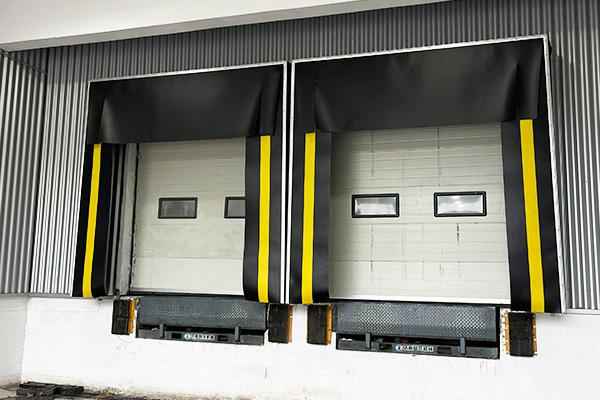
Real Case Study: How Segmented Dock Levelers Solved a Warehouse Center’s Dilemma
Project Background
The client is a logistics company in Panama City specializing in cross-border e-commerce. This logistics enterprise needs to handle the inbound sorting of approximately 20 standard containers daily, while also dispatching small trucks to deliver orders to local areas and neighboring countries. Its original three traditional fixed-lip dock levelers (2m wide) faced excessive lip width and difficult docking when handling busy small-truck loading operations.
Operational Inefficiencies: When a narrow truck docked, the standard-width leveler lip would be too wide, leaving unstable gaps on either side. Conversely, wider trucks often experienced alignment issues. This forced forklift operators to slow down, reposition loads, and manually bridge gaps, adding several minutes to each loading and unloading cycle.
Safety Risks: Operators often had to temporarily place wooden planks at the rear doors of trucks. It was not only inefficient, but also resulted in two minor work-related injuries caused by slipping wooden planks.
Our Solution
After on-site investigation and technical communication, we provided a customized hydraulic dock leveler solution with segmented telescopic lips:
Hardware Configuration
Replaced and installed two side-by-side 8-ton segmented telescopic dock levelers at the client’s two busiest loading/unloading bays.
The platform specifications were fully adapted to the height of its docks, with a 2m main lip and a 1.5m telescopic lip.
Operation Process
- Container Operations: The process remained unchanged. After the driver confirmed details with the warehouse manager, the telescopic section was directly extended to use the 2m full-width mode.
- Small Truck Operations: All drivers were required to confirm the 1.5m telescopic section mode after reversing into position, before lifting the dock leveler for docking.
Need a Custom Solution for Your Panama Warehouse?
Don’t let mixed fleets slow down your operations. Contact our engineering team today for a free consultation and drawing based on your dock dimensions.
FAQs
What is a adjustable width dock leveler?
A segmented lip telescopic dock leveler is a specialized loading dock ramp with a retractable lip divided into separate, independently adjustable sections. This design allows the leveler to change its effective width to securely accommodate different vehicle sizes.
Why is a segmented lip important for mixed fleets?
It allows a single loading bay to service a wide range of vehicles, from large 2-meter-wide trailers to smaller 1.5-meter-wide delivery vans. This flexibility eliminates the need for separate dedicated bays for different truck sizes.
Does this leveler improve safety during loading?
Yes, it significantly enhances safety by creating a stable bridge that fits the specific width of the docked vehicle. This minimizes dangerous gaps on the sides of the ramp where workers or equipment could slip.
 Spanish (Argentina)
  English
  Arabic
  Spanish (Mexico)
  French
  Russian
  Uzbek
Uzbek  Japanese
  Korean
  Indonesian
  Spanish (Peru)
  Spanish (Venezuela)
  Spanish (Costa Rica)
  Spanish (Ecuador)