
Mon - Sat : 9am to 7pm Sunday is CLOSED


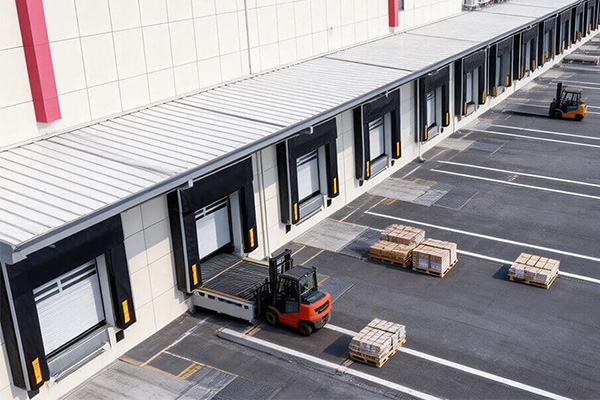
The gap between a parked trailer and the warehouse wall is a major source of energy loss, security risks, and environmental contamination. As energy costs rise and sustainability mandates become stricter, choosing the right dock shelter—Mechanical vs. Inflatable Dock Shelter. It is a critical operational decision that directly impacts efficiency, safety, and long-term cost savings.
The Engineering Choice: Versatility or Precision?
While both systems aim to seal the loading bay, they serve distinct operational needs:
- Mechanical Dock Shelters: The commonly used industrial equipment. Built for high-traffic environments and diverse trucks, focusing on mechanical durability and low maintenance.
- Inflatable Dock Shelters: The precision dock seal. Engineered for airtight integrity, making them the gold standard for climate-controlled or pharmaceutical facilities.
Read on to explore the detailed technical and discover which sealing aligns with your facility’s long-term performance goals.
Contents
- 1 What is a Mechanical Dock Shelter?
- 2 What is an Inflatable Dock Shelter?
- 3 Technical Face-Off: Mechanical vs. Inflatable Dock Shelters
- 4 Performance Analysis: Which Offers a Faster ROI?
- 5 Selection Guide: 5 Factors to Consider Before You Buy
- 6 Conclusion: Making the Right Investment for Your Loading Dock
- 7 Frequently Asked Questions
- 7.1 What are the main differences between mechanical vs. inflatable dock shelter?
- 7.2 Which option provides better energy efficiency and why?
- 7.3 How do dock seals compare to inflatable shelters for high-frequency loading?
- 7.4 Are foam dock or sponge dock shelter options better for creating a tight seal?
- 7.5 Choose the right warehouse: How do I choose between seals and shelters for a cold storage facility?
- 7.6 Can either option improve loading and unloading efficiency and operational safety?
- 7.7 What installation and maintenance should I expect for each type?
- 7.8 How do door size and dock equipment influence the best selection of dock seals and shelters?
- 7.9 What are the top considerations when choosing between dock seals vs inflatable shelters?
What is a Mechanical Dock Shelter?

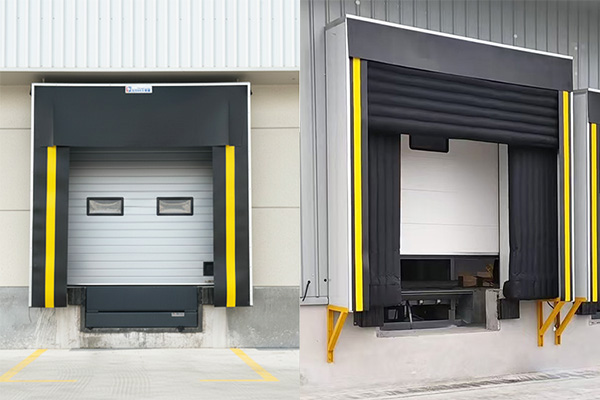
A mechanical dock shelter is a flexible frame structure designed to accommodate various vehicle dimensions while maintaining a functional seal.
- Mechanism: It uses a curtain-style design mounted on a retractable or flexible frame. When a truck backs in, the side and top curtains press against the vehicle’s body, adjusting naturally to the truck’s height and width.
- Durability: These shelters are constructed from high-density PVC. These abrasion-resistant materials ensure the curtains do not tear or wear down quickly despite constant contact with trailers.
- Best Use Case: Ideal for general warehousing and distribution centers that service a diverse fleet of trucks with varying sizes.
What is an Inflatable Dock Shelter?
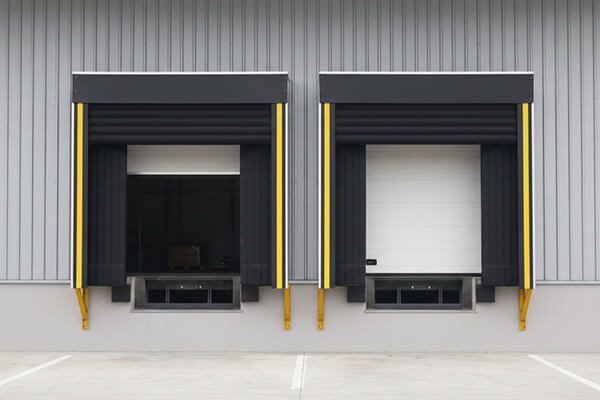
An inflatable dock shelter provides a high-performance, airtight seal by using air pressure to wrap around the docked vehicle.
- Mechanism: This system uses a blower-assisted inflation process. Once a truck is positioned, heavy-duty air bags inflate around the top and sides of the trailer, creating a 99% airtight seal that bridges the gap between the building and the vehicle.
- Thermal Integrity: Because it creates a total seal, it eliminates the rapid escape of internal air—making it the most efficient option for preventing temperature fluctuations.
- Best Use Case: The premier choice for pharmaceutical, food processing, and ultra-cold facilities where strict climate control and hygiene are mandatory.
Technical Face-Off: Mechanical vs. Inflatable Dock Shelters
| Feature | Mechanical Dock Shelter | Inflatable Dock Shelter |
| Initial Investment | Lower (Economical for high-volume docks) | Higher (Premium for precision sealing) |
| Operational Cost | Minimal (No electricity required) | Moderate (Requires power for blowers) |
| Sealing Tightness | Good (Perimeter seal) | Superior (Airtight compression seal) |
| Installation Time | Fast (Simple structural assembly) | Complex (Requires electrical & air setup) |
| Average Lifespan | 10–15+ Years | 8–12 Years (Varies with maintenance) |
| Best For | General Warehousing | Cold Chain & Clean Rooms |
Initial Investment: Budget vs. Performance
When evaluating dock shelter maintenance and setup costs, mechanical dock shelters are the clear winner for facilities with tight capital budgets. They use a simple, robust frame and heavy-duty curtains. Conversely, inflatable dock shelters represent a larger upfront investment due to the inclusion of integrated blower systems, control panels, and sophisticated airbag assemblies.
Energy Consumption vs. Simplicity
Inflatable dock seal systems require electricity to power the 110V or 220V blowers that maintain pressure during the entire loading cycle. While this adds a small utility cost, it is the significant HVAC savings often offset by their airtight seal.
Sealing Tightness: The Cold Chain Standard
If your facility handles cold chain logistics equipment, the inflatable dock shelter is the best choice. Mechanical dock shelters provide a reliable perimeter barrier, but may allow minor air infiltration in extreme wind or with irregularly shaped trucks.
Operational Lifespan
The longevity of your loading dock shelter depends heavily on material choice:
- Mechanical Loading Dock Shelters: Usually feature high-grade PVC-coated polyester fabric. This reinforced fabric is designed to withstand the “shaving” action of trailers moving up and down during loading.
- Inflatable Loading Dock Shelters: Often use high-tensile PVC or Neoprene. Because the bags inflate after the truck is parked, they experience less abrasion than mechanical curtains.
Performance Analysis: Which Offers a Faster ROI?
Choosing between a mechanical or inflatable system depends on whether your priority is immediate operational savings or long-term energy reduction. Both offer distinct paths to a full return on investment (ROI).
Energy Savings: HVAC Cost Reductions
The Inflatable Dock Shelter is designed for maximum thermal retention. By creating a 99% airtight seal, it virtually eliminates the exchange of internal and external air during loading.
- ROI Timeline: In climate-controlled or cold-storage facilities, the reduction in HVAC energy loss is significant. On average, the energy savings allow an inflatable system to pay for itself within 18 to 24 months.
- Efficiency: It is the most effective solution for maintaining strict cold chain integrity and reducing a facility’s carbon footprint.
Operational Longevity and Maintenance Costs
The Mechanical Dock Shelter offers ROI through lower upkeep and high uptime. Its simple, robust construction is built to withstand the physical demands of high-frequency docking.
- Lower Downtime: Because the system relies on flexible frames and durable curtains rather than electrical components, it is simpler and faster to repair.
- Cost Efficiency: Parts like side curtains are easily replaced at a lower cost, ensuring the door remains operational with minimal technical intervention.
Climate Factors: Performance in Varying Conditions
Extreme Cold: Inflatable dock shelters prevent the cold air rushing in at the bottom, while warm air escapes at the top, protecting both the product and the indoor working temperature.
Moderate Weather: In temperate zones where the temperature difference between inside and outside is minimal, a mechanical shelter is often the more practical choice. It provides sufficient protection against rain and wind without the higher initial investment of a powered system.
Selection Guide: 5 Factors to Consider Before You Buy
Trailer Variety: Uniform Fleet vs. Mixed Traffic
- Mechanical: If your dock receives a wide mix of standard 53′ trailers, smaller delivery trucks, and containers with varying widths and heights. The flexible curtains of a mechanical dock shelter can accommodate them all without manual adjustment.
- Inflatable: Best for facilities that need a custom fit for every vehicle. Because the airbags expand only after the trailer is parked, they can wrap around irregular shapes or heights more effectively than static curtains, providing a tighter seal for a diverse fleet.
Climate Requirements: Ambient vs. Cold Chain Logistics
- Mechanical: Ideal for ambient-temperature warehouses or regions with mild weather, where the primary goal is keeping out rain, dust, and pests.
- Inflatable: A must-have for cold chain logistics equipment. If you are managing a freezer or pharmaceutical facility where a 2-degree temperature fluctuation can result in product loss, the airtight, thermal-insulating seal of an inflatable system is essential to maintain “Grade A” climate control.
Dock Traffic: High-Frequency vs. Moderate Use
- Mechanical: Built for the heavy lifters. In high-traffic distribution centers, where trucks dock every 15–30 minutes, the rugged. Retractable frames of mechanical shelters withstand frequent impacts and friction better than almost any other solution.
- Inflatable: While durable, the cycle time is slightly longer due to the inflation/deflation process. They are perfect for high-value throughput, where the seal quality is more important than the seconds saved during docking.
Building Structure: Wall Strength and Space
- Mechanical: These systems are relatively lightweight and impose minimal structural load on your building. They are often the best choice for older facilities or metal-sided buildings that may not have the reinforcement required for heavy-duty industrial equipment.
- Inflatable: Requires integrated electrical paths for the blower motors and control panels. You must ensure your loading dock has the necessary power supply, and that the wall surface is flat enough to allow the airbags to create a flush, airtight barrier.
Maintenance Budget: Low Upkeep vs. Performance Precision
- Mechanical: Apart from occasional curtain patching or frame inspection, these units have almost no moving parts to fail, leading to lower long-term dock shelter maintenance costs.
- Inflatable: Expect a higher maintenance budget. You will need to periodically service the blowers, check for air leaks in the fabric, and ensure the sensors are calibrated. However, the energy savings from the superior seal often pay for these maintenance costs many times over.
Conclusion: Making the Right Investment for Your Loading Dock
Selecting the ideal loading dock solution is a balance between your facility’s specific traffic patterns and your thermal requirements. Both systems-Mechanical vs. Inflatable Dock Shelter, are engineered to protect your building’s envelope, but excel in different operational environments. Choose a Mechanical Dock Shelter if: Your facility handles a diverse fleet of third-party trailers and experiences high-frequency docking. Choose an Inflatable Dock Shelter if: You manage a climate-controlled, pharmaceutical, or food-processing facility where temperature integrity is a regulatory requirement.
Ultimately, the right investment aligns with your Total Cost of Ownership (TCO) goals. By sealing the gap between your warehouse and the world, you ensure a safer, more efficient, and more sustainable loading operation.
Frequently Asked Questions
What are the main differences between mechanical vs. inflatable dock shelter?
Mechanical (rigid frame) dock shelters use a fixed shelter frame with foam or sponge seals that press against the trailer to form a tight seal; they’re durable for high-frequency loading and unloading and wider door sizes but can stress trailers if misaligned. Inflatable dock shelters use air bladders that inflate around the trailer to create an effective, flexible seal—ideal when you need a tight seal around irregular trailer shapes, cold storage applications, or a wide range of vehicle sizes. Choosing between seals and shelters often depends on door opening, range of vehicle, frequency of docking, and the need for energy efficiency and loading dock sealing.
Which option provides better energy efficiency and why?
Inflatable shelters typically provide superior energy efficiency because they can tightly seal the trailer’s sides and top, minimizing air exchange and heat loss—especially important for cold storage and temperature-controlled operations. However, a properly installed rigid dock shelter with high-quality foam dock seals can also provide an effective seal and conserve energy. For high-frequency loading and unloading operations, a balance between operational efficiency and durability should guide the choice.
How do dock seals compare to inflatable shelters for high-frequency loading?
For high-frequency loading and unloading, rigid frame dock shelters with durable dock seals and dock levelers often outperform inflatable shelters in longevity and resistance to wear from repeated vehicle contact. Inflatable shelters can be slower to cycle and may require more maintenance under continuous use. Dock equipment manufacturers typically recommend rigid shelters or mechanical rail shelter setups when throughput and resilience are top priorities.
Are foam dock or sponge dock shelter options better for creating a tight seal?
Foam dock seals and sponge dock shelters create an immediate physical barrier that can tightly seal the trailer when the door size and trailer geometry are compatible. Foam is low-maintenance and effective for many dock areas, but inflatable seals may form a better tight seal around irregular surfaces. Selecting the right dock seal or shelter requires assessing trailer variability and the desired balance between tight seal performance and shelter frame durability.
Choose the right warehouse: How do I choose between seals and shelters for a cold storage facility?
Cold storage facilities demand robust loading dock sealing and minimal air exchange. Inflatable shelters or inflatable seals often deliver the best performance for sealing top and sides tightly, reducing energy costs and protecting product integrity. If your dock area handles a wide range of vehicle heights and door openings, inflatable rail shelter or inflatable seal solutions are advantageous. However, if the facility experiences very high-frequency loading, a rigid frame dock shelter with insulated seals may be preferable for durability.
Can either option improve loading and unloading efficiency and operational safety?
Both inflatable and mechanical shelters can improve loading and unloading efficiency by providing a sealed, sheltered environment that reduces weather impacts and maintains interior temperatures. Using appropriate dock levelers and dock seals and dock shelters enhances safety and speed during loading. Inflatable shelters can better accommodate varying trailer shapes, improving throughput for mixed fleets, while rigid shelters with dock levelers are often more stable and better suited to heavy, repetitive operations—boosting efficiency and safety.
What installation and maintenance should I expect for each type?
Rigid dock shelters and foam dock seals generally require periodic inspection of seals, fasteners, and the shelter frame; foam replacement may be needed over time. Inflatable shelters require additional maintenance for air bladders, blowers, and control systems; leaks or wear in the inflatable seal components must be addressed promptly. Both systems benefit from regular checks to mitigate shelter and building damage and to ensure the shelter frame and seals remain effective.
How do door size and dock equipment influence the best selection of dock seals and shelters?
Door size, dock leveler configuration, and the range of vehicle sizes directly influence whether a foam dock, inflatable shelter, or rigid frame dock shelter is best. Large door openings and a wide range of vehicle heights may favor inflatable shelters for their adaptability, while consistent trailer dimensions often suit foam or rigid dock shelters. Coordination with dock equipment manufacturers and assessing dock levelers, dock door types, and the loading and unloading platform will help optimize selection.
What are the top considerations when choosing between dock seals vs inflatable shelters?
Key considerations include loading frequency, operational efficiency, trailer variation, door opening dimensions, energy efficiency goals, and potential for shelter and building damage. For high-frequency loading and unloading platforms with consistent trailer sizes. Warehouse dock shelters and dock levelers with foam seals are a robust choice. For cold storage or operations requiring a tight seal around diverse trailers, inflatable seal or inflatable rail shelter solutions excel. Evaluate long-term maintenance, sealing performance, and how well the solution will tightly seal the trailer to create an effective, sealed dock area.
 Spanish (Ecuador)
  English
  Arabic
  Spanish (Mexico)
  French
  Russian
  Uzbek
Uzbek  Japanese
  Korean
  Indonesian
  Spanish (Peru)
  Spanish (Venezuela)
  Spanish (Costa Rica)
  Spanish (Argentina)