
周一至周六:上午9点至下午7点 周日休息


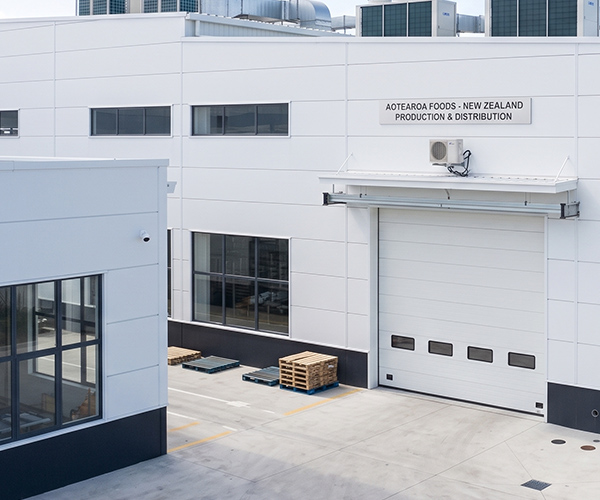
Industrial doors are the vital arteries of any commercial or manufacturing facility. When they operate seamlessly, they go almost unnoticed—but the moment a low-quality door fails, the consequences are immediate and costly. Because these access points are so critical to your daily workflow, finding a reliable sectional door manufacturer is never just a routine procurement task. It is a strategic investment in your facility’s long-term operational security and efficiency.
This guide outlines the objective criteria you need to evaluate potential partners. Read on to learn how to choose a sectional door manufacturer that perfectly aligns with your facility’s safety, technical, and budget needs.
目录
- 1 What is an Industrial Sectional Door?
- 2 Five Core Criteria for Evaluating a Sectional Door Manufacturer
- 3 Customisation and Engineering Capabilities: Tailoring Solutions to Your Infrastructure
- 4 Evaluating the Supply Chain and After-Sales Service of Sectional Door Manufacturer
- 5 常见问题解答
Why Your Choice of Sectional Door Manufacturer Determines Total Cost of Ownership (TCO)
When procuring commercial overhead doors, the focus often falls on the initial quote. However, experienced facility managers understand that the purchase price is only the tip of the iceberg. The sectional door manufacturer you partner with directly influences the Total Cost of Ownership (TCO)—a metric that accounts for the complete lifecycle of the product, from installation to decommissioning.
Beyond the Purchase Price: Initial Investment vs. Long-term Value
Choosing a supplier based solely on the lowest bid often leads to “false economy.” While a lower upfront price may satisfy immediate budget constraints, it frequently indicates compromises in material thickness, hardware grade, or coating quality. A high-quality sectional door is an investment in durability. By selecting a manufacturer that prioritises premium engineering, you reduce the frequency of premature component replacements, ensuring that the asset provides a significantly higher return on investment over its operational life.
Minimising Downtime and Maintenance Expenses
In a high-traffic industrial environment, a malfunctioning door is more than an inconvenience—it is a bottleneck that halts logistics and compromises security. Reliable industrial door suppliers use precision-engineered components, such as high-cycle springs and reinforced tracking systems, designed to withstand rigorous daily use.
- Reduced Failure Rates: Superior manufacturing tolerances mean fewer mechanical breakdowns.
- Lower Maintenance Costs: Standardised, high-grade parts require less frequent intervention.
- Operational Continuity: Quality doors ensure that your facility remains accessible and secure, preventing the hidden costs of lost productivity associated with equipment downtime.
Energy Efficiency: The ROI of Thermal Performance
In the European market, where energy costs and sustainability regulations are paramount, the insulation properties of a door are a critical financial factor. A reputable sectional door manufacturer focuses on the “thermal envelope” of the building.
High-performance doors featuring advanced polyurethane foam cores and robust peripheral seals significantly lower the building’s U-values. By preventing thermal bridging and air leakage, these doors reduce the load on HVAC systems. Over a period of several years, the cumulative savings on energy bills often exceed the initial price difference between a standard door and a high-efficiency model, allowing the door to effectively “pay for itself” through operational savings.
What is an Industrial Sectional Door?
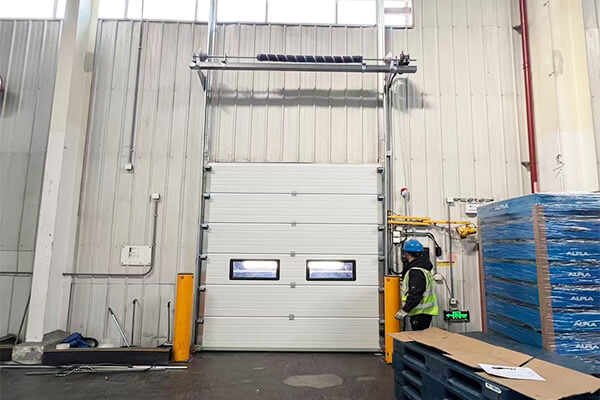
Before evaluating manufacturers, it is essential to define the product’s fundamental value. An industrial sectional door consists of multiple horizontal panels hinged together. Driven by a motorized system, the door glides upward along vertical and horizontal tracks, resting parallel to the ceiling when open. This overhead operation maximizes available floor space and prevents obstruction around the opening.
Key Application Scenarios: Engineered for superior thermal insulation, robust security, and excellent weather sealing, sectional doors are highly versatile and widely used across various sectors:
- Logistics & Distribution: Loading docks where temperature control, security, and frequent operations are critical.
- Manufacturing Plants: Heavy-duty access points designed to withstand high wind loads and industrial wear.
- Controlled Environments: Specialized areas such as cold storage or fruit maturation facilities, where sectional doors are consistently preferred over standard high-speed doors due to their superior gas-tightness and thermal barriers.
- Commercial & Public Facilities: Auto dealerships and fire stations, frequently utilizing fully glazed sectional panels to maximize natural light and visibility without compromising durability.
Five Core Criteria for Evaluating a Sectional Door Manufacturer
Identifying a reliable sectional door manufacturer requires looking beyond the surface of the door panels. To ensure long-term operational success, professional buyers evaluate suppliers against these five technical benchmarks.
European Standards and Safety Certifications
In the European market, compliance is the baseline for quality. A reputable manufacturer must provide documentation of CE Marking, indicating that the product meets high safety, health, and environmental protection requirements.
- EN 13241-1 Compliance: This standard is essential for all commercial overhead doors. It ensures the inclusion of vital safety features such as anti-drop devices (to prevent the door from falling in case of cable or spring failure) and finger-trap protection designs.
Material Quality and Structural Durability
The longevity of a door is dictated by the grade of its raw materials. High-quality panels typically feature hot-dipped galvanized steel with multi-layer anti-corrosion coatings to withstand harsh weather conditions.
- The Role of the Sectional Door Spring: The quality of the 工业提升门弹簧 is perhaps the most accurate indicator of the entire system’s integrity. As the component responsible for counterbalancing the weight of the door, a low-grade spring leads to motor strain and premature failure. Leading manufacturers specify the cycle life of their springs (e.g., 25,000 vs. 100,000 cycles). To understand why this specific component is so critical, read our detailed analysis on 为何分段门弹簧材质决定工业分段门的使用寿命:一份优质采购指南.
Energy Efficiency and Thermal Regulation
For modern industrial facilities, energy efficiency is a key driver of ROI. High-quality sectional doors act as a thermal barrier, maintaining internal temperatures and reducing energy waste.
- Insulation Technology: Look for panels utilizing high-density CFC-free polyurethane (PU) foam. Common thicknesses range from 40mm for standard warehouses to 80mm for cold storage.
- Sealing Systems: High-performance doors feature EPDM rubber seals on the top, bottom, and sides. This ensures a low 传热系数 and high wind-resistance classes, which are vital for maintaining the building’s “thermal envelope.”
Automation and Intelligent Integration
As logistics become more automated, the sectional door manufacturer must offer sophisticated drive and control systems.
- Reliable Motorisation: Motors should be rated for high-frequency use with soft-start and soft-stop functions to reduce mechanical wear.
- BMS Compatibility: Modern systems should support seamless integration with Building Management Systems (BMS) or automated logistics software, allowing for remote monitoring and data-driven maintenance scheduling.
Customisation and Engineering Expertise
A top-tier manufacturer is defined by their ability to solve complex architectural challenges. Standard “off-the-shelf” solutions rarely fit the diverse needs of modern industry.
- Track Configurations: Whether your facility requires high-lift, vertical-lift, or low-headroom tracking, the supplier should provide precise CAD/BIM technical drawings.
- Specialised Solutions: Beyond standard panels, assess their capability in producing full-view glazed doors for showrooms, high-security reinforced doors, or specialized thermal doors for the food and pharmaceutical sectors.
Customisation and Engineering Capabilities: Tailoring Solutions to Your Infrastructure
For architects and facility managers, one of the primary pain points in procurement is the “standard size” limitation. A premier sectional door manufacturer acts as an engineering partner rather than just a hardware supplier, providing bespoke solutions that adapt to your specific architectural constraints rather than forcing you to modify your building.
Bespoke Engineering for Complex Site Requirements
Not every loading bay or warehouse follows a standard blueprint. Whether your facility has restricted headroom, sloping roofs, or requires a vertical lift to clear overhead cranes, the manufacturer must offer diverse track configurations. This adaptability ensures that the commercial overhead doors maximise the available clear opening space without interfering with internal operations.
Aesthetic Integration and Functional Add-ons
In modern commercial design, the door is an extension of the building’s façade. To achieve architectural harmony, leading manufacturers offer extensive aesthetic customisation.
- 观察窗: High-strength acrylic or safety glass inserts that allow natural light and improve safety by increasing visibility between zones.
- Wicket (Pedestrian) Doors: An integrated door within the sectional panels allows staff to enter and exit without cycling the entire main door. This reduces mechanical wear and significantly cuts energy loss in climate-controlled environments.
Smart Features and Industry 4.0 Readiness
The transition to “Smart Buildings” requires hardware that communicates. Advanced industrial door suppliers now integrate IoT-enabled control units. These systems allow for:
- Real-time Monitoring: Tracking cycle counts and motor health.
- BMS Integration: Seamless connection to Building Management Systems for automated security and climate control.
- Proactive Maintenance: Receiving alerts before a component fails, transforming reactive repairs into scheduled, cost-effective maintenance.
| Feature Category | Available Customisation Options | 关键操作优势 |
| Dimensions | Bespoke widths and heights up to industrial scales (e.g., 8000mm+). | Fits non-standard openings without structural rework. |
| Track Systems | Standard, High-Lift, Vertical-Lift, Low-Headroom, and Roof-Following tracks. | Optimises internal overhead space and avoids obstructions. |
| Panel Aesthetics | Full RAL Colour palette, micro-ribbed, smooth, or wood-grain finishes. | Ensures the door matches corporate branding and architectural style. |
| Glazing & Vision | Full-view aluminium sections or individual porthole windows. | Improves safety and reduces the need for artificial lighting. |
| Access Control | Integrated wicket doors (low-threshold options available). | Facilitates pedestrian flow and preserves internal temperature. |
| 自动化 | High-speed motors, remote IoT monitoring, and BMS interfaces. | Enhances logistical efficiency and enables predictive maintenance. |
Evaluating the Supply Chain and After-Sales Service of Sectional Door Manufacturer
A top-tier sectional door manufacturer must back their products with robust service capabilities. Your facility’s operations depend on their reliability long after the initial purchase. When evaluating a potential partner, closely review these three areas:
Lead Times and Production Capacity
Delays in delivery can stall your entire project. Look for manufacturers that utilize highly automated production lines. Automation not only ensures consistent product quality, but also precise lead times and on-time delivery.
Installation Support
A door will only perform as well as its installation. Determine if the manufacturer provides professional installation teams or, at minimum, offers comprehensive technical guidance and support for your local contractors.
Spare Parts Availability and Warranty Terms
When a door gets damaged, extended downtime is costly. Protect your investment by choosing a supplier that guarantees the long-term availability of spare parts and clearly defines their warranty coverage.
Case Study: Avoiding the High-Cycle Operational Risk in Logistics
The Scenario
A major European distribution centre equipped its facility with 50 sectional doors selected through a lowest-cost procurement process. The chosen manufacturer supplied standard torsion springs without verifying the facility’s daily traffic volume.
挑战
Operating 24/7, the facility subjected the doors to intense use. Within 18 months, 40% of the doors experienced spring fatigue and cable failure. The manufacturer had provided residential-grade springs limited to 10,000 cycles, which were insufficient for an environment requiring heavy-duty industrial springs rated for 50,000 to 100,000 cycles.
The Consequence
Frequent loading dock downtime led to missed shipping deadlines and a surge in emergency maintenance costs. The perceived initial savings from the low-cost hardware were quickly overshadowed by the financial burden of operational disruptions and frequent parts replacement.
The Technical Recommendation
Experience in the field demonstrates that a reputable sectional door manufacturer must conduct a cycle-count audit during the project specification phase. For high-frequency environments, selecting high-performance industrial components is essential. This proactive engineering approach ensures that the commercial overhead doors support the supply chain rather than becoming a bottleneck. By matching spring durability to actual usage, businesses can secure long-term reliability and a lower total cost of ownership.
Conclusion: Selecting a Strategic Manufacturing Partner
Choosing a sectional door manufacturer is a decision that extends far beyond the initial procurement phase. As outlined in this guide, the integrity of your facility’s access points influences operational safety, energy expenditure, and long-term maintenance budgets. A professional evaluation must move past the upfront sticker price to consider the Total Cost of Ownership.
Ultimately, high-quality sectional doors are the result of a commitment to precision engineering and proactive support. For facility managers and architects, the goal is to align with a manufacturer that understands the rigors of modern logistics and provides the technical expertise necessary to keep your business moving efficiently.