الاثنين - السبت: 9 صباحاً إلى 7 مساءً الأحد مغلق

Driven by the rapid expansion of the beverage market, newly built bottled water plants face unprecedented logistical demands and uncompromising hygiene standards. Facility managers and structural engineers face a unique dual challenge at the loading bay. On the one hand, pallets of bottled water are exceptionally heavy, requiring highly robust load-handling capabilities. On the other hand, strict food and beverage regulations require absolute control over dust, pests, and temperature fluctuations to prevent contamination of the final product. To effectively address these operational hurdles, relying on standard doors is no longer sufficient. Investing in premium, fully integrated warehouse loading dock equipment is a critical, foundational requirement for any modern facility.
In this guide, we will break down the core components of a complete loading dock set—industrial insulated sectional doors, hydraulic dock levelers, and mechanical dock seals—and explore how they synergize to protect your facility and optimize your logistics.

المحتويات
The Unique Challenges of Bottled Water Facilities at the Loading Bay
Bottled water plants operate under much harsher conditions than standard warehouses. Facility managers must equip their loading bays to handle two extreme factors simultaneously: immense physical weight and strict sanitary regulations.
Heavy Payload Requirements
Water is inherently heavy. A standard pallet of bottled water often weighs over 1,000 kilograms (approx. 2,200 lbs).
Because of this extreme weight, the loading bay experiences severe daily stress. Standard dock equipment is simply not built for this level of continuous impact. Frequent loading and unloading with heavy-duty forklifts will quickly deform or break standard dock levelers and doors. This leads to costly operational downtime, increased maintenance, and serious safety risks for workers.
Strict Hygiene and Climate Control
As part of the food and beverage industry, bottled water plants must comply with strict health and safety standards, such as FDA and HACCP guidelines.
The loading bay is the most vulnerable point in the entire facility. To maintain compliance and protect the product, the loading dock area must act as a perfect barrier. It must strictly prevent dust, insects, exhaust fumes, and rainwater from entering the clean zone. Furthermore, because temperature control is vital for beverage storage, standard equipment without proper sealing and insulation will result in massive heating and cooling losses, driving up energy costs.

Why Bottled Water Factories Need Specialized Warehouse Loading Dock Equipment
Bottled water factories operate in a production environment where efficiency, hygiene, and logistics coordination directly affect operational performance. From receiving raw materials to shipping finished bottled water products, every stage depends on a smooth warehouse workflow. As production capacity continues to increase, standard warehouse configurations are often no longer sufficient. This is why investing in specialized warehouse loading dock equipment has become an important strategy for modern bottled water manufacturing facilities.
High-Frequency Material Handling Requires Efficient Dock Operations
Bottled water production facilities process large volumes of materials every day. Empty bottles, packaging materials, labels, and pallets move continuously between receiving areas, production lines, and shipping docks. Finished bottled water products must also be transported quickly to distribution centers.
Without professional warehouse loading dock equipment, loading and unloading operations can become bottlenecks that slow down production efficiency.
A properly designed loading dock system provides several advantages:
- Faster truck loading and unloading
- Reduced forklift waiting times
- Improved pallet movement efficiency
- Better warehouse traffic flow
- Lower labor costs during receiving and shipping operations
Hydraulic dock levelers help bridge the height difference between trucks and warehouse floors, while insulated sectional doors provide rapid and secure access for forklift traffic. Together, these solutions improve operational continuity throughout the facility.
Temperature Control Protects Product Quality
Temperature management is another critical factor in bottled water manufacturing. Warehouses and receiving zones are exposed to external weather conditions during loading activities. Frequent door opening can allow hot air, dust, and humidity to enter the building.
Specialized warehouse loading dock equipment helps minimize these risks.
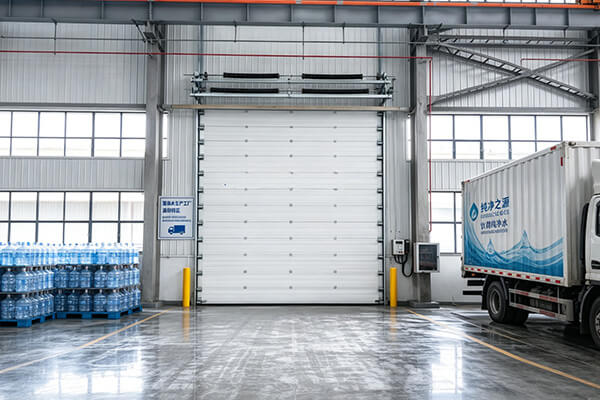
Industrial insulated sectional doors provide thermal insulation that supports indoor climate stability. Dock shelters create a sealing barrier between trucks and buildings, reducing unwanted air infiltration during loading operations.
For bottled water factories, stable environmental conditions offer multiple benefits:
- Reduced energy consumption
- Improved warehouse temperature consistency
- Better protection for packaged products
- Lower HVAC operating costs
For newly constructed bottled water facilities, installing insulated loading dock systems early in project planning can improve long-term operational efficiency.
Hygiene and Contamination Prevention Are Essential
Food and beverage manufacturing facilities must maintain strict cleanliness standards. Although bottled water production processes include filtration and purification systems, warehouse environments also play an important role in product protection.
Standard warehouse entrances may allow dust, insects, and outdoor contaminants to enter receiving and shipping areas.
احترافية warehouse loading dock equipment helps strengthen warehouse hygiene management through:
- Tight door sealing performance
- Reduced dust penetration
- Better insect prevention
- Controlled receiving environments
- Cleaner loading and unloading processes
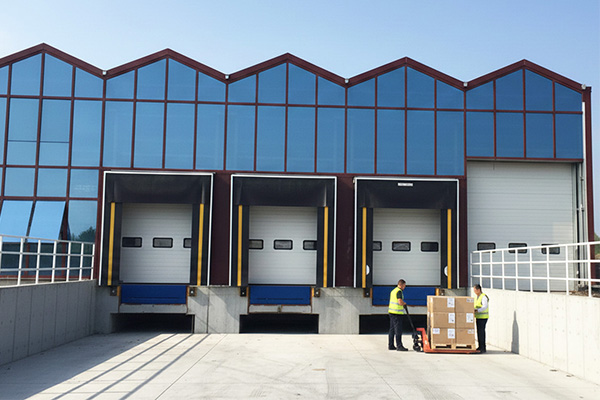
Mechanical dock shelters and insulated warehouse doors create protective barriers that support food-grade facility requirements and help maintain cleaner operating conditions.
Warehouse Expansion Requires Scalable Infrastructure
Many bottled water factories are designed for future production growth. As shipping volumes increase, warehouse infrastructure must support additional logistics demands.
Installing scalable warehouse loading dock equipment during new facility construction allows businesses to prepare for future operational expansion without major modifications.
Modern loading dock systems support:
- Increased truck traffic capacity
- Higher warehouse throughput
- Improved forklift productivity
- Long-term facility flexibility
Investing in the right warehouse infrastructure at the beginning of a project often reduces maintenance costs and operational disruptions later.
Specialized Loading Dock Equipment Supports Long-Term Efficiency
احترافية warehouse loading dock equipment creates measurable advantages by improving loading speed, supporting temperature control, strengthening hygiene protection, and optimizing warehouse workflows.
For new bottled water factory construction projects, a complete loading dock solution that includes insulated sectional doors, hydraulic dock levelers, and dock shelters provides a strong foundation for efficient warehouse operations and long-term business growth.

What Makes a Complete Loading Dock Set? (The Core Components)
A single piece of standard equipment cannot meet the rigorous physical and sanitary demands of a bottled water facility. To achieve maximum efficiency and hygiene, you need a fully integrated system. A complete loading dock set consists of three essential components that work closely together.
Industrial Insulated Sectional Doors
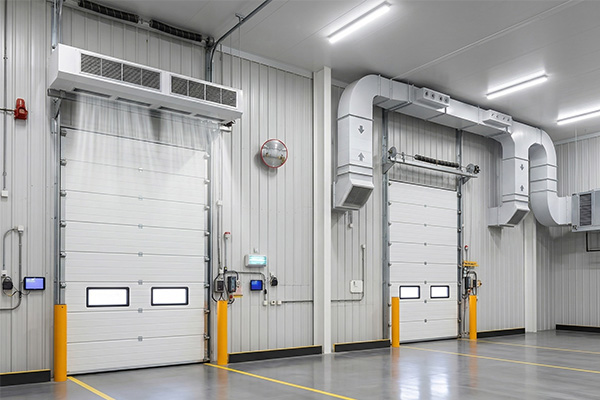
يتم تصنيع industrial insulated sectional door serves as the primary barrier for your facility. For a bottled water plant, temperature control and cleanliness are non-negotiable.
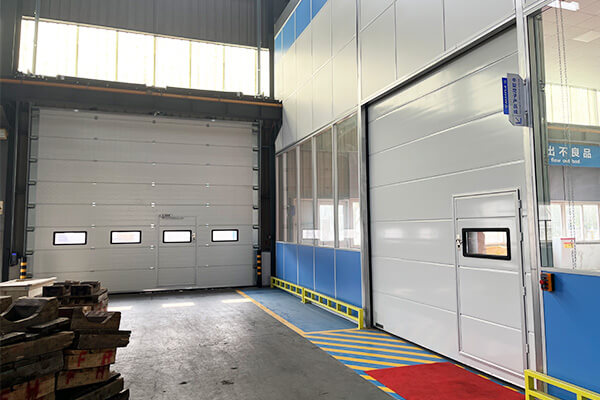
These doors are constructed with a thick layer of high-density polyurethane foam, providing an excellent R-value (thermal resistance) to minimize heating and cooling losses. Furthermore, they feature superior perimeter sealing. This edge-to-edge tight seal ensures that when the door is closed, the internal environment remains absolutely clean and completely isolated from external dust and pests.
منصات منحدرات الأرصفة الهيدروليكية
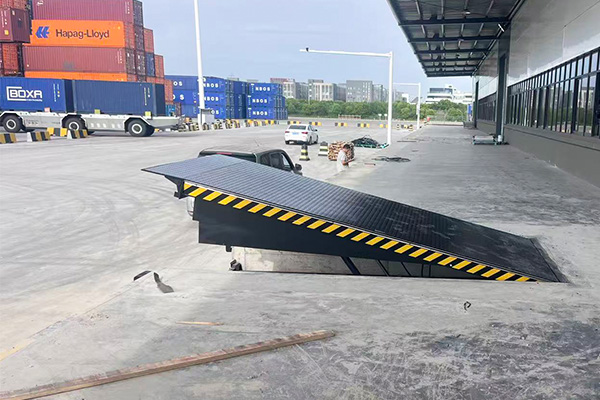
The hydraulic dock leveler acts as the heavy-duty weight-bearing component of the set.
Because bottled water pallets are exceptionally heavy, a highly durable transition bridge is required. The hydraulic leveler seamlessly bridges the gap and height difference between the warehouse floor and the truck trailer. It provides a smooth, stable surface that allows heavy-duty forklifts to load and unload heavy payloads efficiently and safely, preventing equipment damage and worker injuries.
ملاجئ الأرصفة الميكانيكية
The mechanical dock seal is the outer weather shield of your loading dock set.
When a delivery truck backs into the loading bay, it compresses against the mechanical dock seal. This action creates an airtight, tightly sealed tunnel between the truck and the building. This tight seal is crucial for beverage plants, as it completely blocks truck exhaust fumes, rain, dirt, and outside pollution from entering the facility while the industrial door is open for loading.
Quick Reference: Loading Dock Set Components
| Core Component | Primary Role in the Set | Key Benefit for Bottled Water Plants |
| Industrial Insulated Sectional Door | Core facility barrier | Polyurethane insulation ensures absolute cleanliness and climate control. |
| منصة تحميل هيدروليكية | Weight-bearing bridge | Provides safe, smooth transition for forklifts carrying heavy water pallets. |
| سدادة الرصيف الميكانيكية | Outer weather shield | Blocks exhaust fumes, rain, and pollution during active loading operations. |

Specifying the Right Loading Dock Set for Your Newly Built Plant
Designing a newly built facility provides a unique opportunity to optimize your logistics from day one. To avoid costly retrofits and ensure seamless operations, project managers and engineers must specify the loading dock set based on exact facility layouts and operational demands.
Custom Sizing and Pit Design
The greatest advantage of a newly built plant is the ability to pre-cast concrete pits accurately during the initial construction phase. To achieve a perfect installation, engineers must coordinate the following elements:
- Pit Dimensions: The concrete pit must be pre-designed to perfectly match the specific dimensions of the chosen hydraulic dock leveler.
- Door Openings: The width and height of the wall opening must be customized to accommodate the specific truck fleet (e.g., standard trailers vs. high-cube vans) used by the water plant.
- Seal Alignment: Proper dimensional planning ensures the mechanical dock seal fits flush against the exterior wall and aligns perfectly with the industrial door.
Accurate pre-planning guarantees a seamless fit for the entire loading dock set, maximizing weather-sealing efficiency and preventing expensive structural modifications later.
Durability for High-Frequency Operations
Bottled water plants require massive, continuous daily shipments. Standard commercial doors and levelers will quickly wear out under this relentless cycle. To guarantee a low failure rate and uninterrupted logistics, the entire set must be specified for high-frequency use:
- Thick Steel Construction: Specify hydraulic dock levelers reinforced with high-tensile, thick steel plates to continuously withstand the dynamic impact of heavy forklifts carrying water pallets.
- High-Cycle Springs: The industrial insulated sectional doors must be equipped with heavy-duty torsion springs rated for maximum daily cycles, preventing premature door failure.
- Tear-Resistant Seals: Choose mechanical dock seals made from high-density, tear-resistant industrial fabric to endure the constant friction of reversing trucks.
Prioritizing industrial-grade durability significantly reduces long-term maintenance costs and operational downtime.
الخلاصة
For a newly built bottled water plant, utilizing high-standard, fully customized loading and unloading dock systems can enhance operational efficiency. By perfectly integrating an industrial insulated sectional door, a robust hydraulic leveler, and a tight mechanical seal, you guarantee absolute food safety while maximizing your logistical efficiency.