월 - 토 : 오전 9시 - 오후 7시 일요일은 휴무입니다.

Efficient loading dock operations are the backbone of smooth supply chain management, and dock levelers play a critical role in ensuring this efficiency. These essential pieces of equipment bridge the gap between a dock and a trailer, facilitating the safe and seamless transfer of goods. But what is a dock leveler, and why are they vital to modern logistics? This article explores the world of dock levelers, explaining their purpose, functionality, and benefits for loading dock operations. Whether you’re a facility manager, logistics, or just curious about this aspect of material handling. This guide provides all the answers for a logistics manager and any other individuals interested in material handling

Contents
- 1 What is a Dock Leveler?
- 2 Types of Dock Levelers
- 3 Key Features and Benefits
- 4 How Does the Hydraulic Dock Leveler Work?
- 5 Applications of Dock Levelers
- 6 Choosing the Right Warehouse Dock Leveler
- 7 Conclusion
- 8 FAQS
- 8.1 What is a dock leveler used for?
- 8.2 What are the different types of dock levelers, including pit levelers and edge of dock leveler options?
- 8.3 How does a mechanical dock leveler differ from powered dock levelers and hydraulic levelers?
- 8.4 When should I choose a powered dock or powered dock leveler over manual dock plates?
- 8.5 What is a pit leveler and what are the advantages of pit-style levelers in a dock area?
- 8.6 How do vertical dock levelers and vertical leveler options help seal the trailer and control dock height?
- 8.7 What factors should be considered when choosing the right dock leveler and determining dock leveler capacity?
- 8.8 What are common types of dock levelers used with trailers and how do dock plates and dock boards fit into operations?
What is a Dock Leveler?
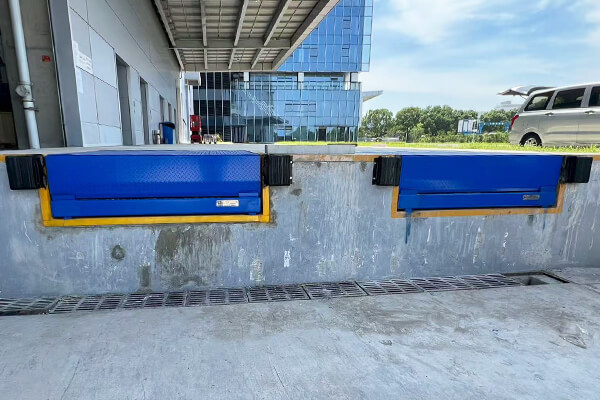
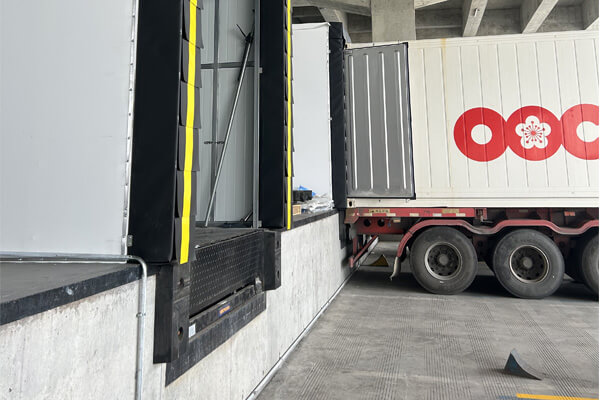
A dock leveler is a platform installed at a loading dock to bridge the gap between a warehouse floor and a truck bed. It ensures a smooth and safe transition for forklifts, pallet jacks, and workers by compensating for differences in height and distance. Dock levelers enhance the efficiency and safety of loading and unloading goods, making them a vital component of modern logistics operations.
Key Functions of Dock Levellers in Loading Bay Area
Loading dock levelers play a critical role in optimizing the functionality and safety of loading bay areas.
Accurate Bridging of Height Gaps
Dock levelers use hydraulic or mechanical systems to adjust to the height gap (usually 50-300mm) between loading docks and truck beds and create a stable transport bridge. This ensures that forklifts and other Material Handling Equipment have passage across the height-adjustable bridge.
All-round Safety Features
To provide full protection, dock levelers are designed with anti-slip platforms (coefficient of friction ≥ 0.8), lip locks, and fall protection systems. It can eliminate the possibility of a forklift rollover, cargo sliding off the dock leveller, or the unintentional collapse. Heavily cushioned rubber bumpers also mitigate the impact force of a truck during docking to reduce equipment damage.
Doubled Loading/Unloading Efficiency
Replacing manual boarding planks, dock levelers cut single-connection time from 5-8 minutes to less than 1 minute. Combined with automatic lip extension, they boost loading speed by 30%, meeting the demand for 24/7 high-frequency operations in warehouses and distribution centers.
Scenario Adaptability & Environmental Protection
Dock levelers support round-the-clock operations; outdoor docks can be paired with rainproof structures. For cold chain applications, they can integrate with warehouse doors to minimize cold air leakage. For hazardous material handling, they can be configured to meet explosion-proof safety standards.
Types of Dock Levelers
Mechanical Dock Levelers
- Operation: Economical and manually operated using a pull chain. The operator walks the deck back to its position.
- Features:
- Lip Drive for positive lip extension.
- Structural steel construction with “C” channels and “I” beams.
- Multi-spring mechanism for extreme float conditions.
- Applications: Basic loading dock operations.
Hydraulic Dock Levelers
- Operation: Push-button activated with hydraulic cylinders for raising and lip extension.
- Features:
- In-line velocity fuses for safety (prevents free fall).
- Low maintenance and high durability.
- Optional features like barrier lips and sliding toe guards.
- Applications: High-volume and fast-paced environments.
Edge-of-Dock Levelers
- Operation: Mounted on the dock face, suitable for operations with minimal height differences.
- Features:
- Compact and easy to install.
- Ideal for small-scale operations.
- Applications: Facilities with limited space or budget constraints.
Telescopic Lip Dock Levelers
- Operation: Advanced levelers with a telescopic lip for precise positioning.
- Features:
- Suitable for varying vehicle sizes.
- Enhanced safety and operational efficiency.
- Applications: High-precision loading and unloading tasks.
- Vertical Storing Dock Leveler
- Operation: The core distinction of a vertical storing dock leveler is its storage position. When not in use, the leveler rests vertically behind the dock door. This allows the dock door to close directly onto the pit floor, creating a tight seal impossible to achieve with a standard pit leveler. This single design feature is the source of its most significant benefits.
- Features:
Upright Storage: The leveler is stored inside the facility, protecting it from the elements and potential impact from vehicles.
Hydraulic Operation: Powered by hydraulic cylinders for smooth and reliable movement of the deck and lip.
Complete Seal Capability: Allows the overhead dock door to create a tight seal with the floor, preventing energy loss and contamination
Exterior Dock Levelers
- Operation: Modular, self-standing units installed outside the building.
- Features:
- No need for concrete pits.
- Energy savings of up to $2,500/year per dock.
- Easily detachable and relocatable.
- Applications: Facilities looking to save space and energy.

Key Features and Benefits
Safety Enhancements
Safety is the primary function of dock levelers. Through multi-layer structural designs and protective mechanisms. They eliminate accident risks caused by height differences between loading docks and truck beds.
Anti-slip & Locking Protection: The dock leveler platform surface features a diamond-patterned texture (coefficient of friction ≥0.8), preventing cargo slippage even in wet or oily conditions. Equipped with lip locks and emergency stop valves. The lip can automatically lock if the truck moves unexpectedly, avoiding the platform detaching from the truck bed.
Overload & Fall Protection: Hydraulic dock levelers are built with an integrated fall-prevention system that locks the platform within 0.5 seconds to prevent rapid collapse. Heavy-duty models (load capacity ≥5,000kg) are also fitted with overload sensors. It can automatically cut off power when overloaded to protect the equipment structure.
Efficiency Improvements
Rapid Operation: Hydraulic dock levelers feature a response time of ≤3 seconds and automatic lip extension (extension length: 150-300mm), eliminating the need for manual boarding planks. The single loading/unloading connection time is reduced from 5-8 minutes (with traditional manual planks) to less than 1 minute.
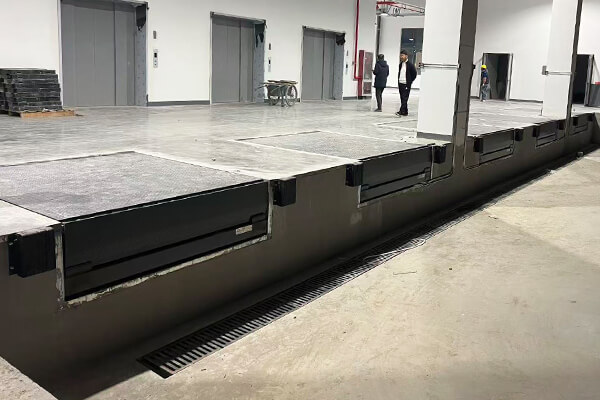
Continuous Operation Support: Pit-mounted dock levelers are flush with the warehouse floor, allowing forklifts to drive directly from warehouse aisles onto the platform without turning or adjusting routes. This enables seamless connectivity between the warehouse → platform → truck bed.
Durability and Load-Bearing Capacity
Pit-mounted dock levelers are engineered to withstand rigorous daily operations, ensuring exceptional durability even in demanding environments. Constructed from high-strength steel, these levelers are designed to support heavy loads, typically ranging from 25,000 to 45,000 pounds, depending on the model. According to the latest data from Google’s search engine, modern dock levelers often include reinforced structural components and advanced welding techniques, enhancing their longevity and reliability. These features make them capable of easily handling high-capacity forklifts and large cargo loads, providing a safe and efficient solution for material handling in warehouses and distribution centers.
How Does the Hydraulic Dock Leveler Work?
- Trailer positioning: Truck backs into dock, activates leveler via control panel.
- Deck lifting: Hydraulic cylinder/pneumatic system raises deck to exceed trailer height.
- Lip extension: Lip automatically extends onto trailer bed.
- Level adjustment: Deck lowers to match trailer floor, forming stable bridge.
Applications of Dock Levelers
Logistics and Distribution Centers
Logistics hubs and distribution centers are defined by high-volume, fast-paced operations. For these facilities, time is money. Dock levelers are in constant use, facilitating the rapid loading and unloading of countless trailers each day. A delay at one dock can create a bottleneck that affects the entire supply chain.
Manufacturing and Industrial Plants
Manufacturing facilities handle a wide range of materials, from small components to large, heavy equipment. Dock levelers in these environments must be versatile and durable. They are used to receive raw materials needed for production lines and to ship finished goods. The loads can be unevenly distributed or require specialized handling equipment.
Food and Beverage Processing
Hygiene and safety are paramount in the food and beverage industry. Loading docks in these facilities must meet strict sanitation standards to prevent contamination. The equipment used, including dock levelers, must be easy to clean and designed to avoid harboring pests or bacteria.
Vertical-storing dock levelers are an ideal solution for this industry. Unlike traditional pit levelers, these units are stored in an upright position inside the building. This allows the overhead dock door to close directly onto the pit floor, creating a superior seal. This design not only improves climate control and security, but also simplifies the process of cleaning the dock pit, helping facilities comply with food safety regulations.

Choosing the Right Warehouse Dock Leveler
When selecting the right dock leveler for your facility, there are several critical factors to evaluate. Each consideration ensures the dock leveler aligns with operational needs, complies with safety requirements, and enhances efficiency.
Weight Capacity
Modern dock levelers are built to handle a wide range of load capacities, typically ranging from 25,000 to over 100,000 pounds. It’s crucial to select a leveler that accommodates the heaviest loads regularly transported within your facility. Overloading a dock leveler can compromise safety and reduce its lifespan.
Dock Traffic
Assess the frequency and type of vehicle traffic, including forklifts, pallet jacks, or heavy trucks. High-traffic facilities may benefit from hydraulic or air-powered dock levelers. They are more durable and require less manual effort than mechanical ones.
Climate and Energy Efficiency
Facilities aiming to maintain strict climate control, such as food storage or pharmaceuticals, should prioritize dock levelers with advanced sealing capabilities. Reports show that energy-efficient dock seals and levelers can reduce energy costs by up to 25%, making them an essential choice for temperature-sensitive operations.
Pit Design and Installation Type
The choice between pit, edge-of-dock, and vertical-storing dock levelers often depends on your dock design and installation space. Vertical-storing dock levelers are ideal where hygiene and sealing are critical. Such as cold storage or industries regulated by strict food safety standards.
Operational Efficiency
Incorporating automated or hydraulic systems can significantly enhance efficiency, minimizing the time and effort required to operate the dock leveler. According to a recent market report, facilities that adopt automated dock equipment see a 30% improvement in loading/unloading times compared to manual systems.
Safety Features
Safety is paramount, with features such as non-slip surfaces, safety lips, and advanced control systems reducing accidents at the dock. OSHA compliance is a must, and modern dock levelers often incorporate fail-safe mechanisms to prevent equipment failure.
By understanding these factors and aligning them with your operational priorities and industry-specific requirements. You can select a dock leveler that optimizes safety, efficiency, and longevity for your facility.
Conclusion
From my perspective, dock levelers are essential for safe, efficient, and flexible loading operations in any facility. Investing in the right dock leveler not only improves productivity, but also enhances safety and long-term cost savings. I strongly recommend considering advanced dock leveler solutions to keep your operations running smoothly.
FAQS
What is a dock leveler used for?
A dock leveler is used to create a bridge between a loading dock and a transport vehicle (i.e. truck and trailers). The levelers are to mitigate and level height differences between the dock floor and the transport bed. The leveler provides a gentle and safe slope for hand and motorized transport equipment to smoothly move products. With a leveler, dock levelers are able to limit gaps in docked structures which increases safety, efficiency, product and equipment damage controls, and overall damage controls.
What are the different types of dock levelers, including pit levelers and edge of dock leveler options?
Different types of dock levelers include pit-style levelers (pit levelers), edge of dock levelers, vertical levelers, and mobile dock plates or dock boards. Pit levelers are recessed into the dock floor and provide a smooth transition, while edge of dock levelers mount at the loading dock edge and are often simpler to install. Vertical dock levelers lift the trailer for better sealing and are popular for energy control. Each type has unique loading dock leveler options that suit specific dock area layouts and workflow needs.
How does a mechanical dock leveler differ from powered dock levelers and hydraulic levelers?
Mechanical dock levelers use springs or counterbalance systems to operate and require manual activation, making them durable and cost-effective for moderate use. Powered dock levelers include hydraulic or air-powered levelers that use a hydraulic cylinder or air system to raise and lower the platform, offering smoother operation and reduced physical effort. Hydraulic levelers are a common type of dock leveler in high-cycle environments because they provide precise control and lower maintenance in many setups compared to mechanical dock leveler systems.
When should I choose a powered dock or powered dock leveler over manual dock plates?
Choosing the right dock leveler depends on frequency of loading and unloading, dock height variation, and safety needs. Powered dock levelers are recommended for facilities with high traffic, variable dock heights, or where quick, consistent adjustment is crucial. Manual dock plates and dock boards are suitable for low-cycle operations or temporary solutions. But they offer less control and lower dock leveler capacity than powered options, which can support heavier loads and frequent use.
What is a pit leveler and what are the advantages of pit-style levelers in a dock area?
A pit leveler is recessed into the dock floor so the platform sits flush with the dock, providing a smooth transition to the trailer without significant obstruction. Advantages of pit-style levelers include improved safety, better weather sealing at the loading dock door, and a more ergonomic surface for forklifts. However, pit levelers require more initial construction and maintenance of the pit, so consider dock floor conditions and long-term maintenance when selecting this type of dock leveler.
How do vertical dock levelers and vertical leveler options help seal the trailer and control dock height?
Vertical dock levelers raise the trailer’s rear to meet the dock face rather than extending a lip out to the trailer. Which creates a tight seal around the loading dock door and improves energy efficiency. Vertical leveler options are especially useful when dock height varies widely or when environmental control is a priority. They also help maintain a consistent dock height interface for forklifts, improving safe loading and unloading and reducing the need for dock bumpers in some installations.
What factors should be considered when choosing the right dock leveler and determining dock leveler capacity?
When choosing the right dock leveler, consider dock height range, frequency of loading, type of dock leveler required (pit or edge of dock levelers), vehicle types and trailer bed heights, and the dock leveler capacity needed to safely handle the heaviest loads. Also evaluate maintenance requirements, installation constraints in the dock area. And compatibility with existing loading dock equipment, such as dock bumpers, vertical dock levelers, or dock boards. These factors ensure efficient loading and unloading and long-term performance.
What are common types of dock levelers used with trailers and how do dock plates and dock boards fit into operations?
Common types of dock levelers used with trailers include mechanical dock levelers, hydraulic levelers, pit levelers, edge of dock levelers, and vertical dock levelers. Dock plates and dock boards are portable options used for temporary or low-frequency loading tasks and can be useful for small height adjustments or emergency situations. For regular trailer servicing, fixed dock levelers and powered dock leveler systems provide more durability, higher dock leveler capacity, and consistent performance for safe loading and unloading operations.