
월 - 토 : 오전 9시 - 오후 7시 일요일은 휴무입니다.



In modern industrial environments, door systems are a critical factor in the efficiency, safety, and energy performance of facilities. As warehouses, manufacturing plants, and logistics centers continue to expand their operations, industrial overhead sectional doors have become the preferred solution for managing large openings, while maintaining temperature control, ensuring safety, and supporting smooth workflow.
This article provides a comprehensive guide to industrial sectional doors, focusing on their design principles, performance features, and the reasons for their widespread adoption across various industries. From structural components and insulation properties to practical applications and selection considerations, we will explore the key factors that impact operational efficiency and long-term value.
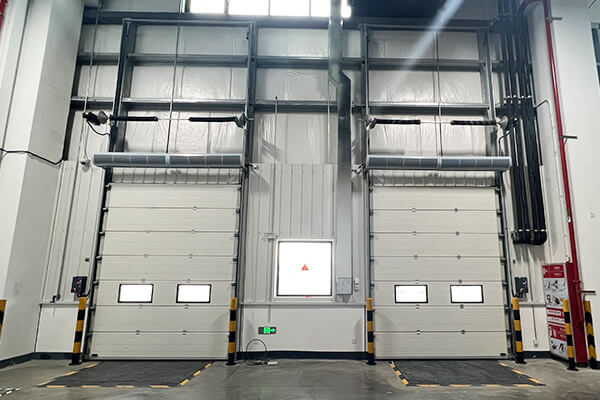
Contents
- 1 Performance of Industrial Sectional Doors: Engineering and Construction
- 2 Key Benefits of Using an Industrial Overhead Sectional Door
- 3 Case Study: Optimising Logistics with Overhead Sectional Doors in Mexico
- 4 Frequently Asked Questions (FAQ)
- 4.1 What makes a commercial garage door the right door for my industrial building?
- 4.2 How do insulated steel and polyurethane insulation improve performance?
- 4.3 Are commercial sectional doors or rolling steel better for high-traffic sites?
- 4.4 What are the benefits of a high performance sectional door versus standard steel doors?
- 4.5 When should I choose aluminum full-view doors or full-view glazing for visibility?
- 4.6 How do rolling steel and rolling steel doors compare in terms of security and maintenance?
- 4.7 Can commercial overhead sectional doors save on heating and cooling costs?
- 4.8 What door designs and steel panels are available for commercial and industrial applications?
- 4.9 How do I find the right overhead door company to install commercial overhead sectional doors?
Technical Specifications of Steel Sectional Doors
| Category | Item | Specifications |
| General | Max Dimensions | Width: 8,000mm – 12,000mm<br>Height: 6,000mm – 8,000mm |
| Wind Load | Class 3 – Class 5 (EN 12424, up to 120 km/h) | |
| Thermal Insulation | U-Factor: 0.35 – 1.2 W/m²K (Panel dependent)<br>R-Value: R-16 ~ R-26 | |
| Tightness | Air Permeability: Class 2 – 3 (EN 12426)<br>Water Tightness: Class 3 (EN 12425) | |
| Operating Speed | Standard: 0.2 – 0.4 m/s<br>High-Speed Models: 0.8 – 1.2 m/s | |
| Cycle Life | Standard Spring: 20k – 30k cycles<br>High Cycle: 50k – 100k cycles | |
| Panel Specs | Material | Double-layer PPGI Steel (0.4 – 0.6mm) or Aluminum |
| Core Insulation | High-density Polyurethane (PU) Foam<br>CFC-free, Fire Rated B2/B1 | |
| Density | 40 kg/m ³ – 45 kg/m ³ | |
| Thickness | Standard: 40mm / 50mm<br>Cold Storage: 80mm / 100mm | |
| Surface Finish | Stucco (Orange Peel), Woodgrain, Flush | |
| Standard Colors | RAL 9010 (White), RAL 9002 (Grey White), RAL 5010 (Blue), RAL 9006 (Silver) | |
| Hardware | Tracks | Hot-dipped Galvanized Steel (2.0mm – 3.0mm thick) |
| Lift Configuration | 1. Standard Lift (400-500mm headroom)<br>2. High Lift (Follows high wall)<br>3. Vertical Lift (Straight up)<br>4. Roof Pitch (Follows roof slope) | |
| Balance System | Torsion Springs (Shot-peened, Oiled/Galvanized) | |
| Safety | Spring Break Device | Ratchet system locks shaft if spring breaks (Standard) |
| Cable Break Device | Blade locks into track if cable snaps | |
| Safety Edge | Bottom sensor reverses door on contact (Rebound) | |
| Photo Eyes | Infrared beams stop operation if obstructed | |
| Finger Protection | Anti-pinch panel joint design | |
| Buffers | Spring buffers at track ends | |
| Drive System | Motor Type | Industrial Jackshaft Operator (IP54 / IP65 Rated) |
| Power Supply | 3-Phase (380V / 220V) or 1-Phase (220V) | |
| Controls | Standard: Push Button Box (Open/Close/Stop)<br>Optional: Radar, Loop Detector, Pull Switch, Remote | |
| Emergency Opener | Manual Chain Hoist or Quick Release Handle | |
| Options | Windows | Oval/Rectangular Acrylic or Full-Vision Aluminum sections |
| Pass Door | Wicket door with safety interlock sensor | |
| Seals | EPDM Rubber (Top, Bottom, Sides) | |
| Special Packages | Stainless Steel Hardware (Food/Corrosive)<br>Explosion-proof Motor (Chemical) |
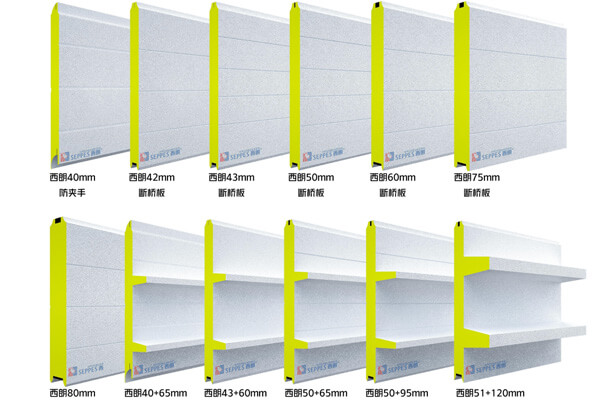
Performance of Industrial Sectional Doors: Engineering and Construction
When selecting industrial overhead sectional door, the aesthetic is secondary to the engineering. The performance of the door—its ability to withstand daily impact, resist weather, and maintain internal temperatures—is dictated by three core construction elements: the panel design, the insulation method, and the wind load rating.
Panel Construction: The Sandwich Design
The industry standard for high-performance facilities is the sandwich panel construction. Unlike hollow pan doors (a single sheet of steel) or bonded doors (steel with glued-in insulation), a true sandwich panel features a Steel-Polyurethane-Steel configuration.
In this design, the inner and outer steel skins are chemically bonded to the insulation core. This creates a monolithic composite unit. The result is a panel that is incredibly strong yet lightweight. For heavy-duty industrial applications, we typically recommend a 20-gauge or 24-gauge exterior steel skin, which provides superior resistance to dents and dings common in active loading dock environments.
Thermal Efficiency: The Insulation Core
Not all insulated doors are created equal. The difference lies in the core material and how it is applied.
- Polystyrene (The Budget Option): Polystyrene panels utilize rigid sheets of foam (similar to a coffee cup material) inserted between steel skins. While they provide adequate insulation for general warehousing, there can be small gaps between the foam and the steel, leading to potential delamination over time.
- Foamed-in-Place Polyurethane (The Performance Choice): This is the superior option for modern logistics. Liquid polyurethane is injected between the steel skins, where it expands to fill 100% of the cavity before hardening.
- Structural Rigidity: Because the foam bonds directly to the metal skins, it turns the door section into a solid, brick-like structural element. This makes the door significantly quieter and more resistant to bowing.
- Higher R-Values: Polyurethane is denser and provides a higher R-value per inch than polystyrene. A 2-inch polyurethane door can achieve R-values exceeding R-18, delivering maximum thermal efficiency for cold storage and climate-controlled facilities.
Thermal Breaks
Insulation alone is not enough. Steel is an excellent conductor of heat. Without a thermal break, the cold temperature from the outside steel skin will travel through the edge of the industrial overhead sectional door panel to the inside skin—a phenomenon known as “thermal bridging.”
High-performance sectional doors feature a continuous thermal break—a non-conductive rubber or composite strip that physically separates the interior and exterior metal skins. This separation is critical for two reasons:
- Energy Conservation: It ensures the R-value is actually effective.
- Moisture Control: It prevents the interior panel from “sweating” (condensation) or icing up in freezing conditions, which protects your hardware from corrosion and keeps the floor dry.
Wind Load Ratings: Protecting the Building Envelope
An industrial door covers a large surface area. In regions prone to hurricanes or high gusts, a standard door can buckle under pressure, leading to catastrophic building damage.
Engineered wind load ratings are not optional; they are a code requirement. Based on your geography and building design, your sectional door must be reinforced with specific strutting and heavy-duty hardware to meet ANSI/DASMA 108 standards. Selecting a door with the correct wind load rating ensures that even during a storm, your facility remains secure and operational.
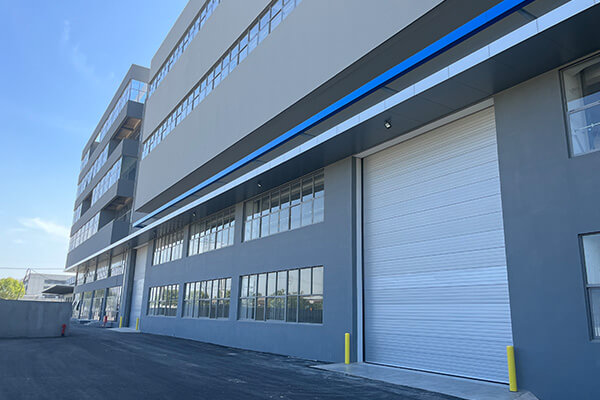
Key Benefits of Using an Industrial Overhead Sectional Door
An industrial overhead sectional door is not simply an access solution—it is a critical element in improving operational efficiency, energy performance, and safety within industrial and commercial buildings. Designed for demanding environments, sectional doors offer long-term value across logistics, manufacturing, and temperature-controlled facilities.
Space-Saving Vertical Operation
An industrial overhead sectional door opens vertically and stores neatly beneath the ceiling, unlike swing or sliding doors. This design delivers clear operational advantages:
- Maximises usable floor space inside and outside the building, allowing uninterrupted movement of forklifts, pallet trucks, and personnel.
- Improves the flow of traffic in loading bays, warehouses, and production areas, by removing the need for door swing clearance zone.
- Perfect for sites with low headroom or complicated ceiling structures, making overhead sectional doors a preferred option for contemporary warehouses and distribution centres.
High Durability and Long Service Life
Industrial sectional overhead doors are engineered for high-cycle, heavy-duty operation:
- Manufactured from galvanised steel or reinforced aluminium panels, offering strong resistance to impact, corrosion, and daily wear.
- Modular panel construction allows individual sections to be replaced, reducing maintenance costs and minimising downtime.
- With correct installation and routine servicing, a heavy-duty industrial sectional door can achieve a service life of 15 years or more, even in demanding industrial environments.
Enhanced Security for Industrial Buildings
Security is a key consideration for industrial facilities, and sectional doors provide reliable protection:
- Reinforced door panels and robust track systems help deter unauthorised access and resist forced entry.
- Compatible with access control systems, including key switches, remote controls, RFID readers, and interlocking systems.
- Designed to withstand high wind loads and harsh weather, ensuring stable operation and site security in exposed locations.
Improved Indoor Climate Stability and Energy Efficiency
Insulated industrial overhead sectional doors play a vital role in maintaining indoor environmental control:
- Insulated sandwich panels with high-density polyurethane cores significantly reduce heat transfer.
- Perimeter sealing systems prevent air leakage, moisture ingress, and dust penetration.
- Particularly suitable for cold storage, food processing, pharmaceutical, and climate-controlled warehouses, where stable temperatures are essential.
- Effective insulation and sealing can help reduce energy consumption by up to 30% in temperature-sensitive operations.
Customised Flexibility for Different Industrial Applications
One of the strongest advantages of industrial overhead sectional doors is their adaptability:
- Custom sizes and lift configurations (standard lift, high lift, vertical lift) to suit any building structure.
- Optional features such as vision panels, integrated pedestrian doors, surface finishes, and colour matching to meet functional and aesthetic requirements.
- Motorised operation and smart control integration support automated workflows and improve operational efficiency.
Due to their space efficiency, durability, security, thermal performance, and high customization, industrial overhead sectional doors remain one of the most reliable and cost-effective access solutions for European industrial facilities.
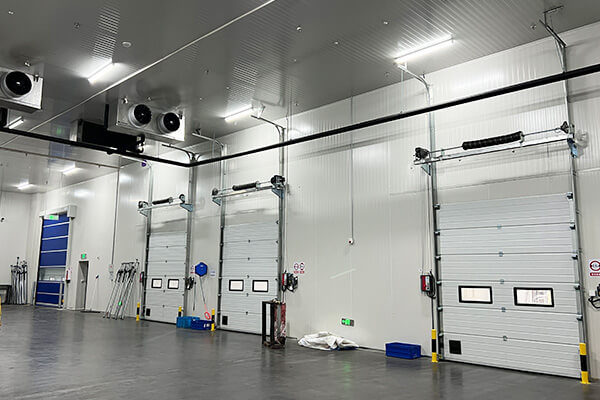
Case Study: Optimising Logistics with Overhead Sectional Doors in Mexico
A multinational logistics corporation recently expanded its operations with a state-of-the-art distribution centre in Central Mexico. Serving as a critical node for local distribution and North American trans-shipment, the facility manages high-volume throughput daily.
To ensure operational excellence, the project team required a door system that balanced speed, safety, and strict environmental control. The primary objectives were:
- Minimise turnaround times for loading and unloading.
- Maintain strict climate control via high thermal insulation.
- Ensure compliance with European safety and performance standards (CE/EN 13241).
The Solution: The facility deployed high-performance Industrial Overhead Sectional Door across all main access and loading bays.
Implementation & Technical Specifications
The project utilized a customized sectional door system designed for heavy-duty industrial use. Key technical features included:
- Insulation: High-density Polyurethane (PU) sandwich panels (40–50 mm thick) for superior thermal resistance (R-Value).
- Sealing: Full-perimeter EPDM weather seals to minimise air infiltration and heat loss.
- Space Saving: A vertical lift track configuration, allowing the door to retract straight up, maximising usable floor space around the loading bay.
- Automation: Electric drive systems integrated with safety sensors and auto-close logic.
- Accessibility: Integrated vision panels (windows) and wicket doors for safe pedestrian access.
Performance Results (6-Month Post-Installation Data)
Six months after deployment, the facility manager reported significant improvements compared to the legacy system:
Operational Efficiency
- 20% Reduction in average loading/unloading times.
- Impact: Faster vehicle turnaround and reduced manual intervention.
Climate Stability
- Temperature fluctuation reduced by ±1–2 °C near loading zones.
- Impact: Critical protection for temperature-sensitive goods in pre-cooling areas.
Energy & Safety
- 15–25% Reduction in HVAC energy consumption due to superior insulation.
- Impact: Lower operational costs and a reduced carbon footprint.
- Enhanced site safety via automated sensors, reducing the risk of workplace accidents.
Customer Feedback
“Implementing automated industrial overhead sectional doors has not only accelerated our workflow but provided a robust solution for our temperature-controlled operations. In a high-traffic environment, the reliability and insulation of these doors have directly improved our bottom line.”
— Facility Manager, Logistics Centre
Industrial overhead sectional doors are essential for modern industrial facilities, offering efficiency, safety, and energy performance. These warehouse doors, with their insulated sandwich panels and robust construction, ensure durability, security, and climate control. They save space with vertical operation, reduce energy costs by up to 30%, and are customizable for various applications. Their high performance makes them ideal for logistics, manufacturing, and temperature-sensitive environments.
Frequently Asked Questions (FAQ)
What makes a commercial garage door the right door for my industrial building?
Choosing the right door for your business means balancing durability and energy savings, door size, and the range of industrial door designs available. Commercial garage doors and commercial sectional doors such as insulated steel or sectional steel models offer strength and energy efficiency for commercial and industrial applications. Consider steel panels or aluminum full-view doors for visibility and glazing options, and look for series doors like an energy series or a high performance sectional door if heating and cooling and long-lasting performance are priorities.
How do insulated steel and polyurethane insulation improve performance?
Insulated steel doors with polyurethane insulation provide excellent thermal resistance, reducing heating and cooling costs and improving energy efficiency in commercial applications. Polyurethane insulation bonds to steel panels to increase structural strength and contributes to durability and energy savings—important when evaluating commercial overhead sectional doors, rolling steel doors, or a series high performance product for your facility.
Are commercial sectional doors or rolling steel better for high-traffic sites?
For high-traffic commercial and industrial sites, both commercial sectional and rolling steel doors have advantages. Commercial sectional doors provide fast operation, better insulation, and options like full-view glazing for visibility, while rolling steel doors and rolling steel units excel in compact headroom situations and security. The best doors depend on required opening frequency, insulation needs, and available headroom—consult an overhead door company to compare commercial overhead and commercial overhead sectional doors.
What are the benefits of a high performance sectional door versus standard steel doors?
High performance sectional doors are engineered for frequent cycles, speed, and reliability, often with enhanced seals and materials for longevity. Compared with standard steel doors, a high performance sectional door can reduce downtime, improve climate control by minimizing air infiltration, and offer options such as glazing, insulated steel construction, and polyurethane cores for improved strength and thermal performance in commercial applications.
When should I choose aluminum full-view doors or full-view glazing for visibility?
Aluminum full-view doors or full-view glaze panels are ideal where natural light and visibility are priorities—loading docks, showrooms, and retail bays benefit from improved visibility while maintaining a sleek appearance. For commercial and industrial environments, consider aluminum full-view doors combined with robust framing and options for energy series insulation or tempered glazing to balance visibility with durability and climate control.
How do rolling steel and rolling steel doors compare in terms of security and maintenance?
Rolling steel doors offer excellent security and require relatively simple maintenance; they are often preferred for warehouses, service entrances, and high-security commercial garage doors. Rolling steel models resist forced entry and debris impact and are available in insulated and non-insulated varieties. Regular lubrication, spring checks, and periodic inspections by an overhead door company keep rolling steel doors long-lasting and reliable.
Can commercial overhead sectional doors save on heating and cooling costs?
Yes—commercial overhead sectional doors designed with insulated steel panels and polyurethane insulation significantly reduce heat transfer, improving heating and cooling efficiency. Choosing a door from an energy series or a series high performance line can deliver better seals and thermal breaks, reducing HVAC load for commercial applications and providing measurable energy savings.
What door designs and steel panels are available for commercial and industrial applications?
Manufacturers offer a wide range of industrial door designs, from traditional steel panels and sectional steel profiles to aluminum full-view and glazed options. Series doors such as Extreme™ Series or specialized high performance sectional door lines provide choices in panel style, insulation, and surface finishes. Select designs based on aesthetics, required durability, and operational needs for doors for your business.
How do I find the right overhead door company to install commercial overhead sectional doors?
Look for an overhead door company with experience installing commercial sectional doors, commercial overhead doors, and rolling steel systems across commercial and industrial applications. Verify certifications, references, and service capabilities for maintenance and emergency repairs. Ask about available product lines—insulated steel, energy series, or full-view aluminum doors—warranties, and recommendations for the right door size and model to match strength and energy efficiency goals.
 Korean
  English
  Arabic
  Spanish (Mexico)
  French
  Russian
  Uzbek
Uzbek  Japanese
  Indonesian
  Spanish (Peru)
  Spanish (Venezuela)
  Spanish (Costa Rica)
  Spanish (Ecuador)
  Spanish (Argentina)