
Contact us WhatsApp: 8618036828007


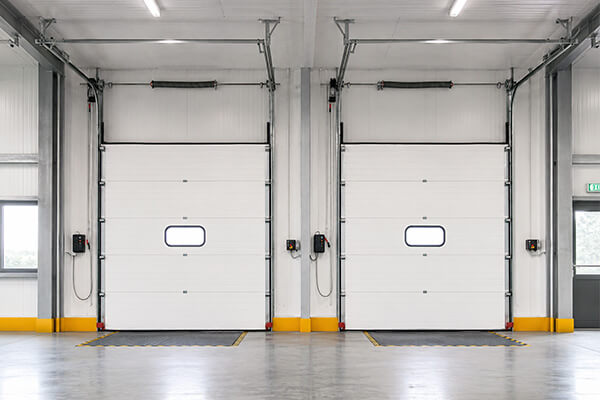
For modern warehouses, factories, logistics centers, and commercial buildings, choosing the right overhead door is not only about opening and closing an entrance. It also affects space utilization, traffic efficiency, safety, insulation, and long-term operating costs. A high lift overhead door is a practical solution for buildings with extra headroom above the door opening. Compared with a standard lift door, a high lift system allows the door panels to travel vertically higher before turning horizontally under the ceiling. This design helps keep more internal space clear and reduces interference with forklifts, trucks, ceiling equipment, lighting, and storage systems.
For industrial facilities that require better clearance and a more professional access solution, a high lift sectional door can be an efficient and durable choice.
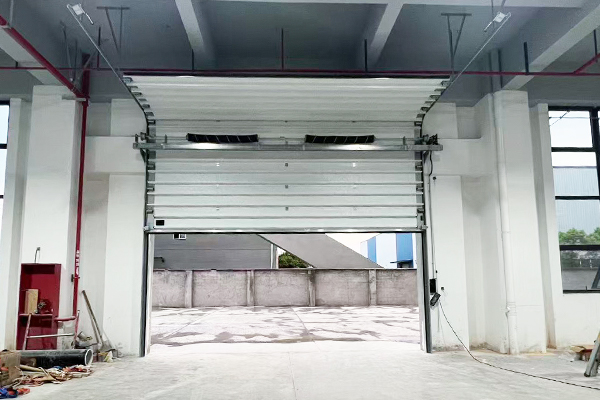
What Is a High Lift Overhead Door?
A high lift overhead door is a type of industrial sectional door that moves upward along vertical tracks and continues rising higher than a standard lifting door before curving back into the building. The door is usually made of multiple horizontal panels connected by hinges, allowing it to move smoothly along a customized track system.
Unlike a standard lift sectional door, which turns horizontally shortly after the door opens, high lift track system allows the door to rise higher along the wall. This makes it suitable for buildings with high ceilings, tall equipment, forklift traffic, or special interior layout requirements.
How Does High Lifting Sectional Door Work?
A high lifting sectional door operates through a heavy-duty, coordinated system of panels, guide tracks, rollers, torsion springs, and an industrial motor.
Here is a step-by-step breakdown of its mechanical movement:
- Vertical Ascent: When activated, the sectional panels move straight upward along the vertical side tracks.
- Extended Lift (The Key Difference): Unlike standard doors that curve horizontally right above the opening, high lift panels continue traveling vertically up the wall for a significantly longer distance.
- Horizontal Transition: Once the door reaches the engineered high lift clearance, the track curves and guides the panels to rest horizontally beneath the ceiling.
Key Support and Control Systems:
- Counterbalance: A robust torsion spring system and cable drums counterbalance the weight of the heavy panels, ensuring smooth, low-friction operation.
- Smart Automation: Powered by an industrial operator, the door can be customized with various access controls, including push buttons, remote controls, pull switches, and radar sensors.
- Advanced Safety: Photoelectric sensors and bottom safety edges are easily integrated to prevent accidents during closing.
The Bottom Line: This structural design makes the high lift sectional overhead door an ideal solution for high-frequency industrial environments where safety, durability, and maximum operational clearance are critical.
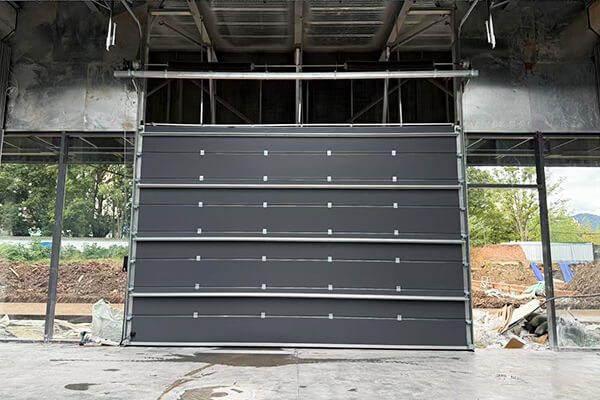
High Lift Overhead Door vs. Standard Lift vs. Vertical Lift: Which is Best?
Choosing the right track system is one of the most important steps when selecting an industrial sectional door. The most common options include standard lift, high lift, and vertical lift.
| Track System Type | Door Movement & Track Design | Best Industrial Applications |
| Standard Lift | Rises vertically for a short distance before quickly curving horizontally beneath the ceiling. | General commercial buildings, standard warehouses, and workshops with limited overhead space. |
| High Lift | Travels higher up the wall vertically before turning horizontally, maximizing ceiling clearance. | High-ceiling manufacturing plants, logistics centers, automotive shops, and active forklift zones. |
| Vertical Lift | Travels completely straight up the wall parallel to the opening with no horizontal track layout. | Heavy industrial sites, loading docks, and facilities utilizing overhead bridge cranes. |
A Closer Look at Your Options:
- Standard Lift Sectional Door: This is the most cost-effective and universally common track system. It is perfectly suited for general buildings with standard ceiling heights, where maximizing vertical clearance is not a primary concern.
- High Lift Overhead Door: A high lift overhead door acts as the perfect middle ground. You should choose this option when your facility has extra vertical space above the opening, but not enough for a full vertical lift. By traveling higher up the wall before turning inwards, a high lift overhead door keeps the door tracks out of the way, freeing up critical ceiling space for HVAC systems or heavy machinery.
- Vertical Lift Sectional Door: Designed for buildings with massive vertical headroom, vertical lift sectional doors move straight upward without ever curving into the room. Because they require no horizontal tracks, they are the go-to solution for specialized industrial environments and complex loading bays.
When Should You Choose High Lift Overhead Doors?
A high lift overhead door is not necessary for every building. It is most valuable when the building structure and daily operation require better use of vertical space.
When Your Building Has Extra Headroom
If there is enough space between the top of the door opening and the ceiling, a high lift track system can make better use of that space. Instead of placing the horizontal track close to the entrance, the door moves higher before turning inward.
This is especially useful for high-ceiling warehouses, factories, and logistics facilities where the internal space needs to remain open and efficient.
When Forklifts or Trucks Need Better Clearance
In industrial facilities, forklifts, pallet trucks, and loading vehicles often move through the entrance frequently. A standard overhead door track may occupy space near the opening, while a high lift system can provide better clearance.
For loading areas, shipping zones, and receiving areas, sectional lifting door helps improve traffic flow and reduce interference with daily operations.
When Ceiling Equipment Must Be Avoided
Many industrial buildings have lights, pipes, ventilation ducts, sprinkler systems, cranes, or storage racks near the ceiling. If the door track is not planned correctly, it may conflict with these systems.
A high lift overhead sectional door can be customized according to the building structure, helping avoid ceiling equipment and making the entrance layout more efficient.
When You Need a More Professional Industrial Entrance
Compared with traditional rolling doors or simple manual doors, a high lift sectional door provides a cleaner appearance, better sealing, stronger structure, and smoother operation.
For factories, warehouses, logistics centers, and commercial facilities, this type of door can improve both functionality and building appearance.
When Insulation and Sealing Are Important
A high lift sectional door can be equipped with insulated panels and sealing strips. This helps reduce heat transfer, dust, wind, rain, and outside air exchange.
For temperature-controlled warehouses, food processing facilities, cold storage transition areas, and clean industrial environments, an insulated high lift overhead door can support better energy efficiency and environmental control.
Main Applications of High Lift Sectional Doors
Different industrial environments have unique operational requirements. The versatile track design of a high lift overhead door makes it the perfect fit for a wide range of facilities.
| Application Area | Core Facility Needs | High Lift Door Solutions & Benefits |
| Warehouses & Distribution Centers | Efficient goods movement, safe forklift access, and smooth shipping/receiving operations. | • Reduces overhead space interference. • Integrates seamlessly with dock levelers, shelters, and truck restraints for a complete loading bay solution. |
| Manufacturing Plants | Large, durable openings to move heavy machinery, raw materials, and finished goods. | • Saves valuable ceiling space for production equipment. • Built with a strong panel structure and stable tracks for frequent use in demanding environments. |
| Logistics Facilities | High-traffic stability, fast-paced vehicle movement, and a clean internal layout. | • Delivers safe, easy operation for high-frequency cycles. • Customizable for large openings to maximize loading efficiency. |
| Automotive Workshops & Service Centers | Extra vertical clearance for accommodating large trucks and operating interior vehicle lifts/hoists. | • Keeps the track system out of the way, maximizing usable indoor overhead space and ensuring safe lifting operations. |
| Cold Storage & Temperature-Controlled Areas | Strict climate control, minimal air leakage, and reduced energy loss. | • Utilizes advanced insulated sectional door panels. • Combined with premium weather sealing to maintain consistent internal temperatures. |
Key Factors Before Ordering High Lift Sectional Overhead Doors
Door Opening Size
The first step is to confirm the clear opening width and height. These dimensions determine the door panel size, track structure, spring system, and motor selection.
Available Headroom
Headroom is the distance from the top of the door opening to the ceiling or nearest obstacle. A high lift sectional door requires more headroom than a standard lift door.
The more available headroom there is, the higher the door can travel vertically before turning horizontally.
Sideroom and Backroom
Sideroom refers to the space on both sides of the door opening. Backroom refers to the depth available inside the building for the horizontal tracks. Both are important for installation.
If the building has limited sideroom or backroom, the manufacturer may need to adjust the track design or operator position.
Door Panel Thickness
Industrial sectional doors can use different panel thicknesses depending on insulation, strength, and application requirements. Insulated panels are commonly used in warehouses, factories, cold storage areas, and energy-saving buildings.
Track Type
Track design should match the building structure. Common options include standard lift, high lift, vertical lift, low headroom lift, and follow-roof lift. For buildings with high ceilings and special clearance needs, a high lift track system is often recommended.
Motor and Control System
For automatic operation, the motor should match the door size, weight, opening frequency, and power supply. Control options can include push button, remote control, radar sensor, loop detector, pull switch, access control, or PLC signal connection.
Safety Configuration
Safety is important for every commercial overhead door. Common safety options include photoelectric sensors, bottom safety edge, spring break protection, cable break protection, emergency stop, warning light, and manual chain hoist.
What Factors Affect The Cost Of High-Lift Overhead Doors?
The cost of high lift overhead door depends on project requirements. A fixed price cannot be provided without checking the technical details.
Main cost factors include:
- Door width and height
- Panel thickness and insulation level
- High lift track height
- Motor and control system
- Safety accessories
- Window or pass door design
- Wind load requirement
- Surface color and finish
- Quantity
- Installation environment
- Packaging and shipping requirements
For an accurate quotation, it is recommended to provide the door opening size, available headroom, application area, required operation method, and project location.
Conclusion
High lift overhead door is an ideal choice for industrial buildings that need better clearance, stronger durability, and improved space utilization. Compared with a standard lift door, it allows the door to rise higher before turning horizontally, making it suitable for high-ceiling warehouses, factories, logistics centers, automotive workshops, and loading areas.
FAQs
How much headroom is required for a high lift overhead door?
Typically, a high lift track system requires at least 24 to 36 inches (2 to 3 feet) of clearance above the door header. However, the exact measurement depends on your specific building structure, the door’s total height, and the desired lift distance before the tracks turn horizontally.
Can a standard lift sectional door be converted into a high lift door?
Yes, standard track systems can be converted. This process requires a high lift conversion kit, which includes new vertical track extensions, longer lifting cables, new cable drums, and custom-wound torsion springs designed to handle the modified weight distribution. Because of the high spring tension, this conversion should always be performed by a trained professional.
How often should high lift industrial doors be maintained?
For high-frequency commercial environments, high lift doors should undergo a professional inspection at least twice a year. Maintenance should focus on lubricating the rollers and tracks, checking cable tension, and inspecting the torsion springs, as the extended vertical lift puts different stress on these components compared to standard doors.
What is the difference between vertical lift and high lift doors?
The primary difference lies in the track layout and the required building headroom. A high lift door moves vertically up the wall for an extended distance before eventually curving horizontally beneath the ceiling. It is used when a facility has extra overhead space, but not enough for the door to open entirely straight up. A vertical lift door, on the other hand, travels completely straight up parallel to the wall without any horizontal tracks. It requires the building’s interior headroom to be taller than the door’s total opening height.
What are the three types of overhead doors?
In industrial applications, overhead sectional doors are primarily categorized by their track systems into three main types:
- Standard Lift: The door rises a short vertical distance before immediately turning horizontally. It is the most common and cost-effective configuration for standard commercial buildings.
- High Lift: The door travels vertically for an extended distance before making the horizontal turn. This maximizes usable ceiling clearance for indoor machinery and forklift traffic.
- Vertical Lift: The door moves strictly upward along the wall with no horizontal tracks at all. This is typically reserved for heavy industrial facilities and loading docks with exceptionally high ceilings.