
Mon - Sat : 9am to 7pm Sunday is CLOSED


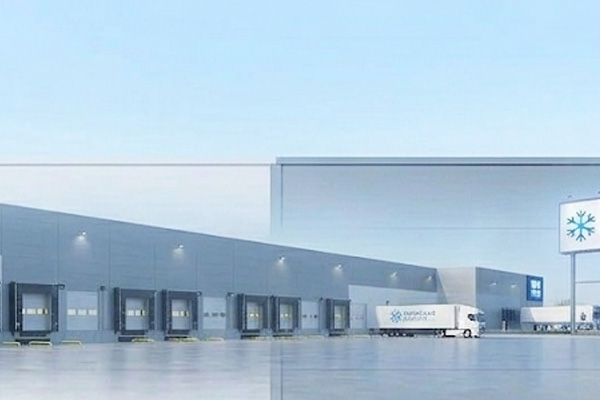
In the field of Cold Chain Logistics Management, the loading bay represents the most significant challenge for maintaining thermal integrity. Implementing a robust Loading Dock Solution is essential to prevent temperature fluctuations during the transition from warehouse to vehicle, which can lead to compromised product quality and excessive energy waste. For operators in food distribution, pharmaceuticals, and 3PL cold storage, securing this transition point is a critical requirement for operational efficiency and regulatory compliance.
The objective of this guide is to outline how strategic equipment selection can eliminate thermal bridging and achieve zero temperature loss at the dock. We will analyze the essential roles of high-performance hardware, including insulated sectional doors, inflatable dock shelters, and vertical dock levelers, in creating an airtight environment.
By exploring specific industry applications and technical standards. This article provides a roadmap for facility managers to reduce energy consumption through superior loading dock design.

Contents
- 1 Understanding Cold Chain Logistics Management: Definition and Scope
- 2 Core Loading Dock Solution for Cold Chain Logistics Management
- 3 How to Optimize Your Cold Chain Loading Bay Layout
- 4 Essential Equipment for Cold Chain Loading Docks
- 5 The Essential Accessories to Enhance Your Loading Dock Solution
- 6 Key Segments of the Cold Chain Logistics Industry
- 7 Benefits of Achieving Zero Temperature Loss in Cold Chain Logistics Management
- 8 FAQs
- 8.1 How do vehicle restraints improve safety at warehouse loading docks?
- 8.2 When should I choose a dock leveler versus a ramp or pit leveler?
- 8.3 What are the main types of dock levelers and their pros and cons?
- 8.4 How can I optimize loading dock operations for efficiency and safety?
- 8.5 What types of dock designs exist for different warehouse needs?
- 8.6 How do dock seals and shelters contribute to loading and unloading processes?
- 8.7 What safety features should a well-designed loading dock include?
Understanding Cold Chain Logistics Management: Definition and Scope
Cold chain logistics management is a specialized temperature-controlled supply chain designed to ensure that perishable goods logistics—such as fresh food, chemicals, and pharmaceuticals—remain within a specific, low-temperature range. This process spans from raw material sourcing and production to storage, refrigerated transport, and final delivery.
Unlike standard logistics, any break in this chain can lead to bacterial growth, chemical degradation, or total product loss.
Why is Loading Dock Equipment the Core of the Chain?
The loading bay is the most critical point because it is where the controlled environment of the warehouse meets the external atmosphere. It is the primary site for thermal energy exchange.
High-quality Loading Dock Solutions are essential for three reasons:
- Preventing Temperature Spikes: Every second a dock door is open, cold air escapes and warm air enters. Advanced equipment minimizes this exposure.
- Eliminating Contamination: Proper seals and shelters prevent dust, pests, and moisture from entering the facility during loading.
- Reducing Energy Costs: Without airtight insulation at the dock, refrigeration systems must work significantly harder, leading to massive increases in operational expenses.
Core Loading Dock Solution for Cold Chain Logistics Management
To achieve an effective Loading Dock Solution, facility managers must move beyond standard industrial hardware. In cold storage, every component must be engineered to minimize thermal conductivity and maximize airtightness.
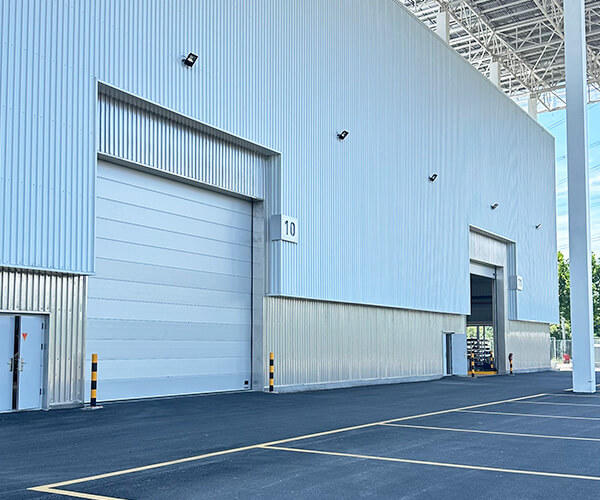
Insulated Sectional Door: The First Line of Defense
The insulated sectional door serves as the primary thermal barrier between the temperature-controlled interior and the external environment. These doors are typically constructed from high-density PU sandwich panels (Polyurethane), which provide superior structural strength and thermal resistance.
Panel Thickness and Performance: The choice of panel thickness—ranging from 40mm to 80mm—directly impacts the R-value (thermal resistance). While a 40mm door is standard for ambient or chilled areas. An 80mm panel is essential for deep-freeze environments to prevent energy transfer.
Comprehensive Sealing: Beyond the panels, the efficiency of the door relies on its Side, Top, and Bottom Seals. These flexible, cold-resistant gaskets ensure that when the door is closed. There are no gaps for air infiltration, maintaining a constant internal temperature.
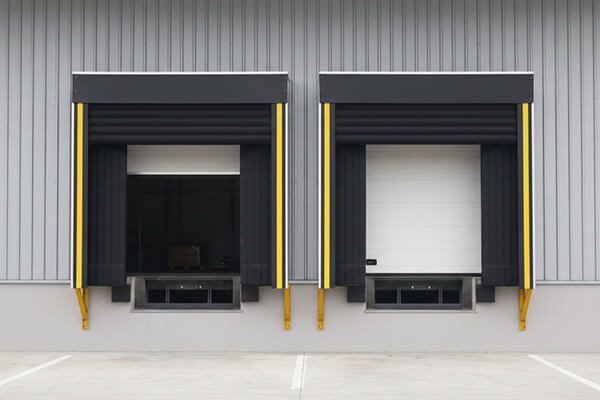
Inflatable Dock Shelters: Creating an Airtight Seal
While doors protect the building when closed, Inflatable Dock Shelters protect the facility during the loading process. Unlike traditional foam dock seals that rely on compression, inflatable models use high-pressure air to wrap around the trailer.
- Superior Airtightness: Once a vehicle is positioned, the bags inflate to create a tight seal against the sides and top of the truck. This eliminates the Thermal Bridge—the gap where cold air usually escapes.
- Vehicle Variation: This technology is particularly effective for facilities handling a wide vehicle variation. Whether the truck is a small delivery van or a large refrigerated trailer, the inflatable bags adjust to provide a custom fit every time.
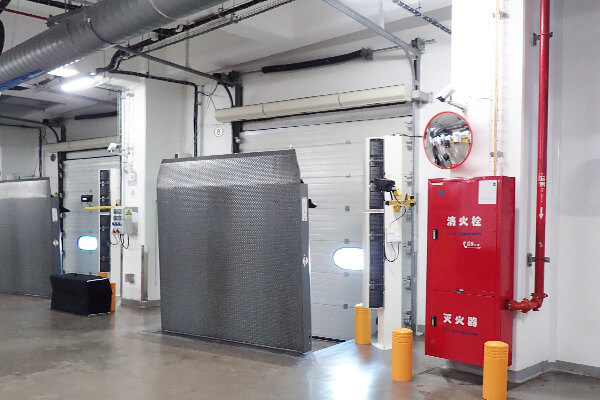
Vertical Dock Levelers
The Vertical Dock Leveler is widely considered the gold standard for modern cold chain facilities. Unlike horizontal levelers that require a pit—vertical levelers are stored upright inside the building.
- The Doors-Closed-First Mode: This leveler supports a drive-through application, allowing the truck to back into the dock and the shelter to inflate before the truck or warehouse doors are even opened.
- Optimized Pit Design: By storing the leveler vertically, the insulated door can close directly to the warehouse floor. This setup eliminates energy loss through the pit design, ensuring the cold chain remains unbroken.
Cold Chain Logistics Management: Sealing Efficiency & Thermal Loss Comparison Matrix
| Solution Set | Sealing Level | Thermal Bridge | Application |
|---|---|---|---|
| Basic: Mechanical Dock Shelter + Swing Lip Leveler | ★★☆☆☆ | High: A large amount of cold air escapes when the truck door is opened. | Constant temperature warehouse (10°C~15°C) |
| Standard: Foam Dock Seal + Telescopic Lip Leveler | ★★★☆☆ | Medium: Sealed by compressed foam, but gaps remain at the top. | Cold storage warehouse (0°C~4°C) |
| Professional: Inflatable Dock Shelter + Vertical Leveler | ★★★★★ | Very low: Inflatable sealing around the truck body, indoor door opening, zero temperature loss. | Deep-freeze / Pharmaceutical warehouse (below -20°C) |

How to Optimize Your Cold Chain Loading Bay Layout
The most efficient Loading Dock Solution is not about individual components, but how they function together as a unified system.
Creating a Sealed Thermal Tunnel
When Insulated Sectional Doors, Vertical Dock Levelers, and Inflatable Shelters are integrated, they form a Sealed environment. This configuration ensures that from the moment a truck arrives until it departs. The internal temperature of both the warehouse and the trailer remains protected from the outside elements.
Automated Interlocking Systems
To maximize both safety and efficiency, these components should be managed by an Interlocking system. This smart control logic ensures a strict operational sequence:
- The dock door cannot open until the Inflatable Shelter has achieved a full seal.
- The Vertical Dock Leveler cannot be deployed until the door is fully raised.
- The truck cannot depart until the leveler is stored and the door is safely closed.
Essential Equipment for Cold Chain Loading Docks
| Essential Equipment | Brief Description |
|---|---|
| Insulated Sectional Door | Made of high-density polyurethane sandwich panels, it serves as the primary barrier against heat transfer between indoor and outdoor areas when closed. |
| Inflatable Dock Shelter | It tightly wraps around trucks of various sizes via inflatable airbags, creating a fully airtight and thermal-bridge-free connection during loading and unloading. |
| Vertical Dock Leveler | Stored vertically indoors, it allows truck doors to be opened within a sealed environment, completely eliminating cold air leakage caused by pit-type structures. |
| High-Speed Cold Storage Door | Featuring ultra-fast opening and closing performance plus insulated curtain fabric, it is specially designed for high-traffic areas to minimize environmental exposure time. |
| Dock Interlocking System | Ensures sequential operation of doors, levelers and shelters through intelligent control logic, preventing temperature loss due to human error. |
| LED Loading Dock Light | Provides high-efficiency lighting for the interior of low-temperature enclosed trucks, ensuring safe operation for workers in sealed cold-chain tunnels. |
The Essential Accessories to Enhance Your Loading Dock Solution
In the precision-driven world of cold chain logistics management, the difference between a high-performing facility and an energy-draining one often lies in the details. While core equipment like Dock Levelers and Overhead Sectional Doors provide the foundation, a truly comprehensive Loading Dock Solution requires specialized accessories to eliminate the final 1% of thermal leakage and air infiltration.
Dock Seals & Perimeter Gaskets
Even the most advanced Insulated Sectional Door can be undermined by microscopic gaps between the door tracks and the building wall.
Technical Impact: Perimeter Gaskets and Dock Seals act as the final barrier against air infiltration. Without high-quality compression seals, where warm, moist air is sucked into the cold storage area, leading to frost buildup and evaporator strain.
The Advantage: These accessories ensure that the interface between the door and the facility remains airtight, significantly reducing BTU loss during the thousands of cycles a door performs annually.
Integrated Interlock Systems: Orchestrating Operational Integrity
Loading Dock Solution is only as effective as its operational sequence. Human error—such as opening a door before a truck is fully sealed—is a leading cause of temperature spikes.
How it Works: Integrated Interlock Systems create a programmed logic for the dock. For example, the Insulated Sectional Door cannot be raised until the Inflatable Dock Shelter is fully deployed and the truck is locked in place.
Efficiency Gain: By automating the sequence of operations, you minimize the duration of exposure between the refrigerated warehouse and the external environment, ensuring that the cold chain remains “closed” at all times.
LED Dock Lights: High Visibility, Zero Heat Footprint
Illumination is a safety requirement, but in cold storage, the type of light matters. Traditional halogen dock lights emit significant heat, which can interfere with local temperature sensors and add unnecessary load to the cooling system.
- The Solution: Industrial-grade LED Dock Lights are essential for cold chain environments. They provide crisp, clear visibility inside the trailer without generating heat.
- Performance: LEDs are ideally suited for low-temperature zones, as they have no “warm-up” period and offer a much longer lifespan in cold conditions compared to standard bulbs, reducing maintenance costs and energy consumption.
Heavy-Duty Dock Bumpers: Protecting the Thermal Envelope
The structural integrity of your loading dock is the first line of defense against temperature loss. A single impact from a heavy-duty trailer can misalign a door track or crack a wall panel, creating permanent air leaks.
- Structural Preservation: Heavy-Duty Dock Bumpers absorb over 90% of the kinetic energy from a docking vehicle.
- Long-Term ROI: By preventing damage to the Insulated Overhead Sectional Door and surrounding masonry, these bumpers ensure the sealing systems continue to fit perfectly. In cold chain management, preventing structural deformation is a critical preventive maintenance strategy to avoid long-term “energy bleeds.”
Key Segments of the Cold Chain Logistics Industry
To implement an effective Loading Dock Solution, it is essential to understand that different industries face unique thermal challenges. Tailoring equipment to specific market applications is the hallmark of professional Cold Chain Logistics Management.
Food & Beverage (F&B) Logistics
In the food and beverage sector, the primary challenge is high-intensity operation. Distribution centres for fresh produce, dairy, and meat products often face constant loading and unloading cycles.
- Operational Requirements: These facilities require equipment that supports high-frequency opening and closing while maintaining strict HACCP food safety compliance to prevent biological contamination.
- Equipment Focus: A combination of Insulated Sectional Doors for overnight security and High-Speed Doors for daytime operations is ideal. High-speed doors minimize the duration of air exposure, ensuring the internal temperature remains stable even during peak traffic hours.
Pharmaceutical & Life Sciences
The pharmaceutical industry represents the most demanding segment of perishable goods logistics. Vaccines, biological samples, and specialized medicines often require a “zero-tolerance” approach to temperature deviations.
- Operational Requirements: These products typically must be stored between 2°C to 8°C or in deep-freeze conditions below -20°C. Maintaining an unbroken cold chain is a legal and safety mandate.
- Equipment Focus: To eliminate thermal bridging, the use of Inflatable Dock Shelters is critical for an airtight seal. When paired with Vertical Dock Levelers, the facility can implement a “drive-through” process where the truck doors only open inside the sealed environment, ensuring a seamless, temperature-protected transition.
Cold Storage & 3PL
Third-party logistics providers (3PL) manage diverse inventories for multiple clients, meaning their facilities must be the most versatile in the Cold Chain Logistics Management industry.
- Operational Requirements: A 3PL warehouse must be capable of handling a vast vehicle variation, from small delivery vans to international shipping containers, all while maintaining maximum energy efficiency to protect profit margins.
- Equipment Focus: Versatility is key. Multi-functional loading platforms and intelligent sensor systems (such as automated interlocking controls) are essential. These systems ensure that the loading dock automatically adjusts to the specific vehicle type, minimizing human error and maximizing thermal performance across all client accounts.
Benefits of Achieving Zero Temperature Loss in Cold Chain Logistics Management
Implementing a high-performance Loading Dock Solution is an investment that yields measurable returns across energy, compliance, and product integrity. Achieving zero temperature loss is the benchmark for modern, sustainable warehousing.
Energy Efficiency: Substantial Cost Reduction
The most immediate impact of a sealed loading environment is the reduction in thermal gain. Statistics indicate that an optimized dock configuration—using Inflatable Dock Shelters and Insulated Sectional Doors—can reduce facility energy consumption by 20% to 30%.
By eliminating the escape of treated air, refrigeration compressors run less frequently and for shorter durations. This not only lowers monthly electricity bills but also extends the operational lifespan of expensive HVAC and cooling equipment.
Compliance: Meeting Global Standards
For facilities involved in Cold Chain Logistics Management, adhering to international safety and environmental standards is mandatory. A professional dock setup ensures you meet the following:
- HACCP & IFS: Proper sealing prevents temperature fluctuations and cross-contamination (dust, pests, and humidity), which are critical for Food Safety Management Systems.
- LEED Certification: Energy-efficient dock designs contribute significantly to LEED (Leadership in Energy and Environmental Design) credits, helping buildings achieve green building status and meet corporate ESG (Environmental, Social, and Governance) goals.
Product Quality: Protecting the Bottom Line
Maintaining a stable environment directly correlates with the shelf life of temperature-sensitive goods.
- Extended Shelf Life: By preventing “micro-breaks” in the cold chain during loading, products—especially fresh produce and pharmaceuticals—retain their quality for longer.
- Lowered Rejection Rates: Consistent temperature control reduces the risk of spoilage and condensation, leading to a significant decrease in client rejections and insurance claims.
In the competitive landscape of perishable goods logistics, the ability to guarantee product integrity from the warehouse to the final destination is a powerful differentiator.
FAQs
How do vehicle restraints improve safety at warehouse loading docks?
Vehicle restraints secure the truck to the dock to prevent unexpected movement during loading and unloading processes. Proper restraints reduce the risk of separation between the dock and the truck bed, minimizing the height gap between the dock and trailer and preventing rollaway incidents. Combined with dock seals and shelters and other safety equipment, vehicle restraints help meet the highest ANSI safety standards and improve loading dock safety and efficiency for workers and forklifts.
When should I choose a dock leveler versus a ramp or pit leveler?
Dock levelers bridge the gap and grade difference between the dock floor and the truck bed. Choose loading dock levelers when you need adjustable height and a smooth transition for forklifts moving goods. A pit leveler is installed in a recessed pit for a flush dock face, ideal for enclosed docks or high-volume loading and unloading operations. If you need mobile or temporary solutions, ramps may be used, but for long-term dock access and safety performance, hydraulic dock levelers or mechanical dock levelers are typically the right dock leveler for repeated use.
What are the main types of dock levelers and their pros and cons?
There are several types of dock levelers: hydraulic dock levelers, mechanical dock levelers and air-powered units. Hydraulic dock levelers offer smooth operation, high durability and minimal maintenance, making them suitable for high-frequency loading dock operations. Mechanical dock levelers are less expensive and simpler but require more physical effort or counterbalance mechanisms. Pit levelers provide a flush dock appearance and protect the dock edge, while specialized designs address unique dock positions and dock height variations. Select based on safety features, maintenance capacity and loading demands.
How can I optimize loading dock operations for efficiency and safety?
Optimizing loading dock operations starts with a well-designed loading dock that includes proper loading dock levelers, dock seals and shelters, vehicle restraints and clear dock areas. Implement standardized loading and unloading processes, train staff on safe loading practices and maintain safety equipment to prevent accidents. Ensure dock access is unobstructed, monitor dock positions to reduce waiting times, and use the right loading dock leveler for each truck type to minimize the height gap and improve efficient loading and unloading of goods.
What types of dock designs exist for different warehouse needs?
Different types of loading docks include flush docks, enclosed docks, sawtooth docks and vertical storing docks. Flush docks provide a level appearance and are often paired with pit levelers. Enclosed docks are used for climate control and secure loading. Sawtooth docks improve docking angle efficiency for multiple bay operations. Each dock type affects dock face layout, dock access, seal between the dock and truck, and decisions about overhead door placement and loading dock seals for safety and performance.
How do dock seals and shelters contribute to loading and unloading processes?
Dock seals and shelters create a tight seal between the truck and the dock, reducing energy loss and protecting goods from weather exposure during loading and unloading. They also help maintain a safe working environment by minimizing gaps that could compromise loading dock safety and by providing a barrier that supports secure loading and unloading operations. Proper sealing reduces contamination, improves climate control inside the warehouse loading docks and complements vehicle restraints and dock levelers for overall safety and efficiency.
What safety features should a well-designed loading dock include?
A well-designed loading dock should include vehicle restraints, dock levelers appropriate to the dock height, dock seals and shelters, clear dock areas, overhead door protection and safety equipment such as wheel chocks and warning lights.