
Mon - Sat : 9am to 7pm Sunday is CLOSED


From harvest to retail, bananas undergo a strictly controlled ripening process. Unlike standard cold storage, banana ripening is a precise biological procedure that requires tightly controlled conditions: a narrow temperature range, over 90% humidity, and effective ethylene containment. Even small climate fluctuations or seal leaks can cause uneven ripening, short shelf life, and direct financial losses. In this sensitive process, high-quality industrial doors are critical to maintaining stable environmental conditions.
This guide explains why specialized sectional doors and high-speed doors are essential precision tools for post-harvest quality control, rather than just basic building components. We will outline the key features to protect your crop yields, cut energy costs, and achieve consistent, perfect ripening results.
Contents
- 1 Why Specialized Industrial Doors are Vital for Ripening Rooms
- 2 The Core Solution: Insulated Sectional Doors
- 3 Key Features to Consider for Ripening Room Doors
- 4 High-Speed Doors vs. Sectional Doors: Which One Does Your Cold Chain Facility Need?
- 5 Technical Specifications for Professional-Grade Ripening Industrial Doors
- 6 Conclusion: Investing in Reliability for Better Yields
- 7 FAQs
- 7.1 What is a banana ripening room?
- 7.2 Does temperature affect banana ripening?
- 7.3 Where are industrial high-speed doors typically used?
- 7.4 High-Speed Roll-Up: How do rapid roll doors maintain safety and reliability in high traffic areas?
- 7.5 Can high speed overhead doors be used outdoors and withstand weather?
- 7.6 How do I choose the right high speed commercial door for my facility?
Why Specialized Industrial Doors are Vital for Ripening Rooms
Banana ripening is a precision-dependent process that differs significantly from standard cold storage. Achieving a consistent, high-quality product requires total control over the internal environment, making specialized industrial doors essential.
The Science of Ripening: Precision Control
To transform green bananas into a shelf-ready product, ripening rooms must maintain a strictly controlled atmosphere:
- Ethylene Containment: Ripening is triggered by ethylene gas. Specialized doors are designed with airtight seals to prevent this gas from escaping, ensuring the ripening process remains uniform across the entire batch.
- Temperature Stability: The ideal temperature for ripening must be kept steady between 13°C and 18°C. Specialized doors provide superior thermal insulation to prevent external heat from disrupting this narrow window.
The Cost of Inefficiency: Impact on Quality and Profit
Standard industrial doors often fail to meet these requirements, leading to three major areas of loss:
- Uneven Ripening: If the door seal is weak, gas levels and temperatures fluctuate. This results in inconsistent fruit quality, with some bananas ripening too fast while others remain green.
- Energy Loss: Poorly insulated or slow-moving doors allow chilled air to escape. This forces the refrigeration system to work harder, significantly increasing electricity costs.
- Product Shrinkage: Improper environmental control leads to moisture loss in the fruit. This shrinkage reduces the physical weight of the bananas and their market value, directly impacting your bottom line.
The Core Solution: Insulated Sectional Doors
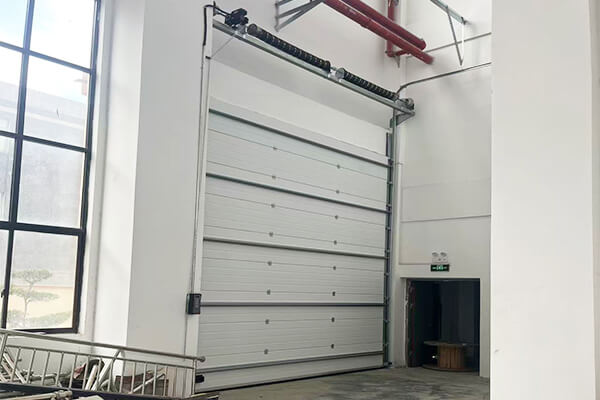
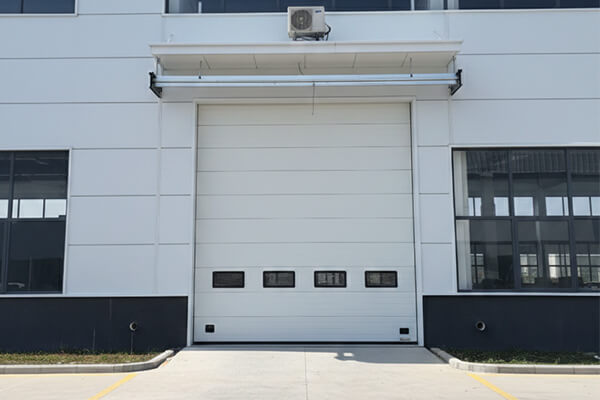
For the stationary ripening phase, the sectional door is the industry standard. These doors are engineered for maximum insulation and an airtight seal during the 4–7 day “lockdown” period.
Superior Gas-Tightness
A professional sectional door uses a multi-sided compression sealing system. EPDM perimeter gaskets create a laboratory-grade barrier that prevents ethylene gas leakage, ensuring 100% process control.
High-Density PU Insulation
Modern ripening facilities use sectional doors equipped with 40mm to 80mm high-density Polyurethane (PU) sandwich panels. This “Thermal Break” technology prevents condensation and drastically reduces refrigeration electricity costs.
Key Features to Consider for Ripening Room Doors
Superior Gas-Tightness & Sealing
The primary function of a banana ripening room is to contain ethylene gas at specific concentrations. Standard industrial doors often allow gas leakage, leading to uneven ripening and wasted chemicals.
- The Sectional Door Advantage: Unlike rolling doors, high-quality sectional doors use a multi-sided compression sealing system.
- Airtight Engineering: Professional-grade doors feature reinforced perimeter gaskets and EPDM bottom seals that create a laboratory-grade airtight environment, ensuring 100% ethylene containment throughout the 4–6 day ripening cycle.
Thermal Insulation & Energy Efficiency
Maintaining a steady temperature between 13°C and 18°C in high-humidity environments (90%+) is energy-intensive. Insulation performance is non-negotiable for operational ROI.
- PU Sandwich Panels: High-performance doors utilize high-density Polyurethane (PU) sandwich panels, typically 40mm to 80mm thick.
- Thermal Break Technology: These panels provide a low U-value (thermal transmittance), preventing “thermal bridging.” This keeps the cold in and the heat out, drastically reducing refrigeration energy consumption and preventing condensation on the door surface.
Opening Speed vs. Insulation Performance
Choosing between High-speed doors and an Insulated Sectional doors depend on your facility’s operational flow.
- Sectional Doors (The Seal): Best used during the stationary ripening phase. They offer maximum thermal protection and security when the room is “locked down.”
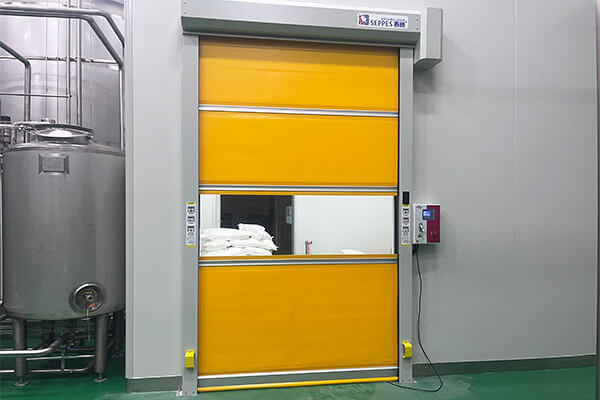
- High-Speed Doors (The Flow): Essential for high-traffic loading bays. With opening speeds up to 2.0m/s, they minimize “air exchange” during pallet movement, protecting the cold chain.
- The Hybrid Strategy: For world-class facilities, a dual-door system (an insulated sectional door for overnight sealing and a high-speed door for daytime logistics) is the industry standard for maximizing both productivity and energy savings.
High-Speed Doors vs. Sectional Doors: Which One Does Your Cold Chain Facility Need?
In a modern cold chain facility, choosing between a sectional door and a high-speed door is not about which is better, but which is right for the specific operational phase. Understanding their distinct roles is key to maintaining fruit quality and operational efficiency.
Insulated Sectional Doors
Sectional doors are the primary choice for the stationary phases of the banana ripening process. Since ripening rooms typically remain closed for 4 to 7 days at a time, the door must act as a high-performance barrier.
- Maximum Thermal Insulation: Constructed with thick, polyurethane-injected panels, these doors provide the highest R-value (thermal resistance), ensuring internal temperatures remain rock-steady.
- Static Security: When the room is “locked down,” sectional doors provide a rigid, mechanical seal that prevents both gas leakage and unauthorized access.
High-Speed Fabric Doors
While sectional doors excel at sealing, high-speed fabric doors are designed for movement. In the busy loading and unloading zones of a cold storage facility, speed is the best defense against thermal loss.
- Rapid Cycling: With opening speeds of up to 2.0 meters per second, these doors minimize the time the cold room is exposed to ambient air.
- Climate Retention: By reducing the “open-door” duration, high-speed doors prevent moisture from entering and cold air from escaping, which is critical during the rapid turnover of pallets.
Comparison Table of High-Speed and Sectional Doors
| Feature | Insulated Sectional Doors | High-Speed (Rapid) Doors |
| Primary Goal | Thermal Insulation & Gas-Tightness | Traffic Flow & Operational Efficiency |
| Best For… | Banana Ripening Rooms, Long-term Cold Storage, External Loading Docks. | High-traffic Corridors, Inter-zone Passageways, Loading Bays. |
| Mechanism | Rigid PU sandwich panels that slide overhead for maximum seal. | High-strength PVC or aluminum slats that roll up at high velocity. |
| Opening Speed | Standard (approx. 0.15–0.25 m/s) | Ultra-Fast (up to 1.5–2.0m/s) |
| Key Advantage | Prevents ethylene gas leakage and maintains a strict $+13°C$ to $+18°C$ ripening environment. | Minimizes air exchange time, significantly reducing energy loss during forklift passage. |
| Maintenance | Low frequency, focus on seal integrity. | High frequency (due to high cycle count), focus on safety sensors. |
The Hybrid Solution: The Modern Cold Chain Standard
For large-scale logistics parks and professional ripening centers, the “Dual-Door System” has become the industry benchmark. This hybrid approach uses both doors on a single opening to provide year-round efficiency.
- How it works: An insulated sectional door is installed on the exterior or interior for overnight security and maximum insulation during the long ripening cycle. A high-speed door is mounted in tandem for use during active loading hours.
- The Result: This combination offers the ultimate ROI—guaranteeing the airtight integrity needed for ripening while providing the logistical speed required for high-volume distribution. By using a hybrid setup, facilities can reduce energy consumption by up to 40% compared to using a single-door solution.
Technical Specifications for Professional-Grade Ripening Industrial Doors
To meet the rigorous demands of the global cold chain, ripening room doors must go beyond standard industrial requirements. High-performance doors are defined by their ability to provide an airtight seal while ensuring operational safety and smart connectivity.
Advanced Sealing Technology
For banana ripening, “airtight” is the minimum requirement. Professional doors utilize a multi-layered sealing architecture to prevent gas leakage and thermal loss.
- Dual-Side Perimeter Seals: High-grade doors feature double-track side seals made of wear-resistant EPDM or PVC. This creates a secondary air pocket that acts as an extra barrier against ethylene escape.
- Thickened Bottom Compression Seal: A reinforced, flexible bottom gasket is used to compensate for any slight irregularities in the warehouse floor, ensuring a 100% gas-tight closure at the most critical leakage point.
Integrated Safety Features
In high-traffic ripening facilities, safety and speed must coexist. Industrial doors are equipped with “active” safety systems to protect personnel and high-value cargo.
- Bottom Pressure Sensors: If the door edge encounters an obstacle during closing, the wireless safety edge immediately triggers a stop-and-reverse command to prevent damage or injury.
- Infrared Photo-Cells: Non-contact photo-eye sensors are mounted on the door tracks. These sensors detect forklifts or pallets in the doorway, preventing the door from closing until the path is entirely clear.
Automation & System Integration
Modern ripening rooms are no longer isolated units; they are part of an integrated data ecosystem.
- Environmental Linkage: The door can be programmed to remain “deadlocked” during the ethylene injection phase of the ripening cycle. Conversely, it can automatically interface with ventilation systems to purge the room once the cycle is complete, optimizing both labor and energy.
Conclusion: Investing in Reliability for Better Yields
In the high-stakes world of cold chain logistics, the difference between a premium harvest and a significant loss often comes down to environmental control. Choosing the right banana ripening rooms sectional doors is not merely a facility upgrade; it is a strategic investment in the quality of your final product.
By prioritizing advanced sealing technology and thermal efficiency, facility operators can achieve three critical objectives:
- Maximum Product Consistency: Ensuring uniform ripening through precise ethylene and temperature containment.
- Operational Cost Reduction: Lowering energy overheads through superior insulation and high-speed cycles.
- Supply Chain Resilience: Minimizing downtime and maintenance through professional-grade, automated door systems.
Ultimately, a reliable industrial door serves as a critical guardian of your yield. For modern ripening facilities, selecting a high-performance door solution is the most effective way to protect your margins and ensure that every pallet reaches the market in peak condition.
FAQs
What is a banana ripening room?
A banana ripening room is a specialized, hermetically sealed thermal environment designed to control the natural ripening process of bananas after they have been transported in a “green” (dormant) state. Unlike standard cold storage, a ripening room is a dynamic processing space. It requires precise regulation of three critical factors: temperature, humidity, and ethylene gas concentration.
Does temperature affect banana ripening?
Absolutely. Temperature is the most important variable in determining the speed, uniformity, and final quality of the fruit. The Golden Range: Bananas typically ripen best between 13°C and 18°C ( 55°F to 64°F ). If the temperature fluctuates outside this narrow window, the ripening becomes uneven, leading to “cooked” fruit (too warm) or “chilled” fruit with grayish skins (too cold).
Where are industrial high-speed doors typically used?
Industrial high-speed doors are used across industrial settings, commercial spaces, and demanding industrial environments such as warehouses, manufacturing lines, loading docks, and food processing facilities. Door applications include exterior high-speed doors for truck bays, interior rapid roll doors between production zones, and cleanroom door systems for contamination-sensitive areas. These high-performance doors support high traffic, improve safety, and meet strict door requirements for specific industrial applications.
High-Speed Roll-Up: How do rapid roll doors maintain safety and reliability in high traffic areas?
Rapid roll doors are equipped with safety edges, motion sensors, and auto-reverse features to protect personnel and equipment. High-speed roll-up doors are built with flexible or tear-away panels that minimize damage and speed repairs, maintaining uptime in high traffic zones. Regular maintenance from door experts and selecting doors engineered for high durability keep industrial high-speed doors functioning reliably under continuous use.
Can high speed overhead doors be used outdoors and withstand weather?
Yes, many exterior high-speed doors and exterior high-speed doors are specifically designed for outdoor use with weather-resistant materials, seals, and wind-rated construction. Industrial high speed and high-speed overhead models can be specified for thermal performance and high durability to withstand wind, rain, and frequent operation, making them suitable for exterior truck bays and other exterior applications.
How do I choose the right high speed commercial door for my facility?
Selecting the right high speed commercial doors involves evaluating door applications, traffic volume, environmental control needs (temperature, dust, contamination), and safety requirements. Consider options such as rubber doors for impact resilience, coiling doors for heavy-duty security, or fold up doors for specific space constraints. Consult door experts to compare high-speed roll-up doors, high-speed overhead doors, and commercial garage doors—matching door offers to your industrial or commercial applications to ensure optimal performance.