
Contact us WhatsApp: 8618036828007


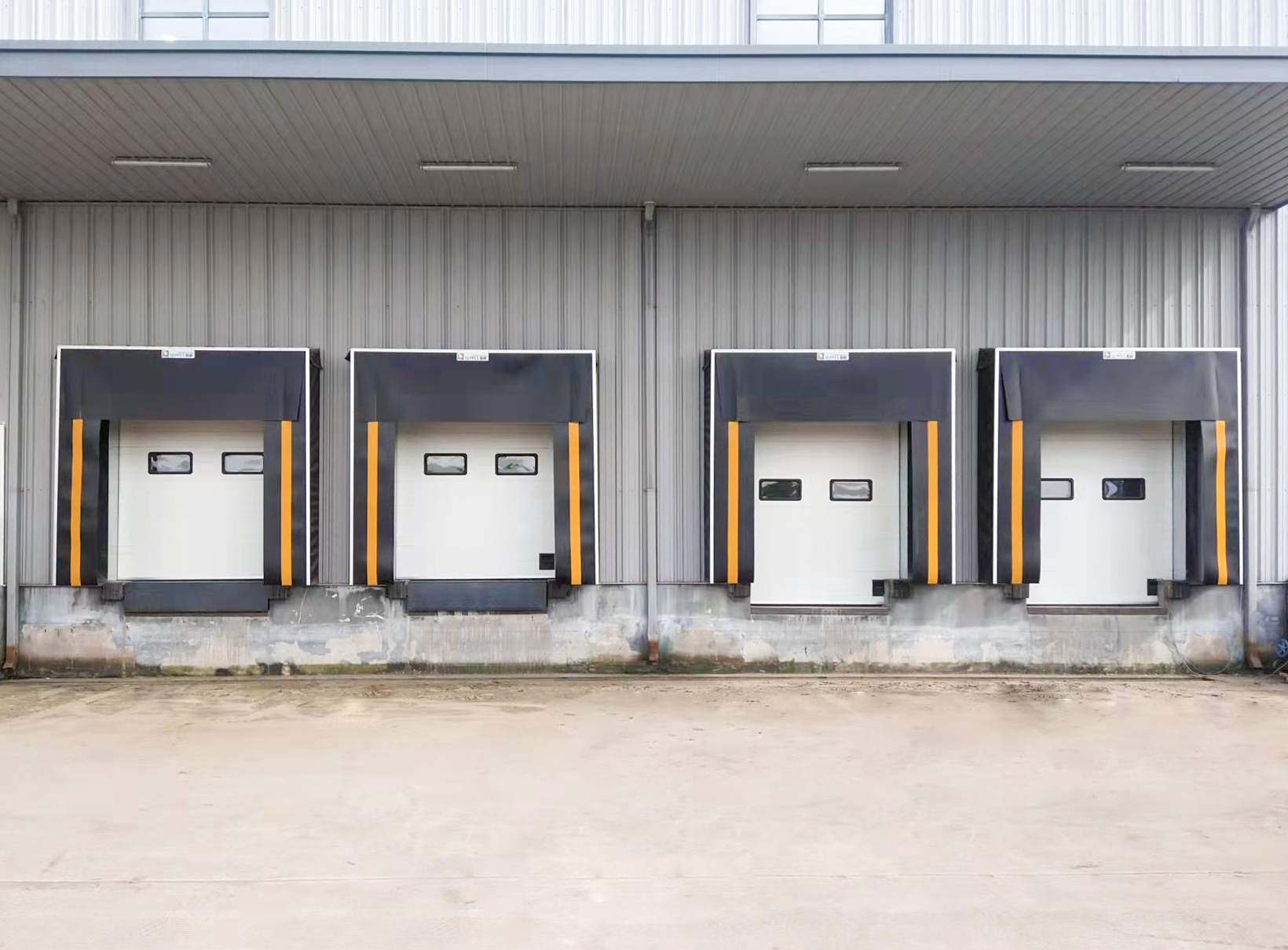
Industrial dock shelters, integral components of industrial doors, are crafted from durable and wear-resistant fiber materials. These sturdy shelters serve the dual purpose of sealing the periphery of trucks or containers while withstanding formidable pressure. Their primary role is to shield loading and unloading operations from rain, snow, sand, and other adverse weather conditions. Additionally, these loading dock shelters provide effective insulation against cold and heat. Ensuring optimal working conditions and enhanced work efficiency within the designated work area.
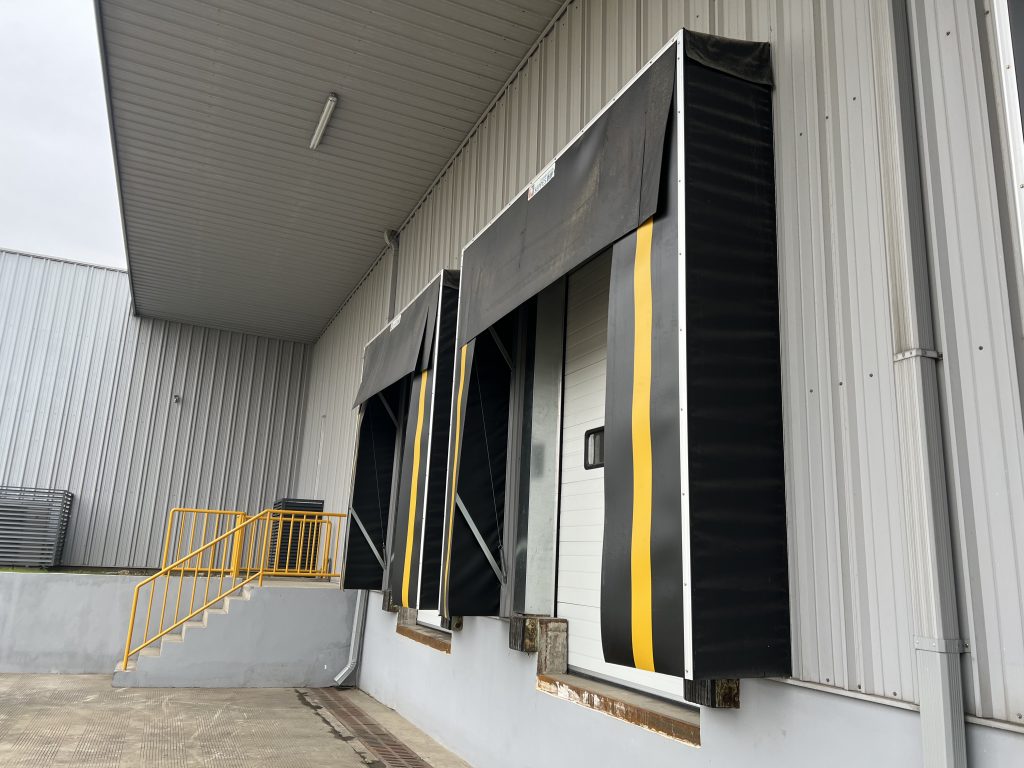
Function and Features of Industrial Dock Shelter
Industrial warehouse dock shelter plays a vital role in sealing the gap between vehicles and warehouse facilities. They are available in various types, including mechanical, sponge, and inflatable shelters.
Core Functions of Dock Seals and Shelters
Environmental Isolation
- Thermal Insulation & Energy Saving: Prevents air exchange between indoor and outdoor environments, significantly reducing energy consumption in cold storage and climate-controlled warehouses, and lowering the operational load on HVAC systems.
- Dust & Pest Prevention: Blocks the ingress of dust, rain, snow, and insects, maintaining the hygiene and cleanliness standards required in sensitive industries such as food and pharmaceuticals.
- Noise Reduction: Minimizes the intrusion of external noise from loading operations, contributing to a more controlled and less disruptive indoor environment.
Enhanced Operational Safety & Efficiency
- Impact Protection: The soft, flexible materials (e.g., foam, rubber) create a protective buffer around the truck, preventing damage to both the vehicle and the building structure during docking and loading.
- All-Weather Operation: Enables safe and efficient loading/unloading processes regardless of adverse weather conditions, such as rain, wind, or extreme temperatures.
- Process Standardization: Facilitates quicker and more consistent truck alignment and sealing, reducing turnaround times and streamlining logistics workflows.
Personnel & Cargo Protection
- Weatherproofing: Shields cargo from getting wet and prevents slippery floors inside the facility, thereby reducing the risk of cargo damage and workplace accidents.
- Temperature Stability: Critical for cold chain logistics, it maintains a consistent temperature seal during the entire loading/unloading process, ensuring product integrity.
Comparison of Three Types of Loading Dock Seals
| Feature | Sponge Dock Shelter | Mechanical Dock Shelter | Inflatable Dock Shelter |
|---|---|---|---|
| Working Principle | Forms a seal by compressing high-density foam against the truck. | Uses rigid or semi-rigid adjustable side and top panels to contact the truck. | Creates a seal by inflating rubber/fabric cushions that mold around the truck contours. |
| Key Advantages | Most cost-effective solution. Simple installation and good adaptability. Forgiving of minor truck positioning variances. | Excellent durability and long service life. Consistent, reliable sealing performance. High wind resistance, suitable for harsh outdoor conditions. | Best sealing performance, ensuring a tight, full-perimeter seal. Accommodates a wide variety of truck sizes and shapes. High level of automation, integrates easily with dock systems. |
| Main Disadvantages | 1. Moderate durability; foam is prone to wear and degradation. 2. Sealing effectiveness may diminish over time. 3. Simpler, less robust appearance. | 1. Highest initial investment. 2. Requires more precise truck alignment during backing. 3. Complex structure demands higher installation and maintenance expertise. | 1. Relies on air pumps and controls, leading to more potential failure points. 2. Higher operational energy consumption (for inflation). 3. Higher upfront cost compared to foam seals. |
| Ideal Application | Cost-sensitive projects with relatively uniform truck types and low to medium traffic in general warehouses or light-duty applications. | Applications prioritizing longevity and reliable sealing under high-frequency, heavy-duty operations and harsh outdoor environments (e.g., ports, heavy industry). | Environments demanding superior sealing such as cold storage, climate-controlled facilities, food & pharmaceutical sectors, especially with highly variable truck sizes. |
Summary & Selection Guide:
- For Cost-Efficiency & General Use → Choose Foam Dock Seals.
- For Maximum Durability & High-Traffic Docks → Opt for Mechanical Dock Shelters.
- For Optimal Sealing & Versatility → Invest in Inflatable Dock Seals.
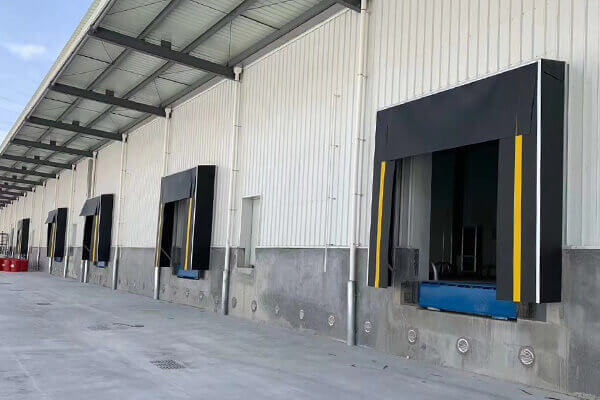
Structure of Industrial Dock Shelter
The structure of industrial dock shelter is designed for flexibility and collision avoidance. It features front and rear frames connected through hinged connecting arms. Mechanical dock shelters can be floor-standing or reinforced, with top curtain panels that offer substantial load-bearing capacity. The top curtain panels are customizable, allowing for a precise fit with the vehicle.
Material Composition
Industrial dock shelter are constructed with high-quality materials. The surface material is typically neoprene rubber or polyester fiber, prized for its outstanding wear resistance and flexibility. It can endure friction up to 30,000 times without compromise. The frame of mechanical dock shelters is made from high-strength aluminum alloy, ensuring durability.
Performance Attributes
The surface material of warehouse dock shelter possesses flame-retardant and self-extinguishing properties. More than, these shelters effectively safeguard against wind, rain, and dust, reducing the circulation of hot air from the outside and cold air from the inside of cold storage areas. And this comprehensive protection ensures the safety of cargo and the efficiency of the loading and unloading process.
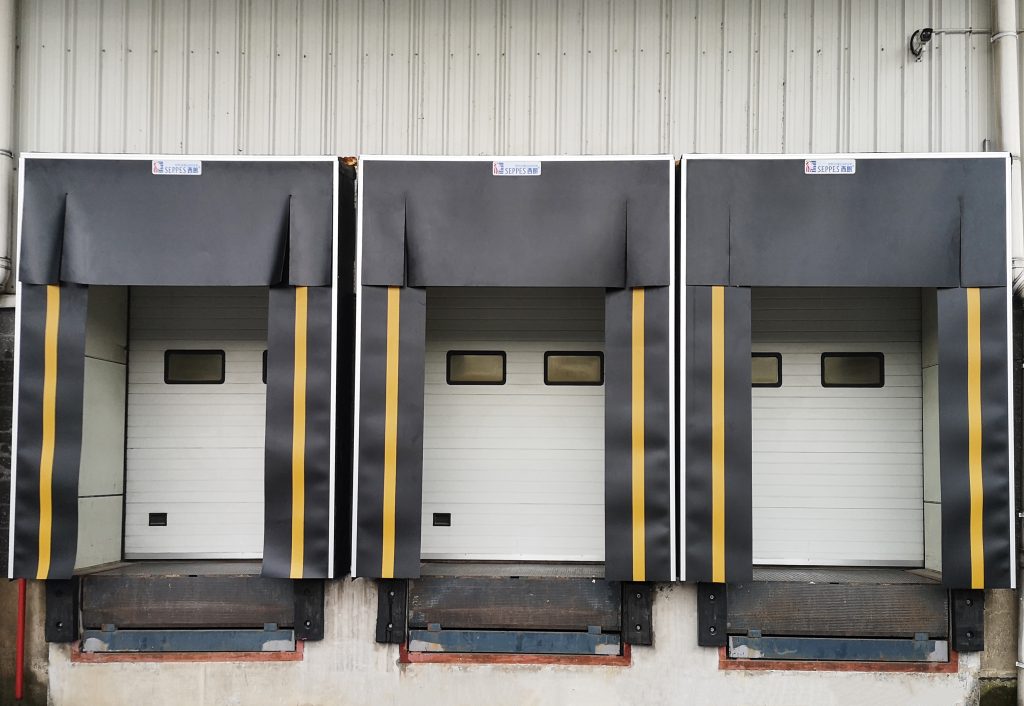
Industrial dock shelters are indispensable for businesses seeking to optimize their operations. These robust and efficient weather barriers protect cargo and personnel from the elements, contributing to a safer, more productive work environment. Actually, Cargill Investment Co., Ltd., a Fortune 500 company, chose SEPPES as their industrial door supplier.