
Contattaci su WhatsApp: 8618036828007



Choosing the right loading dock configuration is essential for efficient warehouse operations, safe truck access and reliable cargo handling. Different tipi di banchine di carico are designed to accommodate specific building layouts, vehicle movements, space limitations and environmental requirements.
Common types of loading docks include flush, enclosed, open, depressed and sawtooth configurations. Each design has its own advantages and limitations, depending on the available space, loading volume and level of protection required. Understanding these differences helps warehouse owners, logistics operators and facility managers select a suitable loading dock layout for their daily operations and long-term business needs.
This guide explains the main loading dock configurations, compares their applications and outlines the key factors to consider when choosing the right design.
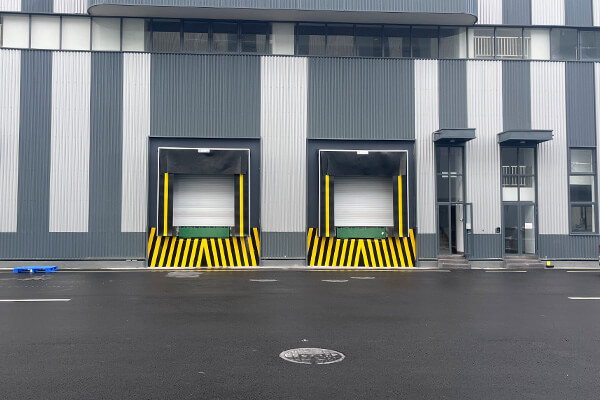
Cosa sono le banchine di carico?
Loading docks are commonly classified according to their structural design and the way trucks access the loading area. The main types of loading docks include flush docks, enclosed docks, open docks, depressed docks and sawtooth docks.
These configurations differ in building layout, truck positioning, space requirements and weather protection. Some are suitable for standard warehouse operations, while others are designed for facilities with limited manoeuvring space, specialised cargo handling or temperature-controlled environments. Understanding these structural differences is the first step in selecting an appropriate loading dock design.
5 Common Types of Loading Docks

Banchine di carico a filo
Structure: The loading dock face is aligned with the exterior wall of the warehouse. Trucks reverse directly towards the loading bay for loading and unloading.
Key Advantages:
- Space-efficient building frontage.
- Straightforward truck positioning.
- Easy integration with dock levelers and dock shelters.
Ideali per: Standard warehouses, distribution centres and manufacturing facilities with sufficient truck manoeuvring space.

Banchine di carico chiuse
Structure: The loading bay is incorporated into an enclosed building area, providing additional separation between the loading operation and the outdoor environment.
Key Advantages:
- Better protection against rain, wind and dust.
- Helps maintain controlled indoor conditions.
- Suitable for integrating insulated doors and dock sealing systems.
Ideali per: Cold storage facilities, food distribution centres and warehouses handling temperature-sensitive or contamination-sensitive goods.
Consideration: Building costs, ventilation and truck access requirements need careful planning.

Banchine di carico aperte
Structure: The loading platform is located outside the main building structure, with trucks accessing the loading area directly from the outdoor yard.
Key Advantages:
- Relatively simple construction.
- Flexible truck access and loading arrangements.
- Suitable for facilities with sufficient outdoor space.
Ideali per: Manufacturing plants, outdoor warehouses and facilities operating in relatively favourable weather conditions.
Consideration: Canopies, dock shelters or other weather protection may be needed to protect goods and workers from rain, wind and direct sunlight.

Depressed Loading Docks
Structure: The truck approaches the loading bay through a lowered or sloped driveway, allowing the trailer bed to align with the warehouse loading floor.
Key Advantages:
- Can accommodate specific site elevation differences.
- Provides an alternative where conventional raised dock construction is difficult.
- Can support practical loading arrangements on constrained sites.
Ideali per: Facilities with particular ground-level access requirements or site elevation constraints.
Consideration: Driveway gradients, drainage, vehicle clearance and surface traction must be carefully assessed.
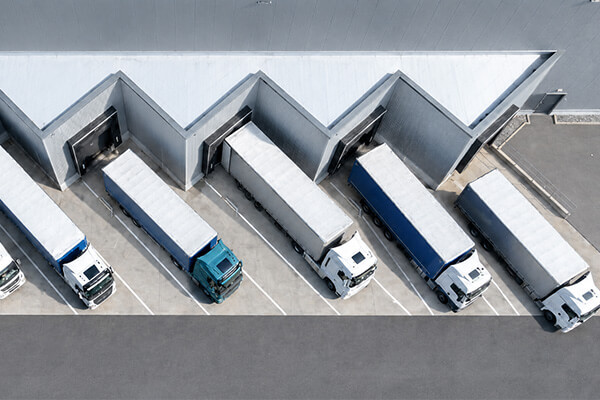
Banchine di carico a denti di sega
Structure: Loading bays are arranged at an angle along the building frontage, creating a layout resembling the teeth of a saw. Trucks reverse into angled loading positions.
Key Advantages:
- Can reduce truck manoeuvring space in certain site layouts.
- Provides an alternative to conventional perpendicular dock arrangements.
- Can improve vehicle access where the building frontage is restricted.
Ideali per: Urban distribution centres and facilities with limited external yard space.
Consideration: Angled bays require careful planning of internal space, dock spacing and vehicle turning paths.
Comparing Different Loading Dock Configurations
| Loading Dock Type | Vantaggi Principali | Potential Limitations | Typical Applications |
|---|---|---|---|
| Flush Dock | Simple layout, efficient truck access | Requires sufficient apron space | Warehouses, distribution centres |
| Enclosed Dock | Better weather and cargo protection | Higher construction costs | Cold storage, food distribution |
| Open Dock | Flexible access, relatively simple construction | Exposed to outdoor conditions | Manufacturing, outdoor loading areas |
| Depressed Dock | Can accommodate specific site and access conditions | Requires careful driveway gradient planning | Specialised industrial facilities |
| Sawtooth Dock | Can reduce external manoeuvring requirements | Requires more internal planning space | Urban distribution centres |
There is no single loading dock configuration that suits every facility. The right choice depends on available land, truck dimensions, daily loading requirements, environmental conditions and construction constraints. A detailed site assessment helps identify the most practical design.
How to Choose the Right Loading Dock Layout
Available Space and Truck Manoeuvring
Available space is one of the first factors to evaluate when planning a loading dock layout. Consider the building frontage, yard depth, truck turning radius and clearance required for different vehicle sizes.
A flush dock is generally suitable for facilities with a conventional straight approach. A sawtooth arrangement may be worth considering where external manoeuvring space is restricted. However, its angled bays require careful internal space planning.
Before finalising the layout, assess truck dimensions, approach routes and the available loading apron to ensure safe vehicle movement.
Loading Volume and Traffic Flow
The number of trucks arriving each day and the frequency of loading operations directly influence dock planning. High-volume distribution centres may require multiple loading bays to reduce vehicle waiting times and support continuous material handling.
Consider the number of loading positions, forklift traffic, pedestrian routes and the separation of incoming and outgoing goods. A well-planned layout helps minimise congestion and improves the overall flow of warehouse operations.
Weather and Environmental Conditions
Local weather conditions should also influence loading dock selection. Open loading docks may require additional protection in areas exposed to heavy rain, strong winds or extreme temperatures.
For facilities handling refrigerated or temperature-sensitive products, enclosed loading areas combined with suitable dock shelters, seals and insulated doors can help reduce air exchange during loading operations.
The choice of sealing equipment should also consider truck dimensions and the frequency of loading activities.
Cargo Protection and Safety Requirements
Different cargo types require different levels of protection during loading and unloading. Food products, pharmaceuticals and temperature-sensitive goods may require better environmental separation than general industrial materials.
Safety planning should include suitable dock levelers, vehicle restraint systems, dock bumpers, warning lights and pedestrian protection. These components should be selected according to the facility layout, operating procedures and applicable safety requirements.
Essential Equipment for Different Loading Dock Types
**Livellatori di banchina di carico**
Dock levelers bridge the height difference between the warehouse floor and truck trailer bed, allowing forklifts and pallet trucks to move goods safely. Hydraulic and mechanical dock levelers are commonly used in different loading dock configurations. The appropriate model depends on loading capacity, vehicle height variations and daily operating frequency.
Here are four types of dock levelers:
- Livellatori Meccanici per Banchine
- Livellatori Idraulici per Banchine
- Livellatori di banchina a bordo banchina (EOD)
- Livellatori Verticali per Banchine
Ogni tipo di livellatore di banchina è progettato per soddisfare specifiche esigenze operative, garantendo sicurezza, funzionalità e affidabilità.
Tenute e Ripari per Banchine di Carico
Dock seals and dock shelters help protect loading bays from rain, wind, dust and outside air. Sponge dock seals compress against the rear of a truck, while ripari per banchine fissi use flexible curtains to accommodate different vehicle dimensions. I ripari gonfiabili per banchine are another option for facilities requiring improved perimeter sealing.
Sistemi di trattenimento dei veicoli
Sistemi di trattenimento dei veicoli secure trucks or trailers at the loading bay to reduce the risk of unintended vehicle movement during loading operations. Depending on the facility’s requirements, mechanical or powered restraints can be integrated with dock controls, warning lights and other safety equipment.
**Porte per banchina di carico**
Loading dock doors provide access control, weather separation and security for warehouse loading areas. Le porte sezionali basculanti are commonly used where insulation and perimeter sealing are important, while high-speed doors may be installed in internal passages requiring frequent access.
Elenco della progettazione delle banchine di carico
| **Nome del componente** | **Descrizione e funzione** |
|---|---|
| **Livellatori di banchina di carico** | Colmano il divario e compensano le differenze di altezza tra il pavimento della banchina di carico e il pianale del rimorchio del camion, garantendo una transizione fluida e sicura per le attrezzature per la movimentazione dei materiali. |
| **Tenute per banchine** **Protezione** |
Pannelli flessibili in schiuma che si comprimono contro il rimorchio del camion per creare una tenuta ermetica attorno all'apertura della porta, prevenendo la perdita di energia e proteggendo le merci dagli agenti atmosferici. |
| Luci per Banchina Sicurezza |
Sistemi di illuminazione LED ad alta intensità che illuminano l'interno dei rimorchi dei camion e le aree della banchina, garantendo operazioni di carico e scarico sicure in condizioni di scarsa illuminazione. |
| **Trattenute per veicoli** Sicurezza |
Sistemi meccanici o idraulici che fissano i camion alla banchina di carico agganciandosi alla barra anticollisione posteriore del rimorchio, prevenendo il movimento accidentale del veicolo durante le operazioni di carico. |
| Sectional Dock Doors | Large sectional or sectional overhead doors that provide access to the loading dock area, designed to withstand frequent use and provide security when the dock is not in operation. |

How to Choose the Right Loading Dock Design
Available Space and Facility Layout
Available space plays an important role in selecting the right loading dock design. Consider the building frontage, yard depth, truck turning radius and available space for loading bays.
Flush loading docks are suitable for conventional warehouse layouts with sufficient truck access. Sawtooth configurations may be considered where external manoeuvring space is limited, while depressed docks can provide an alternative for sites with specific elevation requirements.
Before finalising the design, evaluate truck access routes, loading bay positions and internal warehouse space to ensure smooth vehicle movement.
Loading Volume and Operational Efficiency
The number of trucks handled daily and the frequency of loading operations affect the required number and arrangement of loading bays. High-volume distribution centres may need multiple dock positions to reduce truck waiting times and prevent congestion.
Consider forklift movements, pedestrian access, staging areas and the separation of incoming and outgoing goods. A well-planned loading dock layout helps maintain an efficient workflow and supports daily warehouse operations.
Climate and Environmental Conditions
Local weather conditions and cargo requirements should influence loading dock design. Facilities exposed to heavy rain, strong winds or extreme temperatures may require additional weather protection.
For cold storage, food processing and temperature-controlled distribution, enclosed loading areas combined with suitable dock seals, shelters and insulated doors can help reduce unwanted air exchange and protect goods during loading operations.
Budget, Equipment and Maintenance
Loading dock planning should consider both initial construction costs and long-term operating expenses. The budget needs to cover the dock structure, levelers, shelters, doors and safety systems.
Equipment selection should match loading capacity, operating frequency and environmental requirements. Regular inspection and preventive maintenance of dock levelers, vehicle restraints and sealing systems also help reduce unexpected downtime and extend equipment service life.
Domande Frequenti (FAQ)
Quali sono i cinque tipi comuni di banchine di carico?
I cinque tipi comuni di banchine di carico sono le banchine a raso, chiuse, aperte, incassate e a denti di sega. Ogni configurazione presenta caratteristiche strutturali e requisiti di spazio diversi. La scelta corretta dipende dall'accesso dei camion, dalla disposizione dell'edificio, dal volume di carico e dalle condizioni ambientali.
Qual è la differenza tra una banchina di carico a livello e una banchina di carico aperta?
Una banchina di carico a filo ha la facciata della banchina allineata con la parete esterna dell'edificio, consentendo ai camion di retrocedere direttamente verso la baia di carico. Una banchina di carico aperta è posizionata all'esterno della struttura principale dell'edificio ed è più esposta alle condizioni meteorologiche. La differenza principale è la disposizione fisica e il livello di protezione ambientale.
Quale tipo di banchina di carico è migliore per un magazzino?
Una banchina di carico a livello è una scelta comune per i magazzini convenzionali con sufficiente spazio di manovra per i camion. Le banchine di carico chiuse possono essere più adatte per strutture che richiedono una protezione aggiuntiva del carico o il controllo della temperatura. La selezione finale dovrebbe considerare le condizioni del sito, l'accesso dei veicoli e le esigenze di carico giornaliere.
Quali attrezzature sono necessarie per una banchina di carico completa?
A typical loading dock may include dock levelers, dock shelters or seals, vehicle restraint systems, dock bumpers and loading dock doors. The exact equipment configuration depends on the loading process, truck dimensions, cargo requirements and safety procedures.
Conclusione
Scegliere la banchina di carico giusta rappresenta un cambiamento per le mie operazioni. Aumenta l’efficienza ottimizzando le operazioni di carico e scarico con strumenti come i livellatori di banchina, migliora la sicurezza con dispositivi come i bloccaggi per veicoli e le luci di comunicazione, e riduce i costi grazie a guarnizioni energeticamente efficienti e attrezzature durevoli. Questo investimento non solo protegge il mio team e le merci, ma garantisce anche il successo operativo a lungo termine.
Riferimenti:
5 Tipi di Banchine di Carico e Quale è il Migliore per la Tua Attività
Banchina di Carico: Cosa Sono e Come Scegliere le Opzioni Migliori per la Tua Attività