
お問い合わせ WhatsApp: 8618036828007


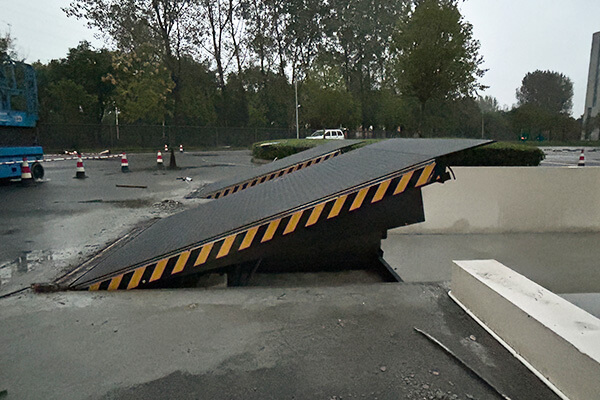
忙しい倉庫の荷積みドックでは、駐車したトラックの荷台が積み込みベイより高いまたは低いことがよくあります。この高さの差により、フォークリフトが建物と車両の間で商品を安全かつスムーズに移動させることが困難になる場合があります。A 油圧ドックレベラー はプラットフォームを上下させ、ヒンジ付きリップをトラックベッドに延ばすことでこの隙間を埋め、安定した移行部を作り出します。しかし 油圧ドックレベラーはどのように機能するのか, 、そしてその動きを可能にするものは何でしょうか?
このガイドでは、その動作原理、主要コンポーネント、および段階的な操作プロセスを説明し、倉庫オペレーターや施設管理者が油圧ドックレベラーが効率的な積み込み・荷降ろし作業をどのように支援するかを理解できるようにします。.
油圧ドックレベラーはどのように作動しますか?
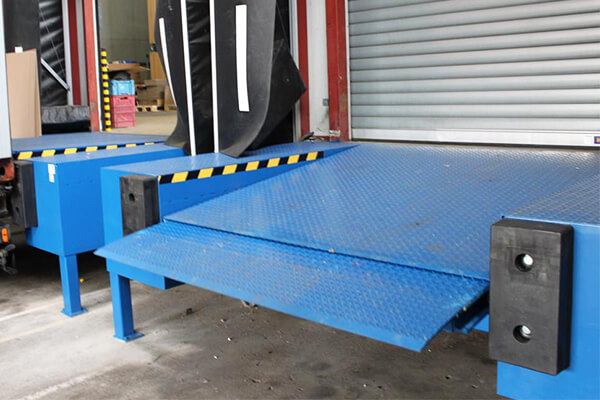
A 油圧ドックレベラー は油圧パワーユニットを使用して鋼製プラットフォームを上下させ、ヒンジ付きリップが延長してトラックベッドに載ることで機能します。これにより倉庫の床と車両の間に安定した橋渡しが作られ、フォークリフトが積み込み・荷降ろし作業中に異なる高さレベルを安全に移動できるようになります。.
ステップ1 – トラックの位置決めと固定
トラックはまず指定された積み込みベイにバックインし、ドック入口に位置合わせします。適切に位置決めされたら、施設の安全手順に従って適切な車両拘束装置または輪止めを使用して車両を固定する必要があります。正確な位置決めにより、ドックレベラーのリップがトラックベッドに届き、操作中に適切な接触を維持できることが確保されます。.
ステップ2 – 油圧ポンプの起動
トラックが固定され、積み込みエリアが安全であることを確認した後、オペレーターはコントロールパネルを使用して油圧ドックレベラーを作動させます。電動モーターが油圧ポンプを始動し、ポンプがリザーバーから作動油を吸引して加圧流体をリフティングシリンダーに送ります。この油圧動力がプラットフォームの上昇移動を駆動します。.
ステップ3 – ドックレベラープラットフォームの上昇
リフティングシリンダー内の油圧が上昇するにつれて、シリンダーが伸長してプラットフォームを上方に押し上げます。鋼製デッキが格納位置から上昇し、ヒンジ付きリップが延長するのに十分なクリアランスを作り出します。この上昇移動は油圧システムによって制御され、 油圧ドックレベラー が必要な操作位置に到達できるようにします。.
ステップ4 – リップをトラックベッドに延長
プラットフォームが上昇位置に達すると、ヒンジ付きリップがトラックベッドに向かって延長されます。モデルに応じて、リップの延長は自動または別操作で制御される場合があります。その後オペレーターはプラットフォームを下降させ、リップがトラックベッドに確実に載るまで下げ、マテリアルハンドリング機器用の連続した橋渡しを形成します。.
ステップ5 – 商品の積み込みと荷降ろし
プラットフォームとリップが適切に位置決めされると、フォークリフトが倉庫の床とトラックベッドの間を移動できます。 油圧ドックレベラーの操作 により、別途ポータブルランプを必要とせずに商品が高さの差を越えて移動できるようになります。オペレーターは定格容量を守り、プラットフォームに障害物がないようにし、施設の積み込み安全手順に従わなければなりません。.
ステップ6 – ドックレベラーを格納位置に戻す
積み込みまたは荷降ろしが完了した後、オペレーターはメーカーの指示に従ってプラットフォームを上昇させ、リップを格納し、ドックレベラーを格納位置に戻します。車両拘束装置はプラットフォームが安全に格納され、トラックが発車準備完了した場合にのみ解除する必要があります。これで操作サイクルが完了し、次の車両のために積み込みベイが準備されます。.
油圧ドックレベラーの主要コンポーネント
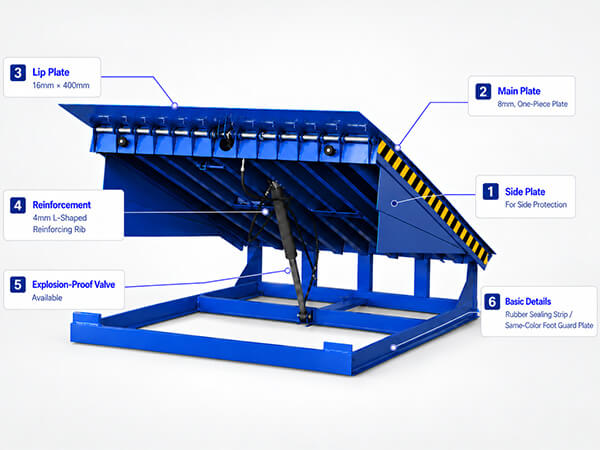
主要な 油圧ドックレベラーの部品 を理解することで、機器がどのように持ち上げ、リップを延長し、異なるトラックベッドの高さに適応するかを説明するのに役立ちます。一般的な油圧ドックレベラーは、スムーズで制御された操作を提供するために連携する複数の機械式、油圧式、および電気式コンポーネントで構成されています。.
油圧ポンプとパワーユニット
油圧パワーユニットは電動モーター、油圧ポンプ、およびオイルリザーバーで構成されています。オペレーターが制御システムを作動させると、モーターがポンプを駆動し、加圧された作動油をリフティングシリンダーに送ります。.
油圧シリンダー
油圧シリンダーは流体圧力を機械的力に変換します。シリンダーはプラットフォームを上方に押し上げ、設計に応じてヒンジ付きリップを操作します。シリンダーは 油圧ドックレベラーの油圧システム, の不可欠なコンポーネントであり、制御されたプラットフォームの動きを可能にします。.
鋼製プラットフォームとヒンジ付きリップ
鋼製プラットフォームはデッキとも呼ばれ、フォークリフトやマテリアルハンドリング機器に安定した表面を提供します。ヒンジ付きリップはプラットフォームの前端から延長され、トラックベッドに載ることで、倉庫の床と車両の間に連続した移行部を作り出します。.
コントロールボックスと油圧バルブ
The control box allows operators to activate and control the dock leveler. Hydraulic valves regulate oil flow and pressure, directing fluid to the appropriate cylinders during lifting, lowering, and lip movement.
安全サポートと保護装置
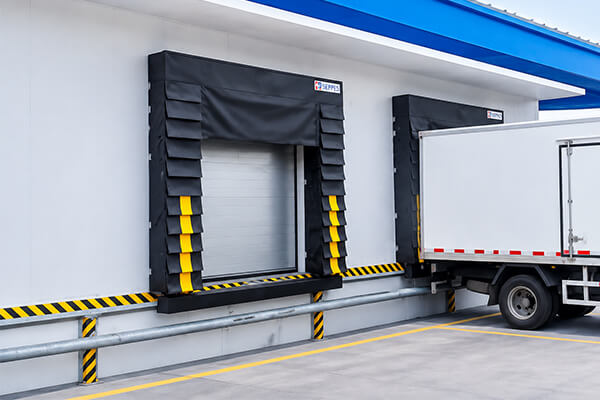
Safety features may include maintenance support struts, toe guards, emergency stop controls, and hydraulic safety valves, depending on the model. These dock leveler components help protect operators and maintenance personnel by reducing risks associated with unexpected movement, accidental access, and hydraulic system failure. Mechanical maintenance supports must be engaged according to the manufacturer’s instructions before working beneath a raised platform.
油圧システムはどのようにプラットフォームの動きを制御するのか?
垂直リフトトラックシステムにより、 hydraulic dock leveler working principle is based on converting electrical energy into hydraulic power and then into mechanical movement. The electric motor drives the hydraulic pump, which pressurizes the oil and directs it through control valves to the hydraulic cylinders. These components work together to control platform lifting, lip movement, and adjustment during loading operations.
油圧がプラットフォームを上昇させる仕組み
When the electric motor starts, the hydraulic pump draws oil from the reservoir and delivers pressurized fluid to the lifting cylinder. The hydraulic pressure extends the cylinder, generating the force needed to raise the steel platform. When the control valve changes the oil flow, the platform can lower in a controlled manner.
リップの延長と格納の仕組み
Depending on the hydraulic dock leveler mechanism, the hinged lip is operated by a dedicated hydraulic cylinder or an integrated linkage system. Hydraulic pressure drives the lip outward, allowing it to rest on the truck bed. The return sequence retracts the lip before the platform returns to its stored position.
プラットフォームがトレーラーの動きに適応する仕組み
During loading and unloading, changes in cargo weight can affect the truck’s suspension and bed height. In its operating position, the dock leveler is designed to follow normal vertical movement of the truck bed within its working range, maintaining contact between the lip and trailer.
油圧式 vs 機械式ドックレベラー:動作の違いは?
The main difference between a hydraulic vs mechanical dock leveler is how the platform is powered and operated. A hydraulic dock leveler uses an electric motor, hydraulic pump, and cylinders to control platform movement. A mechanical dock leveler relies on a spring-assisted mechanism and manual operation to raise and lower the platform.
| 特徴 | 油圧式ドックレベラー | 機械式ドックレベラー |
|---|---|---|
| 駆動機構 | 必要な労力 | Mechanical spring and counterbalance mechanism |
| Operating Method | Push-button hydraulic control | Manual activation using a pull chain or handle, depending on the model |
| Manual Effort | Minimal operator effort | Requires manual activation and greater physical involvement |
| Power Requirements | Requires an electrical power supply | Generally operates without electricity |
| メンテナンス要件 | Hydraulic oil, cylinders, hoses, pump, and electrical components | Springs, hinges, linkages, and mechanical components |
| 適切な用途 | Warehouses with frequent loading and unloading operations | Facilities requiring a mechanically operated loading dock solution |
どちらの操作システムがより適しているか?
Hydraulic dock levelers provide convenient push-button operation and controlled platform movement, making them suitable for facilities with frequent loading activities. Mechanical dock levelers offer a simpler operating mechanism without requiring an electrical power supply. The appropriate choice depends on operating frequency, available power, maintenance requirements, and facility configuration.
油圧ドックレベラーの一般的な問題とメンテナンスのヒント
Regular inspection and proper maintenance help keep a hydraulic dock leveler operating reliably. Understanding common problems can also help warehouse operators identify potential issues before they cause unexpected downtime.
油圧ドックレベラーが上昇しないのはなぜか?
If a hydraulic dock leveler does not rise, possible causes include a power supply failure, a faulty control circuit, insufficient hydraulic oil, or a hydraulic leak. An overloaded platform or an activated safety interlock may also prevent operation. Check the external power supply and visible operating conditions. If the problem persists, contact a qualified technician.
ドックレベラーのリップが延長されないのはなぜか?
A lip that fails to extend may indicate a hydraulic pressure issue, a faulty control valve, a damaged cylinder, or an obstruction around the hinge mechanism. Stop operation and arrange a professional inspection rather than forcing the lip to move.
油圧ドックレベラーにはどのようなメンテナンスが必要か?
定期的な dock leveler maintenance should include checking hydraulic hoses, visible oil leaks, electrical controls, platform hinges, lip movement, and safety devices. Keep the platform and surrounding area free of debris. Follow the manufacturer’s maintenance schedule and arrange periodic inspections by qualified technicians. Never work beneath an unsupported raised platform or attempt to adjust hydraulic pressure without proper training.
油圧ドックレベラーに関するよくある質問
油圧ドックレベラーはどのように異なるトラックの高さに適応するのか?
A hydraulic dock leveler adjusts to different truck bed heights by raising or lowering its platform within its designed operating range. The hinged lip rests on the truck bed, creating a stable transition between the loading dock and vehicle. Its working range depends on the model and specified adjustment capacity.
油圧ドックレベラーは何で動くのか?
A hydraulic dock leveler is typically powered by an electric motor connected to a hydraulic pump. The pump pressurizes hydraulic oil and directs it to the lifting cylinders, which move the platform and, depending on the design, the hinged lip. The control system manages these movements during loading operations.
油圧ドックレベラーは電気なしで操作できるか?
A standard electrically powered hydraulic dock leveler generally requires electricity to perform its normal lifting and operating cycle. Some models may provide manual emergency or backup procedures, depending on their design. Always consult the manufacturer’s operating manual before attempting any alternative operation.
油圧ドックレベラーとドックリフトの違いは何か?
A hydraulic dock leveler bridges the height difference between a warehouse loading dock and a truck bed, allowing forklifts to move goods between them. A hydraulic dock lift is designed to raise or lower materials between different floor levels or working heights, often where a conventional loading dock is unavailable.
油圧ドックレベラーはどのくらいの頻度で点検すべきか?
A hydraulic dock leveler should receive regular visual checks before use, along with scheduled preventive maintenance based on the manufacturer’s recommendations and applicable safety requirements. Inspections should cover hydraulic hoses, oil leaks, electrical controls, hinges, safety devices, and structural components. Qualified technicians should perform more detailed maintenance at the recommended intervals.
結論
Understanding how a hydraulic dock leveler works helps warehouse operators make better decisions about loading dock efficiency, equipment safety, and maintenance. By using hydraulic pressure to raise the platform and extend the hinged lip, the system creates a stable bridge between the warehouse floor and truck bed. Proper operation, regular inspections, and suitable equipment selection are essential for reliable performance.