
문의 WhatsApp: 8618036828007


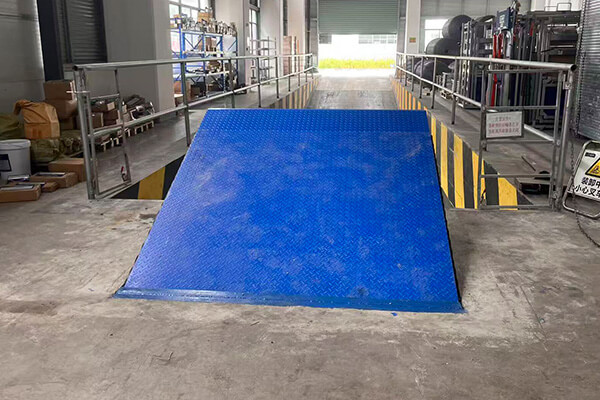
In heavy-duty warehouses and loading bays, selecting a dock leveler based only on its stated tonnage may not be enough. Forklift weight, cargo weight, wheel loads, operating frequency and dynamic forces can all affect the actual load applied to the platform. The hydraulic dock leveler load test helps verify whether the equipment meets its rated capacity and provides an important reference during commissioning and acceptance.
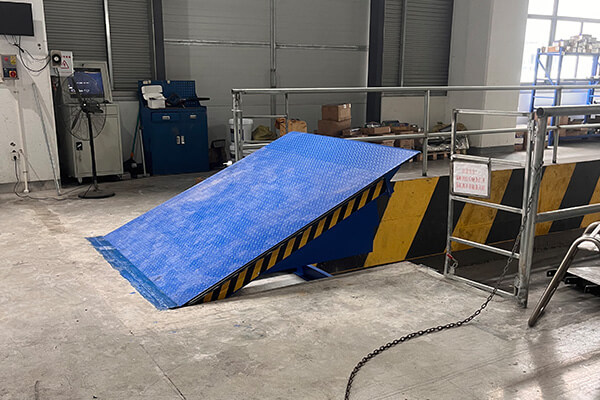
What Is a Dock Leveler Load Test?
그리고 도크 레벨러 하중 시험 is used to evaluate how a dock leveler performs under defined loading conditions. For 창고 도크 레벨러는, especially one used with heavy forklifts or frequent loading operations, the test focuses on more than whether the platform can raise and lower normally.
The main purpose of hydraulic dock leveler load testing is to verify the equipment’s structural load-bearing performance and confirm that its actual response is consistent with the specified dock leveler capacity. During testing, the platform, frame, lip, hydraulic system, and other load-bearing components may be observed under a controlled test load.
Key areas typically evaluated include:
- Rated capacity — whether the dock leveler can support the specified load under defined test conditions.
- Platform deformation — whether the deck shows abnormal deflection or permanent deformation during and after loading.
- Hydraulic stability — whether the hydraulic system maintains stable support and operates normally under load.
- Structural integrity — whether the frame, welds, hinges, lip, and supporting components remain in proper condition.
- Load-bearing performance — how the complete dock leveler structure responds when the specified load is applied.
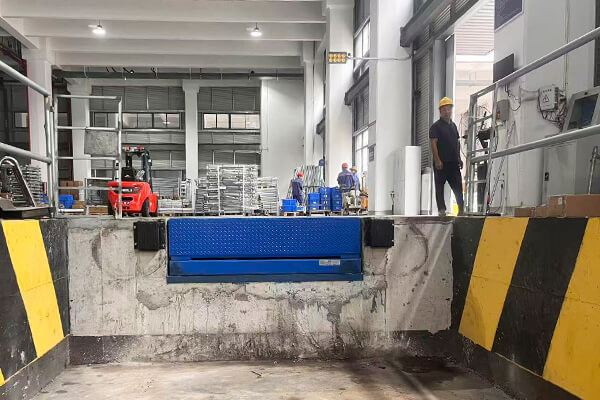
Why Is Load Verification Important in Heavy-Duty Warehouses?
In heavy-duty warehouse operations, a dock leveler is exposed to more demanding loads than in light or occasional loading applications. A heavy duty dock leveler may need to support large forklifts, dense palletized goods, industrial machinery, and repeated vehicle movements throughout the day.
For this reason, verifying dock leveler load capacity is important before regular operation. Forklift weight, cargo weight, operating frequency, travel speed, wheel configuration, and dynamic forces can all affect the actual load transferred to a 창고 도크 레벨러.
Heavy Forklifts and High Pallet Loads
Heavy-duty warehouses commonly handle loads such as:
- Heavy forklifts
- Machinery and production equipment
- Metal products
- Industrial components
- Dense palletized goods
When evaluating dock leveler capacity, the cargo weight should not be considered alone. The total operating load may include the forklift itself, battery, attachments, cargo, and operator.
A practical calculation should therefore consider:
Forklift + Battery + Attachment + Cargo + Operator
For example, a forklift carrying a 3,000 kg pallet may itself weigh several tons. If only the pallet weight is considered, the actual load acting on the dock leveler can be significantly underestimated.
This is especially important in warehouses using electric forklifts, where battery weight can represent a substantial part of the vehicle’s total operating weight.
Frequent Loading and Unloading Cycles
Load frequency is another important factor in warehouse loading operations.
A dock leveler handling a nominal 6-ton load five times per day is operating under a different duty cycle from one handling similar loads one hundred times per day. Even when the individual loads are similar, repeated loading and unloading cycles increase the number of stress events applied to the platform, hinges, frame, hydraulic system, and other structural components.
In a high cycle loading dock, equipment selection should therefore consider not only maximum load, but also:
- Number of loading cycles per day
- Number of operating shifts
- Forklift traffic frequency
- Typical vehicle weight
- Long-term operating conditions
This helps ensure that the selected dock leveler capacity is suitable for both the expected load and the intensity of daily warehouse use.
Dynamic Forces When Forklifts Cross the Dock Leveler
A forklift does not remain stationary while using a dock leveler. As it travels between the warehouse floor and truck bed, the platform is exposed to dynamic forces that can be different from a simple static load.
These forces may include:
- Wheel impact as the forklift enters the platform
- Braking forces
- Acceleration forces
- Concentrated wheel loads
- Repeated dynamic loading
This is why wheel load 와 forklift dynamic load should be considered when evaluating a dock leveler for heavy-duty warehouse applications.
Rated capacity does not represent every possible real-world loading condition.
A proper load verification process helps confirm whether the selected dock leveler is appropriate for the actual combination of forklift weight, cargo load, traffic frequency, and operating conditions expected at the loading dock.
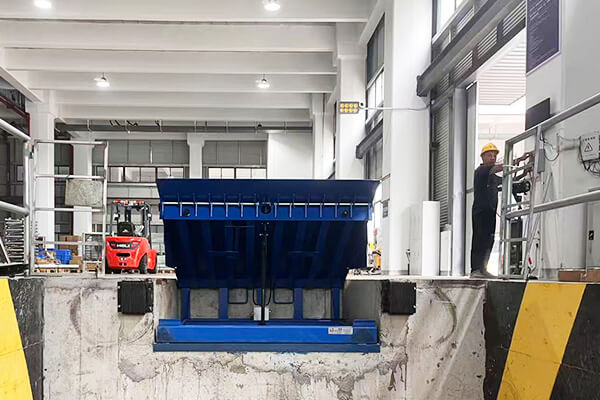
Warehouse Dock Leveler Rated Capacity vs Actual Operating Load
| Term | Meaning |
|---|---|
| Rated Capacity | Manufacturer-specified capacity under defined conditions |
| Static Load | Load applied while equipment is stationary |
| Dynamic Load | Load generated while equipment or forklift is moving |
| Wheel Load | Load transferred through forklift wheels |
| Operating Load | Actual combined load during warehouse operation |
What Loads Should Be Considered Before Testing?
Forklift Weight
그리고 forklift weight for dock leveler selection is one of the first values that should be confirmed. A forklift can weigh several tons even before cargo is added. Its total operating weight may include the vehicle chassis, counterweight, battery or fuel system, operator, and any attachments installed on the mast.
Maximum Cargo Weight
The next factor is the heaviest load the forklift is expected to carry across the hydraulic dock leveler. When evaluating the maximum load dock leveler requirement, the calculation should be based on realistic peak operating conditions rather than average cargo weight.
The maximum expected cargo weight should therefore be considered together with the gross operating weight of the forklift.
Forklift Battery and Attachments
Battery and attachment weight can have a significant effect on total forklift mass, especially for an electric forklift.
Large industrial batteries can add substantial weight to the vehicle. Forklift attachments may also increase the total operating load. For electric forklifts, the battery should be included in the gross vehicle weight used for dock leveler capacity evaluation.
Wheel Configuration and Concentrated Loads
Total weight alone does not fully describe how a forklift loads the platform. Wheel configuration determines how that weight is distributed across the dock leveler deck.
A 3-wheel forklift, for example, may concentrate a larger share of the vehicle load through fewer contact points. Similarly, small or hard wheels can create higher local stresses than larger wheels with a wider contact area.
For heavy-duty applications, concentrated loading can be as important as total vehicle weight because local deck stresses may be much higher than the average distributed load across the platform.
Traffic Frequency and Travel Speed
A proper dock leveler load capacity calculation should also consider how often and how fast forklifts cross the platform. Frequent loading cycles can also increase repeated stress on the deck, hinges, frame, and hydraulic components. For high-cycle warehouse loading operations, capacity selection should therefore consider both the maximum operating load and the intensity of daily use.
How Is a Hydraulic Dock Leveler Load Test Performed?
If you are asking how to load test a dock leveler, the process generally includes verifying the equipment specification, completing a pre-test inspection, applying the required test load, monitoring structural response, reinspecting the equipment after unloading, and documenting the results.
A proper dock leveler load testing procedure should follow the applicable testing standard, project specification, equipment documentation, and site acceptance requirements. The exact test load and method may vary depending on the dock leveler type, rated capacity, installation conditions, and regional requirements.
Step 1 — Confirm the Rated Capacity
Before testing begins, confirm the identification and technical information of the dock leveler.
Key information should include:
- Model
- Serial number
- Rated capacity
- Design specification
- Applicable technical standard or project requirement
The rated capacity provides the reference point for the test, but it should not be interpreted independently from the equipment design and specified testing conditions.
The testing team should also confirm that the dock leveler being inspected matches the approved drawings, purchase specification, or project documentation.
Step 2 — Inspect the Dock Leveler Before Testing
A visual and functional inspection should be completed before any test load is applied.
The inspection should cover the main structural and hydraulic components, including:
- Deck
- 립
- Hinges
- Welds
- Hydraulic cylinders
- Main frame
- Supporting structure
- Pit installation
The dock leveler should also be checked for visible damage, loose components, hydraulic leakage, abnormal deformation, or incorrect installation.
This pre-test inspection is important because existing defects can affect both the test result and the way the structure responds under load.
Step 3 — Apply the Specified Test Load
The test load should then be applied in accordance with the relevant testing requirement.
The applied test load should follow the applicable standard, manufacturer specification, or project acceptance requirement.
There is no single percentage that should automatically be applied to every dock leveler. The required test load can vary depending on the equipment specification, design standard, local regulations, and acceptance criteria.
During this stage, the load should be applied in a controlled manner and positioned according to the defined test method.
For heavy-duty applications, the test setup should reflect the required load condition as closely as practical, including any specified loading position or distribution.
Step 4 — Monitor Platform and Structural Response
While the load is applied, the dock leveler should be monitored for changes in structural and hydraulic performance.
Typical inspection points include:
- Deck deflection
- Abnormal deformation
- Hydraulic movement
- Weld condition
- Unusual noise
- Structural stability
- Lip and hinge behavior
- Frame movement
Some elastic deflection may occur when a structure is loaded, but the important point is whether the dock leveler responds within the limits defined by the applicable design or test requirements.
Inspectors should pay particular attention to sudden movement, excessive deflection, unusual sounds, hydraulic instability, or visible changes in structural components.
Step 5 — Remove the Load and Reinspect
After the test load is removed, the dock leveler should be inspected again.
The post-test inspection should check for:
- Permanent deformation
- Structural damage
- Cracked or damaged welds
- Hydraulic leakage
- Abnormal platform movement
- Damage to hinges or supporting components
The deck and other structural components should be compared with their condition before testing.
A key part of the evaluation is determining whether any abnormal or permanent change remains after the load has been removed.
Step 6 — Record the Test Results
The final step in the dock leveler load testing procedure is to document the test.
A dock leveler load test report should normally record information such as:
- Equipment model and serial number
- Rated capacity
- Applied test load
- Test method
- Test conditions
- Inspection observations
- Measured deformation, where applicable
- Hydraulic system condition
- Structural inspection results
- Test date
- Final acceptance result
Clear test records are especially important during equipment commissioning, warehouse acceptance inspections, and heavy-duty loading dock projects.
A properly documented load test provides evidence of how the dock leveler performed under the specified test conditions and helps technical teams determine whether the equipment meets the required acceptance criteria.