
Contate-nos WhatsApp: 8618036828007


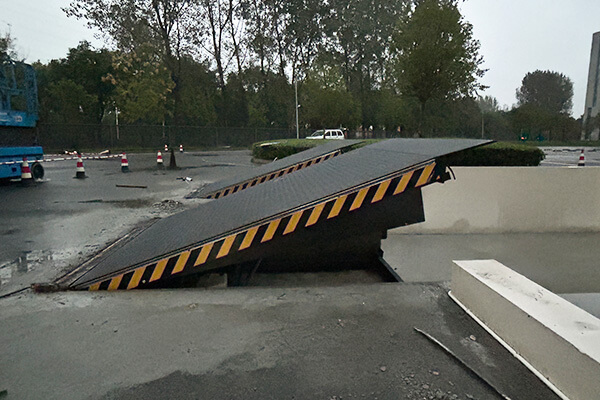
Efficient loading and unloading operations are essential for HVAC manufacturing facilities handling large air conditioning units and finished equipment. In this project, four hydraulic dock levelers were installed at factory dispatch bays to support daily goods handling and outbound logistics.
Hydraulic dock levelers help improve loading efficiency, accommodate varying vehicle heights and reduce manual handling requirements. For HVAC manufacturers, properly equipped dispatch bays support smoother material flow, safer forklift movements and more efficient delivery operations, particularly when handling bulky or heavy finished products.
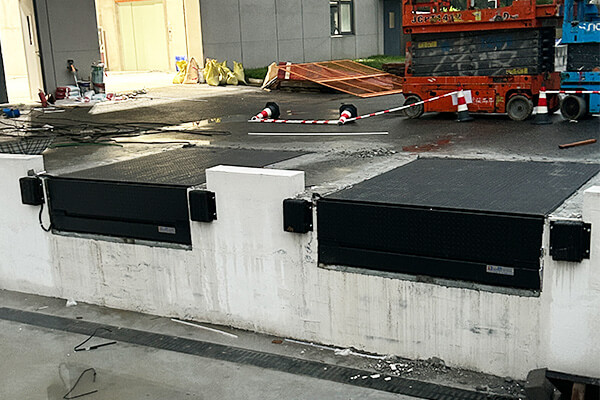
Project Background: Loading Requirements at an HVAC Manufacturing Facility
Handling Large HVAC Equipment at Dispatch Bays
An HVAC manufacturing facility often handles bulky air conditioning units, packaged components and heavy finished equipment. These products may be transported on pallets or secured frames, requiring forklifts and suitable loading bay equipment for efficient dispatch.
Hydraulic dock levelers are powered loading bay platforms that bridge the height difference between the warehouse floor and vehicle bed. They provide a suitable transition for forklifts moving palletised or heavy goods during dispatch operations.
For HVAC manufacturers, where bulky equipment often requires careful handling, these systems help improve vehicle accessibility and loading efficiency. This project illustrates how four hydraulic dock levelers can support daily dispatch operations, while equipment capacity, platform dimensions and safety features must be selected according to actual loading requirements.
Common Challenges in Loading and Unloading Operations
Loading large HVAC equipment presents several operational challenges:
- Vehicle height differences: Varying trailer heights can create uneven transitions at the warehouse loading dock.
- Forklift accessibility: Gaps and height differences between the loading bay and vehicle can restrict forklift movement.
- Loading efficiency: Frequent vehicle movements require reliable equipment to minimise delays.
- Handling safety: Heavy or bulky equipment requires stable loading surfaces and controlled forklift operations.
Properly selected hydraulic dock levelers help address these challenges by improving vehicle access and supporting safer, more efficient goods handling.
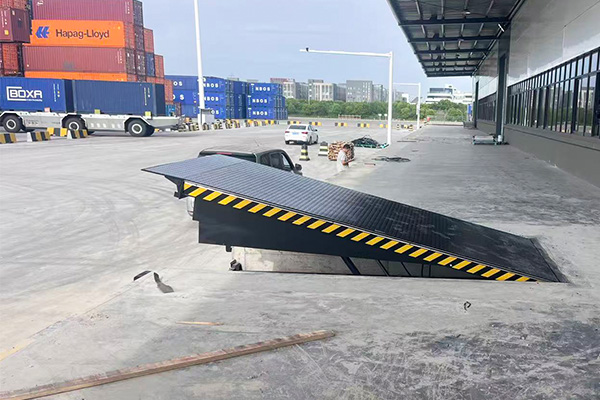
Hydraulic Dock Leveler Solution for the Dispatch Bays
Four hydraulic dock levelers were installed at the dispatch bays of an HVAC manufacturing facility to support the loading and unloading of finished air conditioning equipment. The system provides a stable transition between the loading bay and transport vehicles, allowing forklifts to move goods more efficiently.
Project Configuration and Equipment Specifications
The installation consists of four os niveladores de docas de carga hidráulicos designed for factory dispatch operations.
|
Project Detail |
Information |
|---|---|
|
Indústria |
HVAC Equipment Manufacturing |
|
Envolve mais do que apenas estética; requer consideração cuidadosa das especificações técnicas e ambientes operacionais. Para empresas na Croácia, especialmente nos setores de processamento de metal ou manufatura, siga este guia profissional para tomar uma decisão informada. |
Factory Dispatch Bays |
|
Equipamento |
Niveladores de Doca Hidráulicos |
|
Number of Units |
4 |
|
Main Function |
Bridging the loading bay and vehicle bed |
|
Goods Handled |
Finished HVAC equipment |
|
Loading Equipment |
Forklifts, where suitable for the goods and rated load |
Platform dimensions, rated capacity and lip configuration should be selected according to forklift loads, vehicle types and loading bay conditions.
How the Hydraulic Dock Levelers Support Loading Operations
A hydraulic loading dock leveler uses a powered hydraulic system to raise and lower the platform, compensating for height differences between the loading bay and vehicle bed.
During operation:
- Platform lifting: The hydraulic system raises the platform to prepare for vehicle access.
- Lip positioning: The loading lip extends or pivots onto the vehicle bed, creating a stable bridge.
- Forklift movement: Forklifts transport packaged HVAC equipment between the warehouse and vehicle.
- Platform return: After loading, the leveler returns to its stored position.
This process supports efficient goods dispatch while reducing interruptions caused by varying vehicle heights.
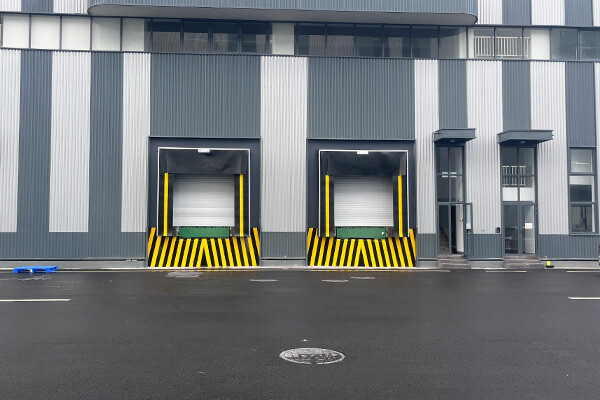
Key Benefits of Loading Dock Levelers for HVAC Manufacturing Plants
Hydraulic dock levelers help HVAC manufacturing plants improve loading efficiency, forklift accessibility and goods handling safety. Their ability to bridge height differences makes them suitable for dispatch bays handling heavy or bulky air conditioning equipment.
Efficient Loading and Unloading of HVAC Equipment
Large HVAC units often require forklift handling during dispatch. Hydraulic dock levelers create a smooth transition between the warehouse floor and vehicle bed, allowing palletised equipment to move more efficiently.
This reduces handling interruptions, supports continuous material flow and improves overall loading dock efficiency, particularly in facilities with frequent vehicle movements.
Safer Forklift Movement Between the Dock and Trailer
A stable loading surface is essential when transporting heavy HVAC equipment. Key dock leveler safety features may include:
- Anti-slip platform surfaces for improved forklift traction.
- Load-rated construction suitable for the combined weight of forklifts and goods.
- Safety support systems for maintenance and controlled operation.
Correct installation, vehicle restraint and adherence to rated capacity remain essential for safe loading operations.
Flexible Height Adjustment for Different Vehicles
Delivery vehicles often have different bed heights. Hydraulic dock levelers adjust vertically to bridge these differences, helping forklifts move between the loading bay and vehicle.
The available working range depends on the platform design and specifications. Selecting the appropriate model helps maintain efficient dispatch operations across different vehicle types.
Hydraulic Dock Leveler vs Other Loading Bay Solutions
Different manufacturing facilities require different loading bay solutions. The appropriate equipment depends on vehicle heights, operating frequency, available installation space and the required movement of goods.
|
Equipamento |
Key Characteristic |
Aplicações Adequadas |
|---|---|---|
|
Nivelador de Docas Hidráulico |
Powered hydraulic lifting and lip positioning |
High-traffic factory dispatch bays |
|
Nivelador Mecânico de Docas |
Spring-assisted operation with manual engagement |
Lower-frequency loading operations |
|
Nivelador de Borda de Doca |
Compact equipment mounted at the dock edge |
Bays with limited vehicle height variation |
|
Elevador de Doca Tesoura |
Vertical lifting between different floor or vehicle heights |
Sites requiring substantial vertical travel |
For HVAC manufacturing facilities with frequent forklift movements, hydraulic dock levelers can offer a practical balance between operational convenience and vehicle accessibility. However, final selection should be based on the actual loading conditions.
How to Choose Hydraulic Dock Levelers for Manufacturing Facilities
Choosing the right hydraulic dock leveler requires careful consideration of load capacity, platform dimensions, vehicle compatibility and safety requirements. For HVAC manufacturing facilities, the equipment must support heavy goods handling and frequent dispatch operations.
Load Capacity and Forklift Requirements
The required dock leveler capacity depends on the total operating load, not just the weight of the goods. Key factors include:
- Forklift weight: Including the operator, battery and attachments.
- Goods weight: Maximum weight of packaged HVAC equipment.
- Dynamic loads: Additional forces generated during forklift movement and braking.
- Operating frequency: Daily loading cycles and traffic intensity.
The selected capacity should account for actual operating conditions and the manufacturer’s rated load specifications.
Platform Dimensions and Vehicle Height Differences
Appropriate hydraulic dock leveler dimensions ensure safe and practical vehicle access. Consider:
- Platform width: Suitable for forklift dimensions and loading operations.
- Platform length: Provides an acceptable gradient between the loading bay and vehicle.
- Pit dimensions: Must match the installation and structural requirements.
- Working range: Accommodates expected differences in vehicle bed heights.
Safety Features and EN 1398 Compliance
For European installations, an EN 1398 dock leveler should meet the applicable safety requirements for design, construction, installation and testing.
Buyers should check anti-slip surfaces, maintenance supports, clearly marked rated capacity, operating instructions and relevant technical documentation. Applicable CE marking requirements should also be verified for the equipment and destination market.
Installation and Integration with Loading Dock Equipment
Hydraulic Dock Leveler Installation Requirements
Proper installation begins with checking the loading bay layout, pit dimensions, structural support and electrical requirements. The selected hydraulic dock leveler must fit the available space and provide a suitable operating range for the vehicles using the bay.
For new facilities, pit construction should follow the approved installation drawings. Existing loading bays may require dimensional checks or structural modifications before installation.
Integrating Dock Levelers with Other Loading Bay Equipment
Hydraulic dock levelers are often installed alongside sectional overhead doors, dock shelters and vehicle restraint systems.
-
Sectional overhead doors: Control access between the warehouse and dispatch area.
-
Dock shelters: Help protect goods and loading operations from wind and rain.
-
Vehicle restraints: Help control unintended vehicle movement when correctly selected and operated.
These systems should be planned together to support safe and efficient loading operations.
Frequently Asked Questions About Hydraulic Dock Levelers
How much weight can a hydraulic dock leveler support?
Hydraulic dock levelers are available in various load capacities, commonly ranging from 6 to 15 tonnes, with higher-capacity models available for specialised applications. The appropriate dock leveler capacity depends on the combined weight of the forklift, goods and operating conditions. Buyers should consider dynamic loads and the manufacturer’s rated capacity before selecting a model.
Can hydraulic dock levelers accommodate different truck heights?
Yes. Hydraulic dock levelers adjust vertically to bridge height differences between loading bays and vehicle beds. This allows forklifts to move between the warehouse and different delivery vehicles. The working range varies by model, platform dimensions and installation conditions.
What is the difference between a hydraulic dock leveler and a mechanical dock leveler?
A hydraulic dock leveler uses an electrically powered hydraulic system to lift and position the platform, reducing manual effort. A mechanical dock leveler typically relies on a spring-assisted mechanism and manual operation. Hydraulic models are generally better suited to frequent loading operations, while mechanical models may be suitable for lower-traffic facilities.
What information is needed to select a hydraulic dock leveler?
Buyers should provide the following details:
- Platform dimensions: Required width and length.
- Pit conditions: Existing pit dimensions or new construction requirements.
- Vehicle heights: Minimum and maximum vehicle bed heights.
- Load requirements: Forklift weight and maximum goods weight.
- Operating frequency: Expected daily loading cycles.
These details help determine the appropriate platform configuration, capacity and working range.
Conclusion: Improving HVAC Factory Dispatch Operations with Hydraulic Dock Levelers
Warehouse hydraulic dock levelers play an important role in improving loading dock efficiency at HVAC manufacturing facilities. This project, featuring four hydraulic dock levelers, demonstrates how properly equipped dispatch bays can support smoother forklift movements and more efficient handling of finished air conditioning equipment.
Selecting the right dock leveler requires careful consideration of load capacity, platform dimensions, vehicle heights and safety requirements.