
Contact us WhatsApp: 8618036828007


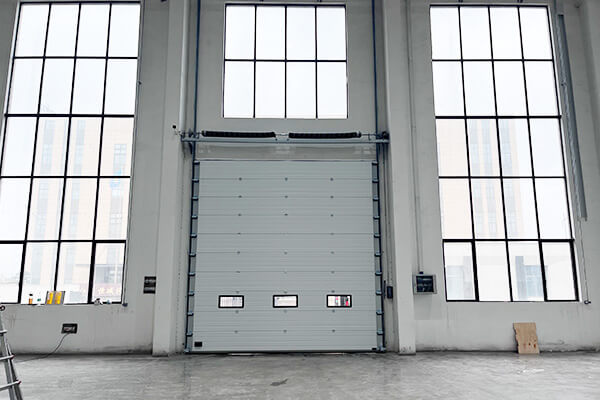
In the fast-paced industrial logistics sector, the difference between a seamless workflow and costly operational shutdown, which often depends on one small but critical component: the torsion spring. While many buyers focus on the aesthetic or insulation of the door panels, the true importance of any sectional door is its balance system. Every door opening and closing involves high-tension mechanical stress, and the quality of the sectional door spring material directly determines whether your facility operates efficiently or suffers unexpected breakdowns.
So what separates a short-lived industrial sectional door from one that delivers reliable, long-term performance?
This professional buying guide explains the precision engineering behind high-performance sectional doors. From the excellent elastic properties of 60Si2Mn spring steel to the long-term benefits of Dacromet anti-corrosion coating, we show how premium materials extend service life from 30,000 standard operating cycles up to 100,000 cycles.
Whether you are planning a new warehouse or upgrading an existing facility, understanding high-quality components and integrated safety devices is key to reducing downtime and maximising long-term return on investment. You will discover that a top-tier sectional door is more than standard hardware — it is a reliable engineered solution designed for trouble-free daily operation.

The Science of 60Si2Mn: Why Material Grade Matters for Sectional Door Spring
What is 60Si2Mn?
60Si2Mn is a high-grade silicon-manganese alloy steel specifically engineered for high-stress mechanical applications. In this alloy, Silicon (Si) significantly increases the elastic limit and yield strength, while Manganese (Mn) enhances hardenability and toughness. This chemical composition provides the superior fatigue resistance necessary for the repetitive heavy lifting required by industrial sectional doors.
Performance vs. Standard Steel
Unlike standard carbon steel springs, which are prone to permanent deformation (set) over time, 60Si2Mn maintains its structural “memory.”
-
- Stress Resistance: It can withstand constant high-tension cycles without losing its original shape.
-
- Fatigue Limit: Its superior elasticity ensures it does not become brittle, preventing the sudden fractures common in lower-grade alternatives.
-
- Operational Stability: While standard steel loses tension and requires frequent manual adjustments, 60Si2Mn remains stable under extreme temperature fluctuations and high-frequency use.
The ROI of Sectional Door Spring Quality
The use of high-grade 60Si2Mn steel is a direct investment in the door’s total cost of ownership. Lower-quality springs eventually suffer from “spring sag,” which disrupts the door’s balance.
-
- Protects the Drive System: A perfectly balanced sectional door reduces the load on the motor, preventing premature operator failure.
-
- Extends System Life: Proper balance minimizes friction across tracks, rollers, and hinges.
-
- Reduces Downtime: By eliminating frequent tensioning and replacement, 60Si2Mn springs ensure the entire sectional door system remains operational for up to 100,000 cycles, providing a significantly higher return on investment (ROI) compared to budget-grade components.
Technical Comparison: 60Si2Mn vs. 65Mn Sectional Door Torsion Springs
To help you understand why SEPPES uses 60Si2Mn spring steel for our industrial sectional doors, we have compared it with the common 65Mn steel used in standard market solutions.
| Feature | Standard 65Mn Spring Steel | Premium 60Si2Mn Spring Steel (Elevate Standard) | The Elevate Advantage |
| Material Composition | Basic Carbon-Manganese Steel | Silicon-Manganese Alloy Steel | Higher purity and better structural stability. |
| Fatigue Resistance | Moderate (prone to sagging) | Excellent (High Elastic Limit) | Maintains tension for significantly longer periods. |
| Cycle Life Capability | Typically 10k – 15k cycles | 30k, 50k, up to 100k cycles | Reduces the frequency of full door replacements. |
| Heat Treatment Stability | Fair | Superior Hardenability | Better resistance to “setting” or losing height over time. |
| Corrosion Protection | Basic Galvanization/Oiling | Dacromet Coating Compatible | Ultimate rust prevention in humid or salty air. |
| Ideal Application | Residential/Light Duty | Heavy Industrial / High-Frequency Use | Designed for 24/7 logistics and warehouse hubs. |
Beyond Rust: The Dacromet Coating Advantage
The Environmental Challenge
Industrial facilities often operate in harsh conditions, such as high-humidity warehouses, coastal regions with high salinity, or chemically aggressive production environments. In these settings, an unprotected sectional door spring is highly susceptible to oxidation, which leads to premature fatigue and mechanical failure.
Why Dacromet Chosen for Sectional Door Spring?
Dacromet is a premium, non-electrolytic coating used to provide high-performance anti-corrosion protection for critical hardware. Unlike standard paint or basic coatings, it is specifically designed to meet the rigorous durability standards required in European industrial engineering.
Key Benefit: Superior Barrier Protection
-
- Overlapping Flakes: It consists of multiple layers of zinc and aluminum flakes that create a dense metallic barrier against moisture and chemicals.
-
- No Hydrogen Embrittlement: Unlike traditional electro-galvanizing, the Dacromet process eliminates the risk of hydrogen embrittlement, preserving the full tensile strength and elasticity of the sectional door spring.
-
- Thin-Film Efficiency: It provides exceptional salt-spray resistance even with a thin coating, ensuring it does not interfere with the spring’s mechanical tolerances.
Operational Smoothness and System Performance
A rust-free sectional door spring is fundamental to the light and smooth operation of the entire door system. By preventing surface oxidation, the Dacromet finish:
-
- Reduces Friction: Minimizes abrasive wear between the spring coils and the shaft.
-
- Lowers Noise Levels: Ensures quiet, fluid movement during high-frequency operation.
-
- Minimizes Maintenance: Reduces the need for frequent lubrication and cleaning, directly contributing to the long-term reliability and efficiency of the complete sectional door system.
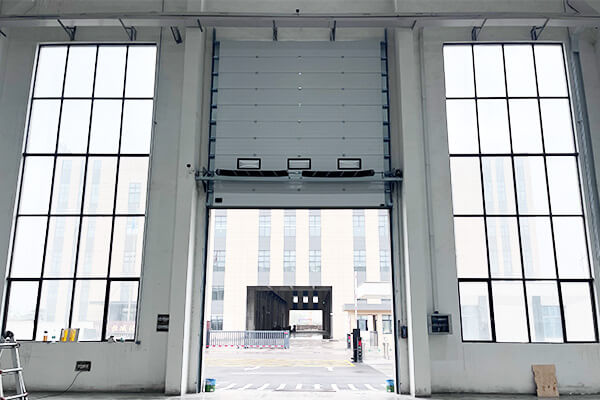
The Synergy of the Balance System: Pulleys, Tracks, and Hinges
The System Approach: Integration is Key
A high-performance sectional overhead door torsion spring is only as effective as the components supporting it. To maximize the 100,000-cycle potential of our 60Si2Mn springs, the entire balance system must meet the same engineering standards. A premium spring paired with low-quality, thin-gauge tracks will lead to misalignment, uneven tension, and premature system failure. Quality at the component level ensures quality at the system level.
Friction Reduction: Protecting the Drive System
Precision-engineered pulleys and heavy-duty hinges are critical to maintaining the “light and smooth” operation of our sectional overhead doors. By facilitating effortless movement, the balance system ensures the motor is never overworked, significantly extending the service life of the drive unit.
The Benefit of Whole Industrial Sectional Door
The true hallmark of a superior sectional door is smooth operation. This is achieved through factory-matched components, where the tracks, pulleys, and hinges are calibrated specifically to the tension of the sectional door spring.
-
- Perfect Balance: This synergy ensures the door remains stable in any position, reducing structural vibration.
-
- Reduced Wear: When all parts are perfectly aligned, the load is distributed evenly, minimizing wear on every component.
-
- Long-Term Reliability: Buying an integrated, factory-tested system guarantees operational safety and durability that cannot be achieved by assembling mismatched parts.

Safety First: Integrated Protection Devices of Sectional Lifting Door
Torsion Spring Breakage Protection
Operating a heavy industrial sectional door requires immense tension. In the unlikely event of a spring failure, our integrated torsion spring breakage protection acts as an immediate mechanical brake. The moment tension is lost, the device automatically locks the shaft, preventing the door from collapsing. This critical feature ensures that a component failure does not result in a catastrophic drop, protecting both your assets and your personnel.
Cable Fall Arrest Device
While the springs balance the door, the cables carry the load. Our cable fall arrest device provides an essential secondary layer of security. Should a cable snap or lose tension, this safety mechanism triggers instantly to wedge the door in its tracks. In high-traffic industrial environments, this device is non-negotiable, offering a fail-safe guarantee that prevents the door leaf from falling, even under extreme circumstances.
Compliance: Meeting Global Safety Standards
Safety is not an optional extra; it is a fundamental requirement of modern industrial engineering. Our integrated protection devices ensure that every sectional door is fully compliant with stringent international safety regulations, including:
-
- CE Certification: Meeting European health, safety, and environmental protection standards.
-
- Operational Security: Adhering to local industrial regulations regarding overhead moving equipment.
By investing in a complete system equipped with these safety features, you ensure a secure working environment and avoid the legal and operational risks associated with non-compliant equipment.
- Operational Security: Adhering to local industrial regulations regarding overhead moving equipment.
In a professional industrial setting, a door is not just a point of entry; it is a critical tool for operational efficiency. Choosing a budget-grade door often leads to hidden costs through frequent repairs and interrupted workflows. By selecting a premium, factory-integrated sectional door system, you are not simply buying hardware—you are investing in a “zero-downtime” solution designed for long-term reliability and safety.
FAQs
What is the average service life of industrial sectional door springs?
The service life of sectional door springs is measured in operating cycles (one opening and one closing equals one cycle). Standard springs typically support 30,000 cycles. For high-frequency industrial applications, we offer custom springs made from 60Si2Mn alloy spring steel, whose service life can be increased to 50,000 or 100,000 cycles. Choosing a complete door system with high cycle performance significantly reduces long-term maintenance costs for businesses.
Why is 60Si2Mn superior to ordinary carbon steel for sectional doors?
60Si2Mn is a high-strength silicon-manganese spring steel. Compared with ordinary carbon steel, it has a higher elastic limit and better fatigue resistance. This means the spring is less likely to suffer permanent deformation or sagging under heavy use, maintaining precise balance for the door at all times. This material is essential to ensuring the entire sectional door operates smoothly and effortlessly.
How do I determine what spring I need?
-
- Identify the Door’s Total Weight
-
- The Four Critical Measurements
Wire Diameter
Spring Length
Wind Direction
Inside Diameter
- The Four Critical Measurements
-
- Determine the Required Cycle Life
You must choose a spring based on the frequency of operation. This is where the material grade (such as 60Si2Mn) becomes vital:
Standard Usage (30,000 cycles): Suitable for residential or light commercial use.
High Frequency (50,000 – 100,000 cycles): Recommended for logistics hubs and industrial facilities.
Note: A higher cycle spring will be physically larger (longer or thicker wire) to distribute the stress over more material.
- Determine the Required Cycle Life
How can I tell if my sectional door springs need maintenance?
If you notice the door feels heavy during manual operation, becomes unusually noisy during movement, or shows obvious rust or uneven gaps on the spring surface, these are typical signs of a failing balance system. Early consultation with a professional engineering team for a full performance assessment can effectively prevent production downtime caused by component failure.