
Contact us WhatsApp: 8618036828007


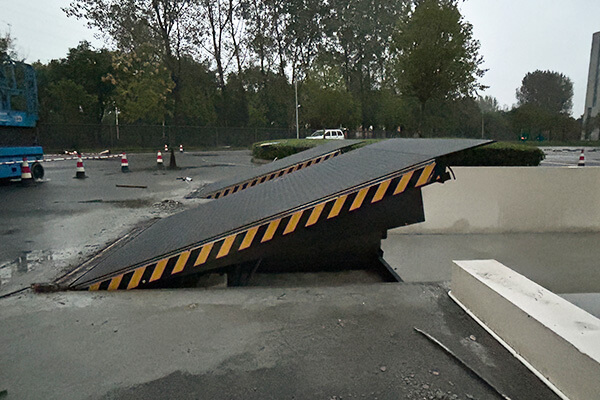
At a busy warehouse loading dock, the floor of a parked truck often sits higher or lower than the loading bay. This height difference can make it difficult for forklifts to move goods safely and smoothly between the building and the vehicle. A hydraulic dock leveler bridges this gap by raising or lowering its platform and extending a hinged lip onto the truck bed, creating a stable transition. But how does a hydraulic dock leveler work, and what makes its movement possible?
This guide explains its working principle, key components, and step-by-step operating process, helping warehouse operators and facility managers understand how hydraulic dock levelers support efficient loading and unloading operations.
How Does a Hydraulic Dock Leveler Work?
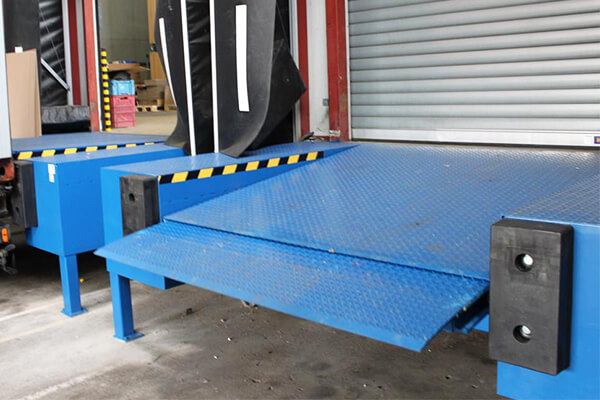
A hydraulic dock leveler works by using a hydraulic power unit to raise and lower a steel platform, while a hinged lip extends to rest on the truck bed. This creates a stable bridge between the warehouse floor and the vehicle, allowing forklifts to move goods safely across different height levels during loading and unloading operations.
Step 1 – Position and Secure the Truck
The truck first backs into the designated loading bay and aligns with the dock entrance. Once properly positioned, the vehicle should be secured using an appropriate vehicle restraint or wheel chocks according to the facility’s safety procedures. Correct positioning ensures that the dock leveler lip can reach the truck bed and maintain proper contact during operation.
Step 2 – Activate the Hydraulic Pump
After confirming that the truck is secured and the loading area is clear, the operator activates the hydraulic dock leveler using the control panel. The electric motor starts the hydraulic pump, which draws hydraulic oil from the reservoir and delivers pressurized fluid to the lifting cylinder. This hydraulic power drives the platform’s upward movement.
Step 3 – Raise the Dock Leveler Platform
As hydraulic pressure builds inside the lifting cylinder, the cylinder extends and pushes the platform upward. The steel deck rises from its stored position, creating enough clearance for the hinged lip to extend. This lifting movement is controlled by the hydraulic system, allowing the hydraulic dock leveler to reach the required operating position.
Step 4 – Extend the Lip onto the Truck Bed
When the platform reaches its raised position, the hinged lip extends toward the truck bed. Depending on the model, lip extension may be automatic or controlled through a separate operation. The operator then allows the platform to lower until the lip rests securely on the truck bed, forming a continuous bridge for material handling equipment.
Step 5 – Load and Unload Goods
Once the platform and lip are properly positioned, forklifts can travel between the warehouse floor and the truck bed. The hydraulic dock leveler operation allows goods to move across the height difference without requiring a separate portable ramp. Operators must observe the rated capacity, keep the platform clear of obstructions, and follow the facility’s loading safety procedures.
Step 6 – Return the Dock Leveler to Its Stored Position
After loading or unloading is complete, the operator follows the manufacturer’s instructions to raise the platform, retract the lip, and return the dock leveler to its stored position. The vehicle restraint should only be released when the platform is safely stored and the truck is ready to depart. This completes the operating cycle and prepares the loading bay for the next vehicle.
Main Components of a Hydraulic Dock Leveler
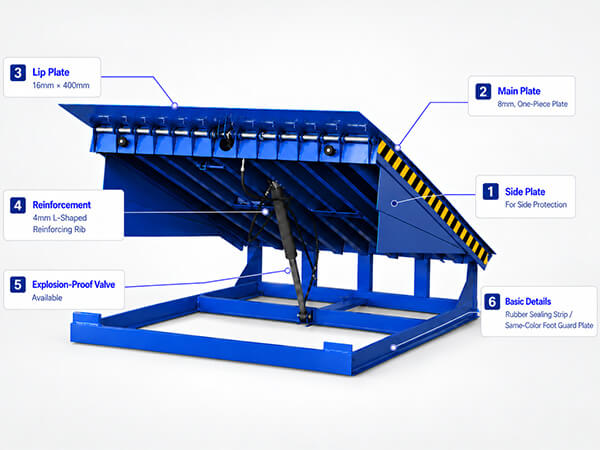
Understanding the main hydraulic dock leveler parts helps explain how the equipment lifts, extends its lip, and adjusts to different truck bed heights. A typical hydraulic dock leveler consists of several mechanical, hydraulic, and electrical components that work together to provide smooth and controlled operation.
Hydraulic Pump and Power Unit
The hydraulic power unit consists of an electric motor, hydraulic pump, and oil reservoir. When the operator activates the control system, the motor drives the pump, which delivers pressurized hydraulic oil to the lifting cylinders.
Hydraulic Cylinders
Hydraulic cylinders convert fluid pressure into mechanical force. They push the platform upward and, depending on the design, operate the hinged lip. The cylinders are essential components of the hydraulic dock leveler hydraulic system, enabling controlled platform movement.
Steel Platform and Hinged Lip
The steel platform, also called the deck, provides a stable surface for forklifts and material handling equipment. The hinged lip extends from the front edge of the platform and rests on the truck bed, creating a continuous transition between the warehouse floor and vehicle.
Control Box and Hydraulic Valves
The control box allows operators to activate and control the dock leveler. Hydraulic valves regulate oil flow and pressure, directing fluid to the appropriate cylinders during lifting, lowering, and lip movement.
Safety Supports and Protective Devices
Safety features may include maintenance support struts, toe guards, emergency stop controls, and hydraulic safety valves, depending on the model. These dock leveler components help protect operators and maintenance personnel by reducing risks associated with unexpected movement, accidental access, and hydraulic system failure. Mechanical maintenance supports must be engaged according to the manufacturer’s instructions before working beneath a raised platform.
How Does the Hydraulic System Control Platform Movement?
The hydraulic dock leveler working principle is based on converting electrical energy into hydraulic power and then into mechanical movement. The electric motor drives the hydraulic pump, which pressurizes the oil and directs it through control valves to the hydraulic cylinders. These components work together to control platform lifting, lip movement, and adjustment during loading operations.
How Hydraulic Pressure Raises the Platform
When the electric motor starts, the hydraulic pump draws oil from the reservoir and delivers pressurized fluid to the lifting cylinder. The hydraulic pressure extends the cylinder, generating the force needed to raise the steel platform. When the control valve changes the oil flow, the platform can lower in a controlled manner.
How the Lip Extends and Retracts
Depending on the hydraulic dock leveler mechanism, the hinged lip is operated by a dedicated hydraulic cylinder or an integrated linkage system. Hydraulic pressure drives the lip outward, allowing it to rest on the truck bed. The return sequence retracts the lip before the platform returns to its stored position.
How the Platform Adjusts to Trailer Movement
During loading and unloading, changes in cargo weight can affect the truck’s suspension and bed height. In its operating position, the dock leveler is designed to follow normal vertical movement of the truck bed within its working range, maintaining contact between the lip and trailer.
Hydraulic vs Mechanical Dock Leveler: How Do They Work Differently?
The main difference between a hydraulic vs mechanical dock leveler is how the platform is powered and operated. A hydraulic dock leveler uses an electric motor, hydraulic pump, and cylinders to control platform movement. A mechanical dock leveler relies on a spring-assisted mechanism and manual operation to raise and lower the platform.
| Feature | Hydraulic Dock Leveler | Mechanical Dock Leveler |
|---|---|---|
| Drive Mechanism | Electric motor and hydraulic pump | Mechanical spring and counterbalance mechanism |
| Operating Method | Push-button hydraulic control | Manual activation using a pull chain or handle, depending on the model |
| Manual Effort | Minimal operator effort | Requires manual activation and greater physical involvement |
| Power Requirements | Requires an electrical power supply | Generally operates without electricity |
| Maintenance Needs | Hydraulic oil, cylinders, hoses, pump, and electrical components | Springs, hinges, linkages, and mechanical components |
| Suitable Applications | Warehouses with frequent loading and unloading operations | Facilities requiring a mechanically operated loading dock solution |
Which Operating System Is More Suitable?
Hydraulic dock levelers provide convenient push-button operation and controlled platform movement, making them suitable for facilities with frequent loading activities. Mechanical dock levelers offer a simpler operating mechanism without requiring an electrical power supply. The appropriate choice depends on operating frequency, available power, maintenance requirements, and facility configuration.
Common Hydraulic Dock Leveler Problems and Maintenance Tips
Regular inspection and proper maintenance help keep a hydraulic dock leveler operating reliably. Understanding common problems can also help warehouse operators identify potential issues before they cause unexpected downtime.
Why Is My Hydraulic Dock Leveler Not Raising?
If a hydraulic dock leveler does not rise, possible causes include a power supply failure, a faulty control circuit, insufficient hydraulic oil, or a hydraulic leak. An overloaded platform or an activated safety interlock may also prevent operation. Check the external power supply and visible operating conditions. If the problem persists, contact a qualified technician.
Why Is the Dock Leveler Lip Not Extending?
A lip that fails to extend may indicate a hydraulic pressure issue, a faulty control valve, a damaged cylinder, or an obstruction around the hinge mechanism. Stop operation and arrange a professional inspection rather than forcing the lip to move.
What Maintenance Does a Hydraulic Dock Leveler Need?
Regular dock leveler maintenance should include checking hydraulic hoses, visible oil leaks, electrical controls, platform hinges, lip movement, and safety devices. Keep the platform and surrounding area free of debris. Follow the manufacturer’s maintenance schedule and arrange periodic inspections by qualified technicians. Never work beneath an unsupported raised platform or attempt to adjust hydraulic pressure without proper training.
Frequently Asked Questions About Hydraulic Dock Levelers
How Does a Hydraulic Dock Leveler Adjust to Different Truck Heights?
A hydraulic dock leveler adjusts to different truck bed heights by raising or lowering its platform within its designed operating range. The hinged lip rests on the truck bed, creating a stable transition between the loading dock and vehicle. Its working range depends on the model and specified adjustment capacity.
What Powers a Hydraulic Dock Leveler?
A hydraulic dock leveler is typically powered by an electric motor connected to a hydraulic pump. The pump pressurizes hydraulic oil and directs it to the lifting cylinders, which move the platform and, depending on the design, the hinged lip. The control system manages these movements during loading operations.
Can a Hydraulic Dock Leveler Operate Without Electricity?
A standard electrically powered hydraulic dock leveler generally requires electricity to perform its normal lifting and operating cycle. Some models may provide manual emergency or backup procedures, depending on their design. Always consult the manufacturer’s operating manual before attempting any alternative operation.
What Is the Difference Between a Hydraulic Dock Leveler and a Dock Lift?
A hydraulic dock leveler bridges the height difference between a warehouse loading dock and a truck bed, allowing forklifts to move goods between them. A hydraulic dock lift is designed to raise or lower materials between different floor levels or working heights, often where a conventional loading dock is unavailable.
How Often Should a Hydraulic Dock Leveler Be Inspected?
A hydraulic dock leveler should receive regular visual checks before use, along with scheduled preventive maintenance based on the manufacturer’s recommendations and applicable safety requirements. Inspections should cover hydraulic hoses, oil leaks, electrical controls, hinges, safety devices, and structural components. Qualified technicians should perform more detailed maintenance at the recommended intervals.
Conclusion
Understanding how a hydraulic dock leveler works helps warehouse operators make better decisions about loading dock efficiency, equipment safety, and maintenance. By using hydraulic pressure to raise the platform and extend the hinged lip, the system creates a stable bridge between the warehouse floor and truck bed. Proper operation, regular inspections, and suitable equipment selection are essential for reliable performance.