
Kontaktieren Sie uns per WhatsApp: 8618036828007


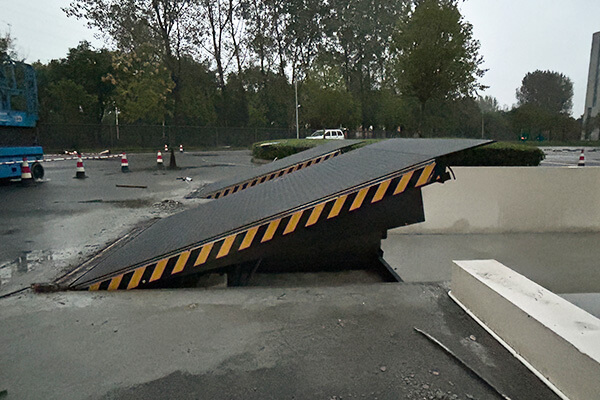
An einer belebten Laderampe eines Lagers liegt der Boden eines geparkten Lkw oft höher oder tiefer als die Ladebucht. Dieser Höhenunterschied kann es für Gabelstapler schwierig machen, Waren sicher und reibungslos zwischen dem Gebäude und dem Fahrzeug zu bewegen. Eine hydraulische Ladebrücken überbrückt diese Lücke, indem sie ihre Plattform anhebt oder absenkt und eine klappbare Lippe auf die Ladefläche des Lkw ausfährt, wodurch ein stabiler Übergang entsteht. Aber wie funktioniert eine hydraulische Überladebrücke, und was ermöglicht ihre Bewegung?
Dieser Leitfaden erläutert ihr Funktionsprinzip, die wichtigsten Komponenten und den schrittweisen Betriebsablauf und hilft Lagerbetreibern und Facility-Managern zu verstehen, wie hydraulische Überladebrücken effiziente Be- und Entladevorgänge unterstützen.
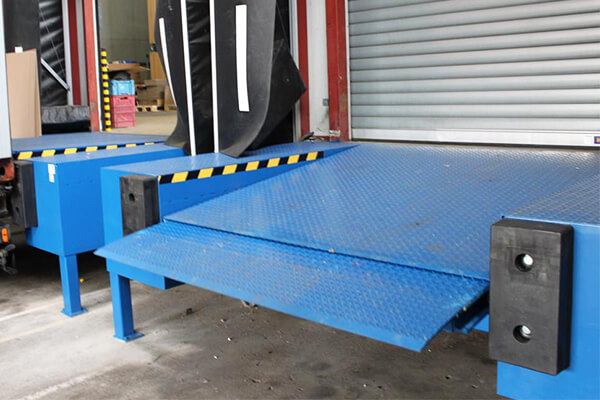
Wie funktioniert eine hydraulische Überladebrücke?
A hydraulische Ladebrücken funktioniert durch den Einsatz eines Hydraulikaggregats, das eine Stahlplattform anhebt und absenkt, während eine klappbare Lippe ausfährt, um auf der Ladefläche des Lkw aufzuliegen. Dadurch entsteht eine stabile Brücke zwischen dem Lagerboden und dem Fahrzeug, die es Gabelstaplern ermöglicht, Waren während der Be- und Entladevorgänge sicher über unterschiedliche Höhenniveaus zu bewegen.
Schritt 1 – Den Lkw positionieren und sichern
Der Lkw fährt zunächst rückwärts in die designated Ladebucht und richtet sich am Andocktor aus. Nach der korrekten Positionierung sollte das Fahrzeug gemäß den Sicherheitsverfahren der Anlage mit einer geeigneten Fahrzeugrückhaltevorrichtung oder Radkeilen gesichert werden. Die korrekte Positionierung stellt sicher, dass die Lippe der Überladebrücke die Ladefläche des Lkw erreichen und während des Betriebs einen ordnungsgemäßen Kontakt aufrechterhalten kann.
Schritt 2 – Die Hydraulikpumpe aktivieren
Nachdem bestätigt wurde, dass der Lkw gesichert ist und der Ladebereich frei ist, aktiviert der Bediener die hydraulische Überladebrücke über das Bedienfeld. Der Elektromotor startet die Hydraulikpumpe, die Hydrauliköl aus dem Reservoir ansaugt und Druckflüssigkeit zum Hubzylinder fördert. Diese Hydraulikkraft treibt die Aufwärtsbewegung der Plattform an.
Schritt 3 – Die Plattform der Überladebrücke anheben
Wenn sich im Hubzylinder Hydraulikdruck aufbaut, fährt der Zylinder aus und drückt die Plattform nach oben. Die Stahldeckfläche steigt aus ihrer Ruheposition an und schafft ausreichend Freiraum, damit die klappbare Lippe ausfahren kann. Diese Hubbewegung wird vom Hydrauliksystem gesteuert, sodass die hydraulische Ladebrücken die erforderliche Betriebsposition erreichen kann.
Schritt 4 – Die Lippe auf die Ladefläche des Lkw ausfahren
Wenn die Plattform ihre angehobene Position erreicht, fährt die klappbare Lippe in Richtung der Ladefläche des Lkw aus. Je nach Modell kann das Ausfahren der Lippe automatisch oder über einen separaten Vorgang gesteuert erfolgen. Der Bediener lässt die Plattform dann absenken, bis die Lippe sicher auf der Ladefläche des Lkw aufliegt und eine durchgehende Brücke für Materialumschlaggeräte bildet.
Schritt 5 – Waren be- und entladen
Sobald Plattform und Lippe ordnungsgemäß positioniert sind, können Gabelstapler zwischen dem Lagerboden und der Ladefläche des Lkw verkehren. Die Funktionsweise der hydraulischen Überladebrücke ermöglicht es, Waren über den Höhenunterschied zu bewegen, ohne dass eine separate mobile Rampe erforderlich ist. Bediener müssen die Nenntragfähigkeit beachten, die Plattform frei von Hindernissen halten und die Ladesicherheitsverfahren der Anlage befolgen.
Schritt 6 – Die Überladebrücke in ihre Ruheposition zurückführen
Nach Abschluss des Be- oder Entladens befolgt der Bediener die Anweisungen des Herstellers, um die Plattform anzuheben, die Lippe einzufahren und die Überladebrücke in ihre Ruheposition zurückzuführen. Die Fahrzeugrückhaltevorrichtung sollte erst gelöst werden, wenn die Plattform sicher verstaut und der Lkw bereit zur Abfahrt ist. Damit ist der Betriebszyklus abgeschlossen und die Ladebucht für das nächste Fahrzeug vorbereitet.
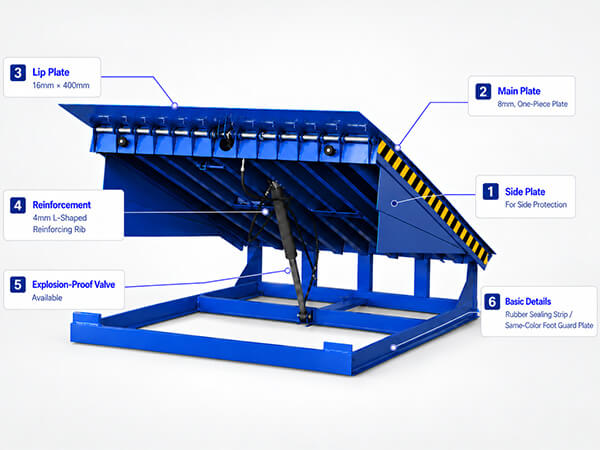
Hauptkomponenten einer hydraulischen Überladebrücke
Das Verständnis der wichtigsten Bauteile einer hydraulischen Überladebrücke hilft zu erklären, wie das Gerät anhebt, seine Lippe ausfährt und sich an unterschiedliche Höhen der Lkw-Ladefläche anpasst. Eine typische hydraulische Überladebrücke besteht aus mehreren mechanischen, hydraulischen und elektrischen Komponenten, die zusammenwirken, um einen reibungslosen und kontrollierten Betrieb zu gewährleisten.
Hydraulikpumpe und Aggregat
Das Hydraulikaggregat besteht aus einem Elektromotor, einer Hydraulikpumpe und einem Ölreservoir. Wenn der Bediener das Steuerungssystem aktiviert, treibt der Motor die Pumpe an, die Druckhydrauliköl zu den Hubzylindern fördert.
Hydraulikzylinder
Hydraulikzylinder wandeln Fluiddruck in mechanische Kraft um. Sie drücken die Plattform nach oben und betätigen je nach Ausführung die klappbare Lippe. Die Zylinder sind wesentliche Bestandteile des Hydrauliksystems der hydraulischen Überladebrücke, und ermöglichen eine kontrollierte Plattformbewegung.
Stahlplattform und klappbare Lippe
Die Stahlplattform, auch Deck genannt, bietet eine stabile Oberfläche für Gabelstapler und Materialumschlaggeräte. Die klappbare Lippe fährt von der Vorderkante der Plattform aus und liegt auf der Ladefläche des Lkw auf, wodurch ein durchgehender Übergang zwischen dem Lagerboden und dem Fahrzeug entsteht.
Steuerkasten und Hydraulikventile
The control box allows operators to activate and control the dock leveler. Hydraulic valves regulate oil flow and pressure, directing fluid to the appropriate cylinders during lifting, lowering, and lip movement.
Sicherheitsstützen und Schutzeinrichtungen
Safety features may include maintenance support struts, toe guards, emergency stop controls, and hydraulic safety valves, depending on the model. These dock leveler components help protect operators and maintenance personnel by reducing risks associated with unexpected movement, accidental access, and hydraulic system failure. Mechanical maintenance supports must be engaged according to the manufacturer’s instructions before working beneath a raised platform.
Wie steuert das Hydrauliksystem die Plattformbewegung?
Die hydraulic dock leveler working principle is based on converting electrical energy into hydraulic power and then into mechanical movement. The electric motor drives the hydraulic pump, which pressurizes the oil and directs it through control valves to the hydraulic cylinders. These components work together to control platform lifting, lip movement, and adjustment during loading operations.
Wie der Hydraulikdruck die Plattform anhebt
When the electric motor starts, the hydraulic pump draws oil from the reservoir and delivers pressurized fluid to the lifting cylinder. The hydraulic pressure extends the cylinder, generating the force needed to raise the steel platform. When the control valve changes the oil flow, the platform can lower in a controlled manner.
Wie die Lippe aus- und einfährt
Depending on the hydraulic dock leveler mechanism, the hinged lip is operated by a dedicated hydraulic cylinder or an integrated linkage system. Hydraulic pressure drives the lip outward, allowing it to rest on the truck bed. The return sequence retracts the lip before the platform returns to its stored position.
Wie sich die Plattform an die Bewegung des Aufliegers anpasst
During loading and unloading, changes in cargo weight can affect the truck’s suspension and bed height. In its operating position, the dock leveler is designed to follow normal vertical movement of the truck bed within its working range, maintaining contact between the lip and trailer.
Hydraulische vs. mechanische Überladebrücke: Wie funktionieren sie unterschiedlich?
The main difference between a hydraulic vs mechanical dock leveler is how the platform is powered and operated. A hydraulic dock leveler uses an electric motor, hydraulic pump, and cylinders to control platform movement. A mechanical dock leveler relies on a spring-assisted mechanism and manual operation to raise and lower the platform.
| Merkmal | Hydraulische Ladebrücke | Mechanische Überladebrücke |
|---|---|---|
| Antriebsmechanismus | Elektromotor und Hydraulikpumpe | Mechanical spring and counterbalance mechanism |
| Operating Method | Push-button hydraulic control | Manual activation using a pull chain or handle, depending on the model |
| Manual Effort | Minimal operator effort | Requires manual activation and greater physical involvement |
| Power Requirements | Requires an electrical power supply | Generally operates without electricity |
| Wartungsbedarf | Hydraulic oil, cylinders, hoses, pump, and electrical components | Springs, hinges, linkages, and mechanical components |
| Geeignete Anwendungen | Warehouses with frequent loading and unloading operations | Facilities requiring a mechanically operated loading dock solution |
Welches Betriebssystem ist besser geeignet?
Hydraulic dock levelers provide convenient push-button operation and controlled platform movement, making them suitable for facilities with frequent loading activities. Mechanical dock levelers offer a simpler operating mechanism without requiring an electrical power supply. The appropriate choice depends on operating frequency, available power, maintenance requirements, and facility configuration.
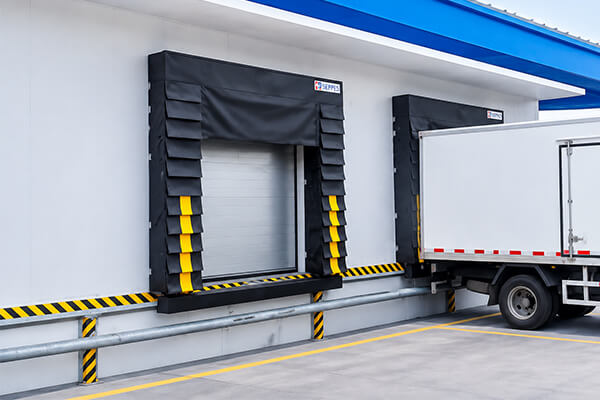
Häufige Probleme bei hydraulischen Überladebrücken und Wartungstipps
Regular inspection and proper maintenance help keep a hydraulic dock leveler operating reliably. Understanding common problems can also help warehouse operators identify potential issues before they cause unexpected downtime.
Warum hebt sich meine hydraulische Überladebrücke nicht?
If a hydraulic dock leveler does not rise, possible causes include a power supply failure, a faulty control circuit, insufficient hydraulic oil, or a hydraulic leak. An overloaded platform or an activated safety interlock may also prevent operation. Check the external power supply and visible operating conditions. If the problem persists, contact a qualified technician.
Warum fährt die Lippe der Überladebrücke nicht aus?
A lip that fails to extend may indicate a hydraulic pressure issue, a faulty control valve, a damaged cylinder, or an obstruction around the hinge mechanism. Stop operation and arrange a professional inspection rather than forcing the lip to move.
Welche Wartung benötigt eine hydraulische Überladebrücke?
**Regelmäßige** dock leveler maintenance should include checking hydraulic hoses, visible oil leaks, electrical controls, platform hinges, lip movement, and safety devices. Keep the platform and surrounding area free of debris. Follow the manufacturer’s maintenance schedule and arrange periodic inspections by qualified technicians. Never work beneath an unsupported raised platform or attempt to adjust hydraulic pressure without proper training.
Häufig gestellte Fragen zu hydraulischen Überladebrücken
Wie passt sich eine hydraulische Überladebrücke an unterschiedliche Lkw-Höhen an?
A hydraulic dock leveler adjusts to different truck bed heights by raising or lowering its platform within its designed operating range. The hinged lip rests on the truck bed, creating a stable transition between the loading dock and vehicle. Its working range depends on the model and specified adjustment capacity.
Was treibt eine hydraulische Überladebrücke an?
A hydraulic dock leveler is typically powered by an electric motor connected to a hydraulic pump. The pump pressurizes hydraulic oil and directs it to the lifting cylinders, which move the platform and, depending on the design, the hinged lip. The control system manages these movements during loading operations.
Kann eine hydraulische Überladebrücke ohne Strom betrieben werden?
A standard electrically powered hydraulic dock leveler generally requires electricity to perform its normal lifting and operating cycle. Some models may provide manual emergency or backup procedures, depending on their design. Always consult the manufacturer’s operating manual before attempting any alternative operation.
Was ist der Unterschied zwischen einer hydraulischen Überladebrücke und einem Hubtisch?
A hydraulic dock leveler bridges the height difference between a warehouse loading dock and a truck bed, allowing forklifts to move goods between them. A hydraulic dock lift is designed to raise or lower materials between different floor levels or working heights, often where a conventional loading dock is unavailable.
Wie oft sollte eine hydraulische Überladebrücke inspiziert werden?
A hydraulic dock leveler should receive regular visual checks before use, along with scheduled preventive maintenance based on the manufacturer’s recommendations and applicable safety requirements. Inspections should cover hydraulic hoses, oil leaks, electrical controls, hinges, safety devices, and structural components. Qualified technicians should perform more detailed maintenance at the recommended intervals.
Fazit
Understanding how a hydraulic dock leveler works helps warehouse operators make better decisions about loading dock efficiency, equipment safety, and maintenance. By using hydraulic pressure to raise the platform and extend the hinged lip, the system creates a stable bridge between the warehouse floor and truck bed. Proper operation, regular inspections, and suitable equipment selection are essential for reliable performance.